



President Trump is a party of one on Iran.
Although he has embraced the war as part of his midterm national security pitch, most Republicans are not following his lead. From the campaign trail to Capitol Hill, they would rather talk about almost anything else: tax cuts, crime, immigration and warnings that Democrats have been overtaken by “socialists” and “Marxists” who will make the country “barely recognizable.”
Iran is just not part of the Republican message.
People were interested in these podcasts
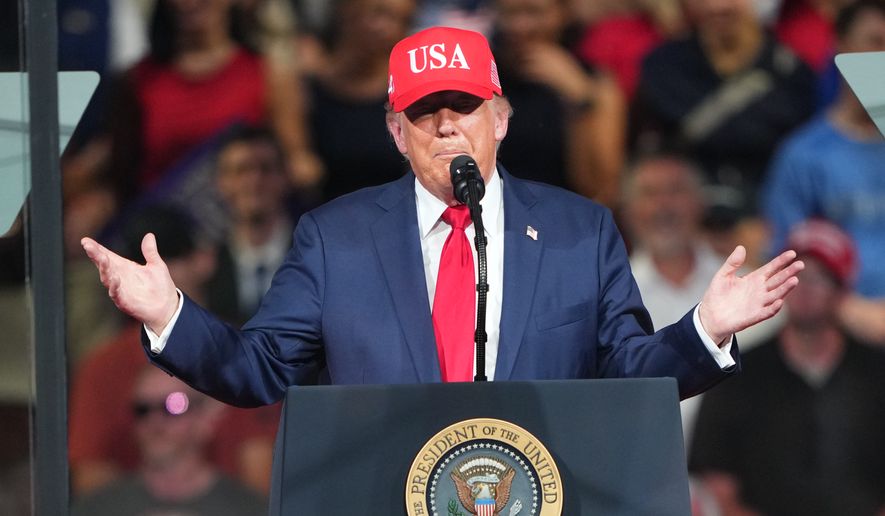
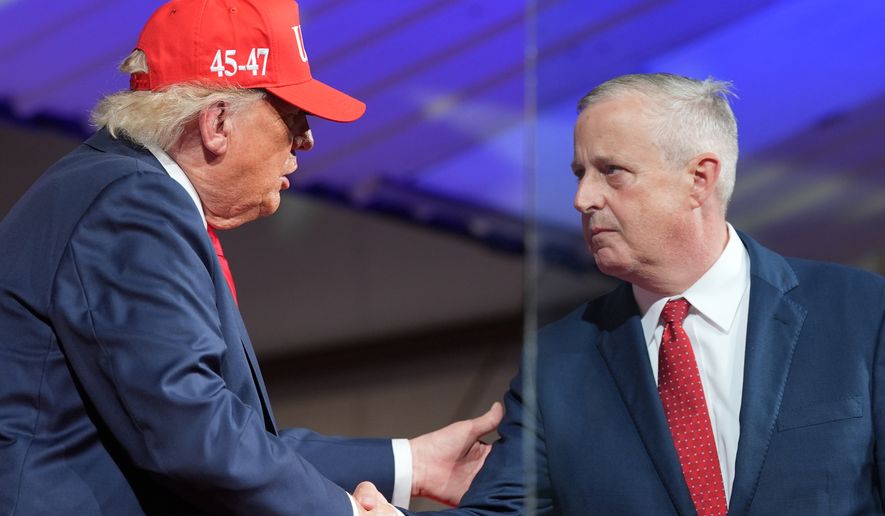
Take North Carolina on Wednesday. About halfway through Mr. Trump’s speech at a rally for Republican Senate nominee Michael Whatley and other downballot candidates, the president declared that the “war is going to end very soon” and later boasted that his administration “took care of the fact that Iran will not have a weapon.”
The pattern was even more glaring at the Republican midterm convention in Dallas last week.
Speaker after speaker moved right past a war that is now nearly 7 months old as if it were not happening. Nobody brought it up until Mr. Trump did, five hours and 40 minutes into the program. Over two days and more than 13 hours on stage, Iran came up 14 times total — and not once from a candidate or a party leader, including Vice President J.D. Vance.
SEE ALSO: Democrats ready to derail the Trump train if they win House majority
Mr. Trump is not shy about the war.
“Oil will be going down as soon as we win the war with Iran,” he said in Dallas. “We’re winning it. We control the Hormuz Strait. I think we should call the Hormuz Strait, we should call it … the Trump Strait.”
In North Carolina, Mr. Trump hinted that the war might wrap up soon, though maybe not before the midterm elections. On gas prices, he framed the pain as worth it: “It’s a very inexpensive price to pay for what we’ve done.”
Republican strategist Whit Ayres said most Republicans are steering away from the issue for a simple reason: They can “read a poll.”
Mr. Ayres said opposition to the war has been high from the start, which is unusual when compared with past overseas conflicts.
“Normally, you don’t base a campaign on something opposed by three-fifths of Americans,” he said, adding that it is politically volatile because voters can draw a “direct line to higher gas prices, higher fertilizer prices and more inflation.”
A New York Times/Siena poll released this week found that 66% of likely voters oppose the war, including 60% who feel strongly about it — that was 77% of independents and even 24% of Mr. Trump’s own 2024 voters. There is similar discomfort with the joint strike against Iran alongside Israel: 63% disapproved, including 74% of independents and 22% of his past supporters.
The poll coincides with crude oil pushing past $100 a barrel and gasoline averaging $4.44 a gallon per AAA. The Congressional Budget Office this week said higher fuel costs are bleeding into shipping and transportation, keeping inflation above its prewar trend through the fall if nothing changes. To top it off, the Federal Reserve just raised interest rates to try to cool the economy.
It has stirred concerns that the war is metastasizing across the Middle East, putting Republicans in an uncomfortable spot.
Two more Republican House members in toss-up races — Reps. Mariannette Miller-Meeks and Zach Nunn of Iowa — crossed over this week to vote with Democrats on a resolution to limit Mr. Trump’s ability to continue military action against Iran without congressional authorization.
Mr. Whatley did not touch the subject at all during Mr. Trump’s visit Wednesday.
Instead, the former chair of the Republican National Committee said his Democratic rival, former Gov. Roy Cooper, is soft on crime and illegal immigration. He said Mr. Cooper backed the Biden-era high-tax-and-spend agenda that sparked inflation — a set of policies Democrats want to bring back.
“Roy Cooper made stuff cost more, and if he gets elected to the Senate, he will vote every single day to bring back Joe Biden’s inflationary policies that made gas prices and grocery prices and housing prices go through the roof,” he said at the Wednesday rally with Mr. Trump.
It is a callback to Mr. Trump’s own 2024 promise: lower prices after the pandemic-recovery inflation spike. That inflation did fall, from a 40-year high above 9% in June 2022 to about 3% by January 2025. During Mr. Trump’s second term, however, inflation has ranged between 2.3% and 4.2% — remaining above the Fed’s 2% target. The latest reading: Prices up 3.4% for the year ending in August, according to the Bureau of Labor Statistics.
Democrats are shining a bright light on the war, pinning the “disaster” on Republicans up and down the ballot, and, in some cases, using it to shield them from the culture wars.
Rep. Marcy Kaptur of Ohio, one of the most vulnerable House Democrats, released a television ad Thursday saying her Republican rival, Derek Merrin, is trying to shift attention away from the war by highlighting her 2023 vote against a bill that barred biological men from competing on girls’ or women’s sports teams at federally supported schools and colleges.
“We’re stuck in another unnecessary war, and inflation is making everything worse,” she says in the ad. “But my opponent won’t talk about all that.”
In Texas, Democratic Senate nominee James Talarico’s campaign has zeroed in on Republican Ken Paxton’s silence on the “reckless war of choice costing taxpayers billions.”
“Every time you pay more at the pump, you can thank Ken Paxton,” Texas Democrats spokesperson Ryan Martin said in a Thursday email blast. “Texas farmers can’t survive under diesel prices this high, and families everywhere are going to be paying the Paxton price hike because he refuses to stand up for Texans and call for an end to this reckless war of choice.”
In Michigan’s U.S. Senate race, it is more of the same.
Democratic Senate nominee Abdul El-Sayed and his allies are portraying Republican Mike Rogers as a rubber stamp for “a hot war we have no business fighting,” one that drains money that could go to Americans instead.
A WinSenate ad hammers the point: “The endless war in Iran is costing us all — billions for bombs, brutal at our gas pumps, and Mike Rogers, a cheerleader for Donald Trump’s war.”
“Rogers claimed it would end quickly, but we keep paying the price,” the narrator says. “Our tax dollars wasted, 18 American soldiers killed, hundreds wounded, gas prices nearly $5 a gallon, and Michigan families are holding the bag.”
• Tom Howell Jr. contributed to this report.
Please read our comment policy before commenting.