



OPINION:
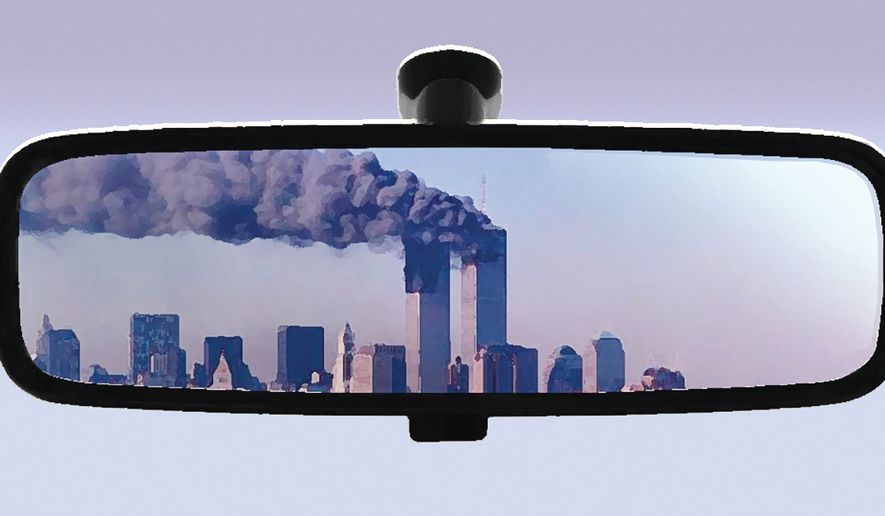
Many in the United States on Friday commemorated the 25th anniversary of the cowardly attacks on New York City and the Pentagon by 19 adherents of “the religion of peace,” 15 of whom were Saudis.
Like most of us, I can remember exactly where I was when the first tower was struck (in traffic on Interstate 395 heading into Washington) and when the second tower was struck (at my office on Capitol Hill) and we knew it was an attack rather than an accident.
I think about that day from time to time. I spent some of it with Sen. Charles E. Schumer, New York Democrat, and his staff as they took over the offices where I worked. We gave a group of schoolchildren some water and food as they tried to figure out how to get back to Virginia.
People were interested in these podcasts
About 8 p.m., I headed home through empty streets now being patrolled by the Metropolitan Police Department and military police.
I remember the sharp feeling that things would never be the same again.
As it turned out, however, that was mostly wrong. Things went back to a slightly adjusted new normal with surprising speed. Within a few weeks, President George W. Bush, rather than calling for a great national awakening involving prayer and personal sacrifice, suggested that Americans get busy doing what they do best: shopping.
Shoes came off at airports, and we all learned to pretend that blue-haired old ladies and middle-aged Irishmen posed as great a threat as military-aged Muslim men.
We invaded Afghanistan in an effort to dismantle al Qaeda and crush the Taliban. (For those keeping score, we did a pretty good job with al Qaeda, but the Taliban remain in power in Afghanistan.)
About 18 months later, we invaded Iraq, for reasons that are still not clear.
Still, those invasions did not really affect most Americans, because most Americans have not served in the military and fewer than half of us know someone who does. Not surprisingly, after a certain point, the killed and wounded from Iraq and Afghanistan became just numbers, much like the nearly 3,000 killed in the attacks on Sept. 11, 2001.
The unavoidable reality of the United States is this: We are not a nation that looks backward. We look only to the future. As a practical matter, this means that although most of us of a certain age remember the 9/11 attacks and remember the specifics of that day very well, very few of us can point to any particular changes the attacks brought to our lives.
This constructive amnesia is not a commentary on the heroism on display that terrible morning in New York City, at the Pentagon or in the skies above Pennsylvania. Americans in those planes and on the ground acquitted themselves courageously and were models of what we hope we would be in similar circumstances.
However, this country, as it has always been, is driven relentlessly into the future. We do not spend time marinating in what-ifs and what-could-have-beens. We are a restless, nomadic people; from the Mayflower to the Susan Constant to the prairie schooner to the Eagle, we are always moving.
That is probably a good thing. No one wants to live in a place or with a tribe that has stagnated and is obsessed with past glories or past failures.
That said, in our rush to summon the future, we sometimes do not properly honor our past. I do not think what happened on Sept. 11, 2001, changed history. The Middle East remains pretty much what it has been for centuries: a land pocked with tribal and religious enmities and tightly lashed to past glories and grievances.
The United States remains pretty much what it was before: a commercial, technological and military colossus that is sometimes unable to comprehend why others choose to invest more in their pasts than their futures.
As for the dead and wounded of Sept. 11, 2001, and the wars that followed therefrom, we can ask only eternal rest and that the perpetual light may shine upon them and may their souls, and the souls of all the faithful, rest in peace. Amen.
• Michael McKenna is a contributing editor at The Washington Times.
Follow the author

Please read our comment policy before commenting.