


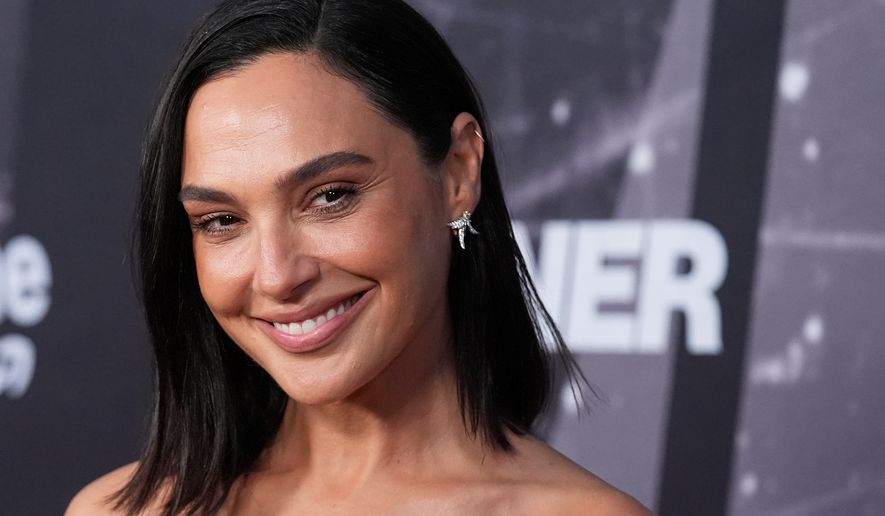

Actress Gal Gadot is defending her decision to star in an upcoming film that uses artificial intelligence to generate its sets and lighting, saying Hollywood has no choice but to adapt to the technology.
Ms. Gadot, best known for playing Wonder Woman in the DC Extended Universe, appears in director Doug Liman’s “Bitcoin,” a $70 million thriller centered on Craig Wright, the Australian computer scientist who has long claimed to be Satoshi Nakamoto, the pseudonymous creator of Bitcoin. A U.K. court conclusively rejected that claim in 2024, ruling after a six-week trial that the evidence against Mr. Wright’s assertion was “overwhelming” and that he had forged documents to support it. The film’s plot nonetheless leans into the mystery, following a journalist investigating why a coalition of powerful crypto and financial interests allegedly worked to destroy Mr. Wright, per the official synopsis.
The film, which also stars Casey Affleck as Mr. Wright, along with Pete Davidson and Isla Fisher, was shot entirely on a custom-built soundstage over 20 days, with AI generating what would traditionally have cost $300 million to produce, according to the film’s producers — a hypothetical estimate from the production team rather than a documented budget the movie would necessarily have required conventionally.
People were interested in these podcasts
“It’s either you’re going to work with it, or be out of the game completely,” Ms. Gadot said, discussing the project on Josh Horowitz’s podcast, “Happy Sad Confused.”
The production was handled by Acme AI & FX, a studio founded by producers Ryan and Matt Kavanaugh along with Garrett Grant and Lawrence Grey. Producer Ryan Kavanaugh said the company priced out a conventional shoot at more than $300 million, citing roughly 200 distinct filming locations ranging from Antarctica to Las Vegas as unworkable without AI-generated backgrounds.
On set, that meant actors performed in what TheWrap’s Emily Zemler, who visited the production twice, described as a drab, gray-screen-wrapped former car showroom in West London, with giant X-marked walls standing in for backgrounds to be filled in later by AI. A traditional lighting department was absent as well; overhead lamps lit the space, with lighting itself to be generated in post-production.
Ms. Gadot has been vocal that the arrangement did not extend to her performance itself. She said the contract negotiation was among the most involved of her career.
“I absolutely did not want the AI to have anything to do with my performance, and so we had to protect that,” Ms. Gadot said. She added that the issue came up so often that SAG-AFTRA contacted her lawyers for guidance on updating its own contract language to protect other performers — an account from Ms. Gadot that has not been independently confirmed by the union.
Producers have maintained that the actors’ on-screen work is untouched. Although the sets and lighting were AI-generated, the actors’ performances were not altered — the footage audiences will see is the actual footage the cast shot on set, according to the production team. Mr. Affleck has also praised the approach, calling the shoot’s focus on performance “more like acting in a Broadway play.”
Ms. Gadot’s remarks came as she promotes “The Runner,” her new Prime Video thriller premiering Wednesday, and follow her recent comments distancing herself from the Wonder Woman franchise under DC Studios’ current leadership.
This article was constructed with the assistance of artificial intelligence and published by a member of The Washington Times' AI News Desk team. The contents of this report are based solely on The Washington Times' original reporting, wire services, and/or other sources cited within the report. For more information, please read our AI policy or contact Steve Fink, Director of Artificial Intelligence, at sfink@washingtontimes.com
The Washington Times AI Ethics Newsroom Committee can be reached at aispotlight@washingtontimes.com.
Please read our comment policy before commenting.