


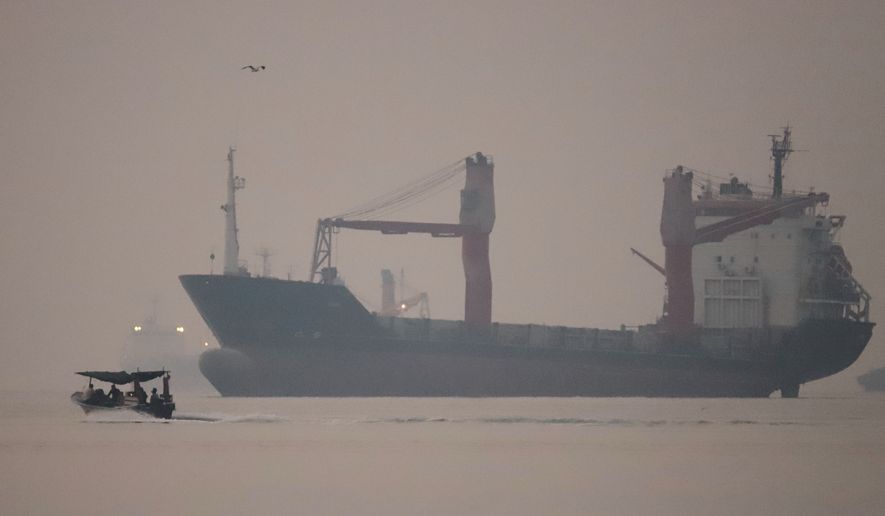

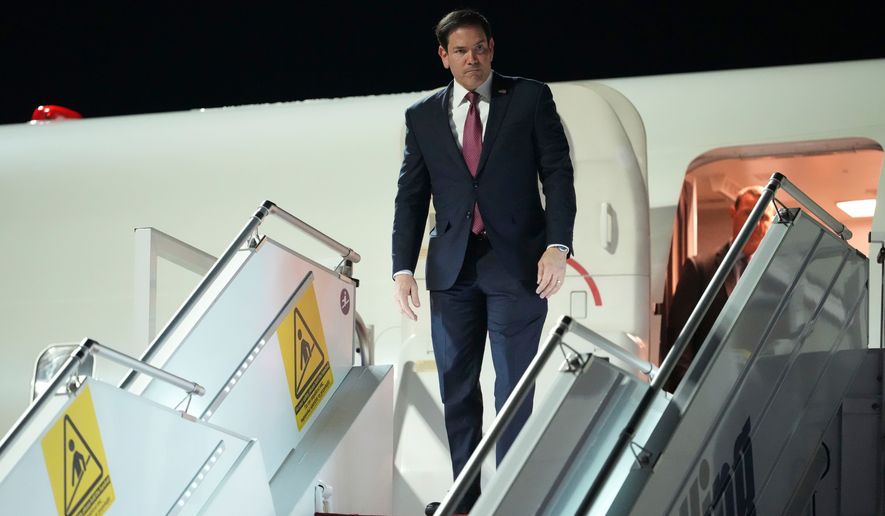
Secretary of State Marco Rubio said Wednesday that Iran’s grip on the Strait of Hormuz has significantly weakened in recent weeks, as oil flows approach prewar levels and the U.S. naval blockade intercepts Iranian tankers.
“The Strait of Hormuz is open. There’s almost as much oil flowing out now as there was before this conflict began,” Mr. Rubio told reporters in Athens. “They’ve lost complete control of the strait.”
His comments come as Iranian attacks against commercial tankers in the strait increase. United Kingdom Maritime Trade Operations reported this week that 12 tankers were struck by Iranian missiles or drones in the strait between Sept. 29 and Oct. 5.
People were interested in these podcasts
That’s a major increase from last month, when independent tanker trackers recorded several days without a tanker attack. An unnamed U.S. official told The Wall Street Journal this week that Iran may have improved its targeting techniques.
Nearly all of the incidents in the strait recorded by UKMTO are labeled as attacks from “unknown projectiles,” and Iran has not claimed responsibility for any of the strikes over the past week.
Still, overall flow through the Strait of Hormuz has increased dramatically over the past month, according to independent tracking firms such as Kpler. Much of the oil that has made it through the waterway has done so under the guidance of the U.S. Navy and through Omani waters.
Some Trump administration officials have argued that the increased traffic flow through the strait has weakened Iran’s leverage during negotiations, adding that Tehran will need to offer more in its proposals.
Mr. Rubio told reporters that Washington will maintain its hardline position against allowing Iran to enrich uranium, hoping to prevent Tehran from building nuclear weapons.
“Anything they agree to that would be acceptable to the United States has to be something that ensures that Iran will never have a nuclear weapon,” Mr. Rubio said.
Contact the author

Please read our comment policy before commenting.