


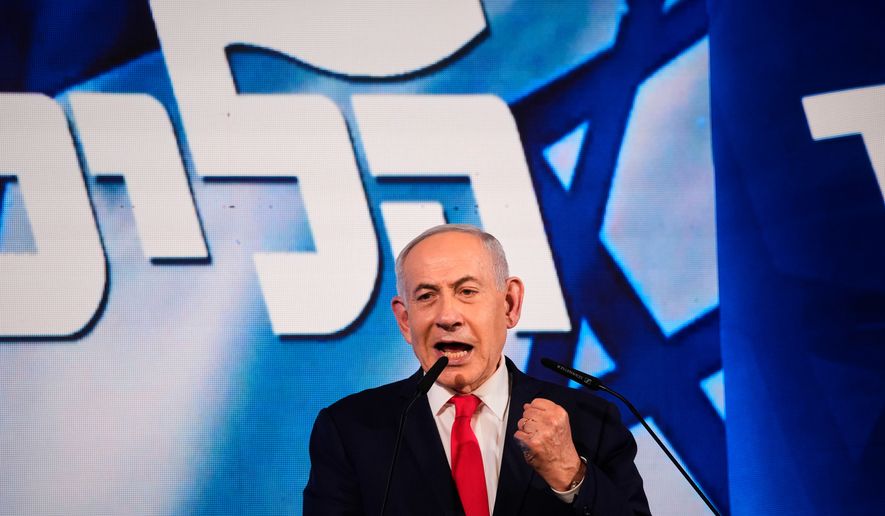

A refusal by Israeli opposition leaders to work with the country’s Arab political parties — which won a historic 19 seats in Tuesday’s elections — could mean that Prime Minister Benjamin Netanyahu could remain in office.
With nearly 90% of the votes tallied, Mr. Netanyahu’s bloc secured 53 seats in the Parliament compared with 48 for his leading rival, former Israel Defense Forces chief Gadi Eisenkot.
Neither reached the 61 seats needed to form a governing coalition in the 120-seat Knesset.
People were interested in these podcasts
While Mr. Eisenkot has not ruled out allying with the Arab parties, most of Israel’s Jewish opposition has ruled out governing with the Palestinians.
While Mr. Netanyahu’s seat in the Knesset has fallen, from 64 to 53, the self-imposed ban on a political alliance with Israeli Arabs could turn his defeat into another term in office, analysts say.
Contact the author

Please read our comment policy before commenting.