


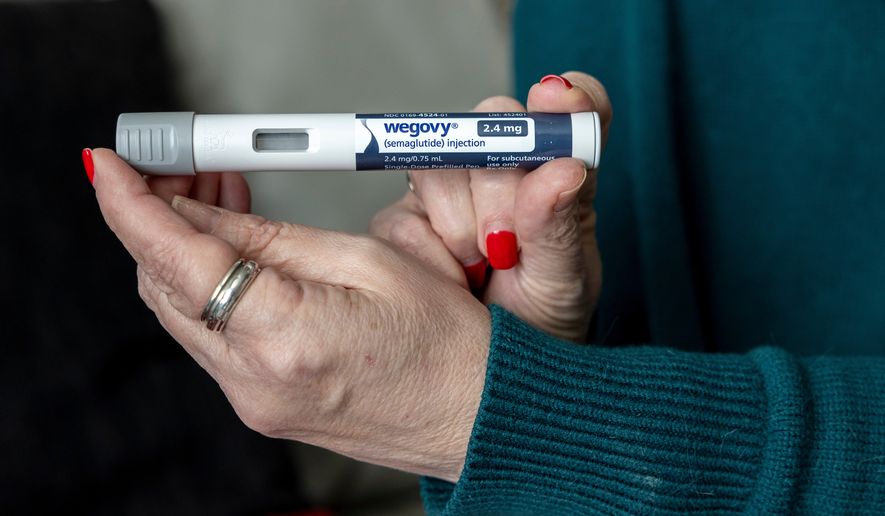

Popular GLP-1 drugs prescribed for Type 2 diabetes and weight loss could also slow aging, according to recent animal testing and drugmakers’ preliminary analysis of human data.
University of California, Berkeley, researchers reported in the journal Nature last month that female mice given the active ingredient in Novo Nordisk’s Ozempic and Wegovy had a median lifespan of 834 days, 12% higher than the 742 days recorded for untreated mice.
Novo Nordisk researchers reported separately that an analysis of 10,052 human patients in five early trials found that blood-protein readings in GLP-1 users showed their hearts were biologically two to four years younger than those receiving a placebo. Similar biomarkers showed that their kidneys, brains, pancreas and lungs were one to four years younger.
People were interested in these podcasts
Eli Lilly reported in a separate analysis of overweight patients that 71 people over 50 who took the active ingredient in their Mounjaro and Zepbound drugs for 72 weeks showed signs of their bodies aging 0.7 to 1.1 years. That was significantly lower than the 1.38 years the company expected.
Danica Chen, a UC Berkeley aging researcher who led the study published in Nature, said the 20-month-old female mice she analyzed were the equivalent of human subjects age 60.
“These studies are an important step as we try to understand if GLP-1s can slow aging,” Ms. Chen said in an email. “We now have evidence in mice and need direct evidence in humans.”
She touted her finding that mice that consumed fewer calories on the drugs also showed signs of healthier aging and improved physiological function.
The human findings came directly from drugmakers’ analyses of existing trials, not from studies designed to test aging, and have not been peer-reviewed.
Novo Nordisk’s researchers noted that their results don’t establish “biological rejuvenation,” while Lilly’s analysis lacked a placebo group.
A federally funded trial of 726 adults in their 60s taking GLP-1s plans to begin enrolling participants next year, according to the University of Texas Health Science Center at San Antonio.
Several medical experts interviewed by The Washington Times warned that research does not yet support promoting GLP-1s for anti-aging alongside their recognized benefits for reducing heart attacks, strokes, kidney decline and deaths related to obesity or diabetes.
They cautioned against giving false hope to older and healthier patients who could suffer troubling side effects or see no benefit from taking the drugs.
“Right now we can’t tell whether these drugs slow aging itself or just reverse the damage of excess weight and high blood sugar,” said Dr. Luke Sorrell, a longevity medicine specialist who prescribes GLP-1s in the Dallas-Fort Worth area.
Several physicians noted that the high costs, muscle loss and gastrointestinal side effects suffered by GLP-1 users could contribute to frailty and falls in older patients hoping to slow their aging.
Dr. Edmundo Rodriguez-Frias of the Retreat of Broward, an addiction treatment facility in Florida, has published extensive research in gastroenterology. He pointed to known GLP-1 side effects such as nausea, vomiting, diarrhea, constipation, pancreatitis and gallbladder problems.
“I would not prescribe a GLP-1 drug solely to slow aging based on these reports,” said Dr. Rodriguez-Frias, an internal medicine specialist.
“We can say GLP-1 drugs treat conditions that affect health during aging, including obesity and Type 2 diabetes,” he added. “What we cannot yet say is that they slow biological aging or extend lifespan in humans.”
Company claims
Liz Skrbkova, who leads U.S. media and stakeholder relations for Novo Nordisk, said the Danish company “is exploring the new science of aging and is actively partnering to advance research in this field.”
She added, “It is not simply about adding more years to life, but to help people live healthier lives also as they grow older.”
She said semaglutide, the active ingredient in Wegovy and Ozempic, is “the only approved molecule with … evidence showing positive effects” on human aging across multiple body organs starting at 12 to 20 weeks of use.
“While this finding does not establish a cause-and-effect relationship, it provides valuable insights into semaglutide’s effects,” Ms. Skrbkova added.
A spokesperson for Indianapolis-based Eli Lilly shared a more guarded statement.
“This work is still early, and we’re continuing to build out these data,” the spokesperson said in an email. “We expect to have more to share down the road, and we’d be glad to stay in touch as that develops.”
Dr. Drishti Timsina, a third-year internal medicine resident at Saint Francis Hospital in Evanston, Illinois, is researching GLP-1 safety in older adults.
She said a dedicated study of aging and lifespan in GLP-1 users is needed to go beyond measuring DNA markers.
“We have a promising animal result and indirect human signals, not a proven anti-aging treatment,” Dr. Timsina said in an email. “A controlled result in mice does not prove the drug slows aging in people.”
Dr. Craig Zebuda, chief medical officer at Yunara Life, a New York-based preventive healthcare and longevity company, described the recent findings as “really exciting.”
“However, it’s important to distinguish between improving biological aging markers and actually extending human lifespan,” Dr. Zebuda said. “I don’t think we’re quite there yet.”
Warning signs
Some medical experts warned that the recognized and unrecognized side effects of GLP-1 drugs have visibly aged some patients who expected otherwise.
GLP-1 medications carry an FDA black box warning of thyroid cancer risk and require pancreatitis screening before prescribing.
They have also spawned a rash of social media buzzwords for unlabeled side effects — including “Ozempic face,” “Ozempic breath,” “Ozempic personality,” “Ozempic zombies” and “Ozempic teeth.”
Dr. Frank Agullo, a plastic surgery professor at Texas Tech University, said he prescribes GLP-1 medications and follows patients for months to see how they affect their health and appearance.
“The [side effect] I see most in my practice is fast weight loss that takes muscle and facial volume with it,” said Dr. Agullo. “Many patients tell me they feel healthier but look older, which is the opposite of what the headlines promise.”
Some physicians said the drugs could reduce metabolic and inflammatory stresses that accelerate age-related diseases in some people, without slowing aging itself.
“GLP-1s have been shown to slow certain aging-associated changes by reducing visceral fat, improving insulin sensitivity and decreasing chronic inflammation,” said Dr. Annu Navani, a longevity and regenerative medicine specialist based in California’s Silicon Valley. “These help improve aging biomarkers without resetting the intrinsic biological clock.”
Dr. Hanul Bhandari of New Waters Recovery, a North Carolina medical detox facility, said it could take years to learn whether GLP-1 drugs do more than provide “meaningful weight loss” and improved glucose control in patients suffering from obesity and Type 2 diabetes.
“More research is needed to determine whether these changes translate into better long-term health outcomes and how much of the effect is independent of weight loss,” said Dr. Bhandari, a neurologist who studies longevity and metabolic health.
Contact the author

Please read our comment policy before commenting.