



OPINION:
Local communities and even entire states are increasingly pushing back against an industry that creates high-wage jobs and generates millions of dollars in local economies.
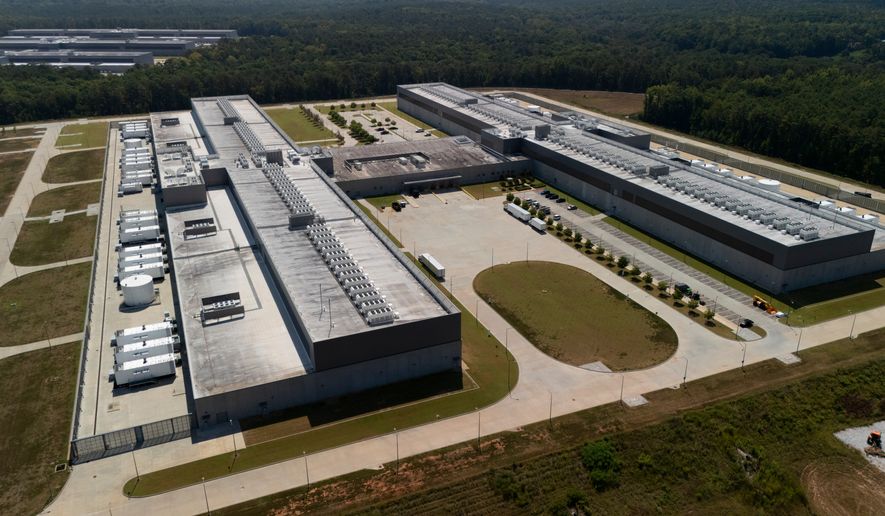
The backlash against data centers is catching even some politicians flat-footed, with reports of grassroots movements popping up across the nation to demand moratoriums, if not outright bans, on data center construction.
Now, local communities in states as diverse as New York, Texas, Virginia, Oklahoma and Indiana are considering legislation or executive orders to hit pause on new data center construction.
People were interested in these podcasts
This is a grievous mistake.
The case for data centers should start with what they make possible. They help securely store medical records, support the services people rely on every day, and enable researchers to analyze massive amounts of information at a level previously impossible.
We can now identify patterns across that data that researchers may not have seen before, leading to new medical discoveries, earlier diagnoses and better medical treatments. The benefits of the technology are increasingly part of improving our health and everyday lives.
When geographies that were formerly thriving but are now seeking their next economic opportunity, such as old Rust Belt towns and cities dotting the northern Indiana border, are turning away billions of dollars in investment and thousands of high-skill jobs, it is clear that the hysteria against digital server outposts has reached an unreasonable level.
Driving this frenzy are overblown reports that the enormous amount of energy data centers require is driving up energy costs for local residents. Yet with the entire nation experiencing ballooning energy bills over the past five years, data centers have become a convenient scapegoat.
A study by the Lawrence Berkeley National Laboratory on the factors influencing retail electricity prices identified grid upgrades, power-generating equipment, and raw materials such as copper as the primary culprits behind higher energy costs, not data centers. Furthermore, industry energy cost tracking shows that national rate increases were well underway prior to the recent artificial intelligence boom.
Other local concerns center on data centers’ high water use to cool their facilities because of the significant heat their servers generate. Nationally, data centers use less than 1% of total U.S. water withdrawals. More data centers are using closed-loop systems that reuse water or recycled water supplies separate from local water utilities, demonstrating yet again that artificial intelligence has an answer for nearly everything.
On March 4, President Trump convened AI technology leaders to pledge to account for the electricity that their data centers use. This would prevent residential energy bills from increasing, and it should further dissuade data center alarmists from tilting at windmills.
The reality is that data centers will pay their own way and enhance, not diminish, key local resources. In northern Indiana, where jobs and investment are in dire need, data centers are by far the most realistic path to expand opportunity and stabilize affordability for local residents.
The NIPSCO-GenCo model in northern Indiana is a public-private partnership that mirrors Mr. Trump’s pledge, putting guardrails in place that require GenCo to build its own natural gas energy supply while protecting the energy needs of residents and businesses.
This not only prioritizes ratepayers over the rapacious needs of data centers but also, under the GenCo agreement, will produce consumer credits totaling $1 billion over 15 years, a strong sign that residents will share in the economic benefits.
Data centers are creating thousands of high-wage jobs and injecting billions of dollars into local economies. When structured correctly and prioritizing a partnership with the community, this can be a big win for consumers and America’s AI future, as secure, high-skill jobs invariably attract capital that further expands opportunity and prosperity for all.
Data centers present a real opportunity, but it will not wait. Communities that act now, negotiate meaningful benefits that extend for decades, establish clear expectations for energy generation and require closed-loop water systems will be best positioned to capture the full value of this investment.
Northwest Indiana might not get a better opportunity to strengthen and diversify its economic base. The decisions made now will shape the region’s economy for generations.
• Gerard Daniel Scimeca is a co-founder of Consumer Action for a Strong Economy.
Please read our comment policy before commenting.