



Alaska could keep election-watchers waiting well past election night.
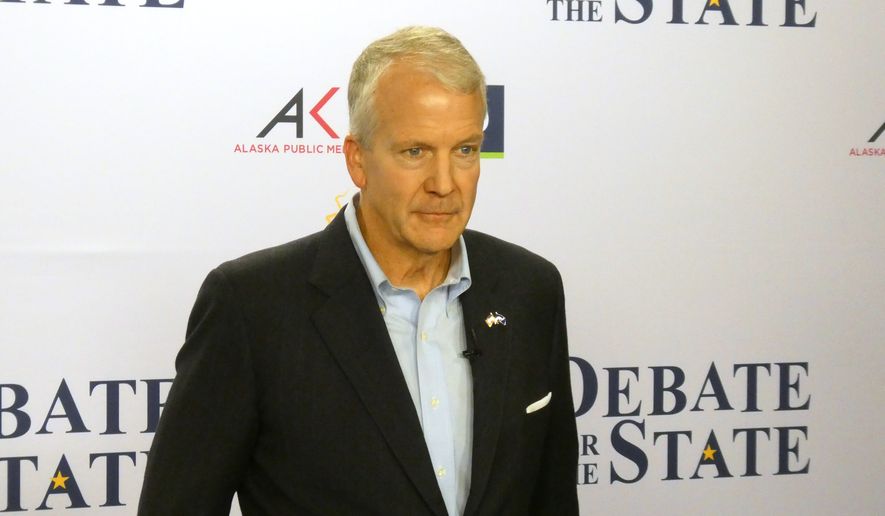
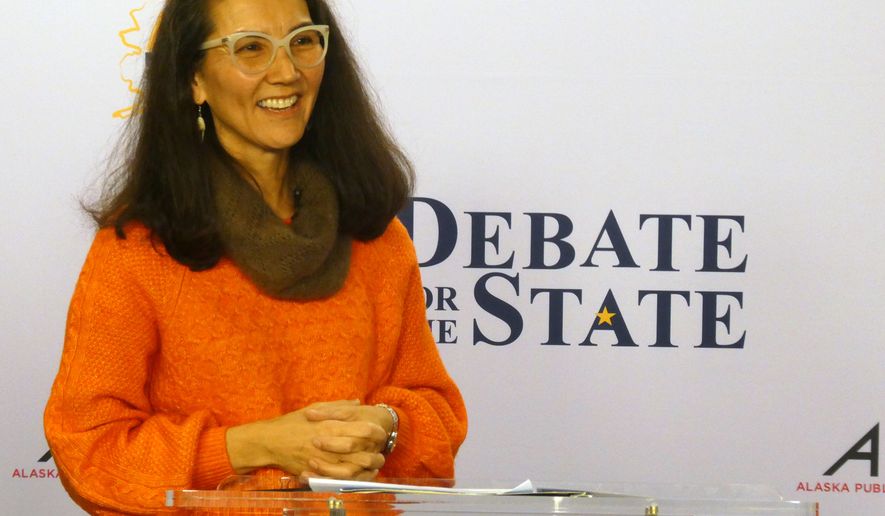
If the Senate race between Republican Sen. Dan Sullivan and Democratic challenger Mary Peltola is close, voters may not know the winner until Nov. 18, when the state runs its ranked-choice tabulation. That’s 15 days after the polls close.
Delays aren’t new in Alaska. According to FairVote, the state has long taken up to two weeks to count close races because absentee ballots keep arriving from remote communities, many reachable only by boat or plane.
People were interested in these podcasts
Meanwhile, state law bars officials from scanning ballots before Election Day. Overseas ballots can show up as late as 15 days after the election, too.
Throughout that stretch, the Division of Elections reports only first-choice vote totals. It doesn’t run the ranked-choice tally until every ballot is in.
Voters will also decide the future of the system itself. Ballot Measure 2 would repeal ranked-choice voting and open primaries, returning the state to closed party primaries.
The long wait could have national consequences. Democrats need a net gain of four seats to win back the Senate, and Alaska is one of the races they’re eyeing.
The latest RealClearPolitics polling average has Ms. Peltola, a former congresswoman, up 2.5 points on Mr. Sullivan, who has represented Alaska in the Senate since 2015.
Ms. Peltola has also out-raised Mr. Sullivan, $32.6 million to $13.8 million, though she had $2 million less cash on hand than her rival as of Sept. 30.
Last week, President Trump flew to Alaska to campaign for Mr. Sullivan, underscoring the stakes.
The ballot itself adds some intrigue. Another Republican named Dan Sullivan is also running. In the Aug. 18 primary, which advanced the top four finishers, Ms. Peltola won 49.5% of the vote, Mr. Sullivan got 41.4% and the other Mr. Sullivan took 2.5%.
Under Alaska’s ranked-choice system, a candidate who wins more than 50% of first-choice votes is elected outright. If no one gets there, the last-place finisher is eliminated, and those ballots go to voters’ next choices. That repeats until someone clears 50%.
Past elections show how long the count can take, as both Sen. Lisa Murkowski’s 2010 victory and Mark Begich’s 2008 win took the full 15 days.
Gail Fenumiai and Jeremy Johnson, former election officials in the state, recently inked an op-ed saying that ranked-choice voting is not to blame for delays in counting election results.
They said the state could change the law to allow absentee ballots to be scanned and processed before Election Day, and allow same-day voter registration updates at polling locations.
Recent elections also show how much the tallies can change as ballots come in under the ranked choice system, which voters adopted by passing a ballot measure in 2020.
Ms. Murkowski trailed challenger Kelly Tshibaka in first-choice votes for days after the 2022 election before moving ahead as more ballots were counted.
When the ranked-choice tally was completed on Nov. 23, she prevailed 53.7% to 46.3%.
FairVote also noted that in 2024, the campaign to preserve ranked-choice voting in Alaska overcame an early deficit during the state’s 15-day counting period.
Please read our comment policy before commenting.