



President Trump is doling out cash and scrambling to lower fuel prices, hoping the last-ditch moves will mollify midterm voters tired of high costs and war-related headaches.
Mr. Trump has authorized dividend checks to troops, Medicare enrollees and certain Obamacare customers, and he is promising $5,000 to every adult citizen if the GOP retains its congressional majorities.
He’s going all-out on diesel, hoping to blunt shortages from the wars in Iran and Ukraine by authorizing the sale of red-dye fuel for road vehicles and touting a controversial deal for hundreds of thousands of tons of Russian fuel.
People were interested in these podcasts
Mr. Trump is pushing these 11th-hour actions to energize voters without help from Congress. Lawmakers left Washington until the midterms, leaving him to find quick fixes to affordability concerns at the heart of the November elections that will determine control of Congress.
Mr. Trump said the president’s party typically struggles in the midterms, so he’s looking for ways to buck the trend.
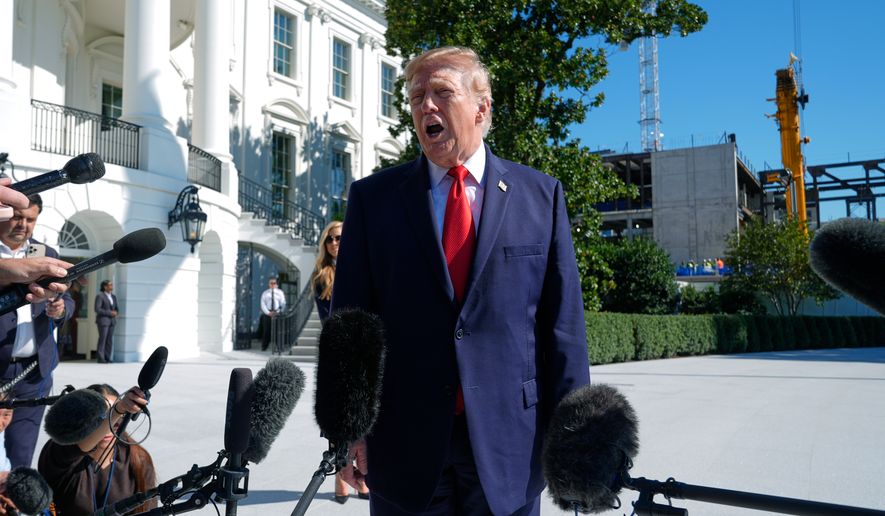
“Nobody’s done what I’ve done, nobody, not even close. But no matter how good they seem to be, they’re at a big disadvantage,” Mr. Trump told White House reporters Tuesday.
Voters are pointing to high costs as their primary worry this cycle, so Mr. Trump is trying to put money in their pockets while pointing to the long-term effects of his One Big Beautiful Bill, which extended tax cuts and erased taxes on tipped income. He also says foreign investments from his tariff agenda will create jobs.
But inflation remains above the Federal Reserve’s 2% target, so central bankers raised interest rates in September. Mortgage rates are at their highest levels since November 2023.
Fears about the national debt are driving up Treasury yields, as bond owners demand a premium for holding government debt.
Some economists warn that Mr. Trump’s attempt to ease pocketbook headaches with government checks will exacerbate deficits.
“Trump’s most recent proposals are, for now, nothing more than theatrics, but, if delivered on, they are potentially dangerous to the extent that they lead to more fiscal malfeasance,” said Steve Hanke, a professor of applied economics at Johns Hopkins University who served on President Ronald Reagan’s Council of Economic Advisers.
Ross Baker, a politics professor at Rutgers University, said Mr. Trump and the GOP will have a hard time using cash to overcome “deeply implanted” concerns about the Middle East conflict, energy prices and perceived “excesses” of Immigration and Customs Enforcement agents carrying out sweeping deportation orders.
“You can’t stop a glacier with a flamethrower,” Mr. Baker said. “It’s not only the president who is saddled with these problems, but also his party in Congress.”
Mr. Trump is not shying away from his send-’em-checks proposals.
He posted a video on social media Monday promising the $5,000 checks, saying the cash will flow if Republicans win the House and Senate but not if Democrats take control of either chamber.
“The only caveat on the Trump dividend is that you have to spend the money in the United States of America, if you don’t mind,” Mr. Trump told supporters Monday in Youngstown, Ohio. “Gets re-circled, gets recycled.”
Earlier, Mr. Trump sent a one-time $1,776 “Warrior Dividend” payment to more than 1 million U.S. military service members.
He is sending $500 checks to 1 million Obamacare customers in 30 states. The checks went to people who did not receive federal subsidies under the program and faced higher premiums because of Obamacare user fees that fund the federal insurance exchange.
Further, Mr. Trump sent one-time $90 payments to more than 20 million Medicare enrollees to offset Part B premiums.
Sen. Ron Wyden, Oregon Democrat, called the Medicare checks a bribe.
“This is another desperate attempt by a failed president to escape Americans’ revulsion with his failed agenda, amounting to one tank of Trump-inflated gas,” Mr. Wyden said.
His tank-of-gas comparison hit Mr. Trump where it hurts.
Mr. Trump boasted for years about low gas costs under his administrations. Yet his war on Iran led to energy shortfalls and higher gasoline and diesel prices, forcing him to pry loose more supply for global markets.
He is using a naval blockade in the Middle East to ferry out more oil, leveraging quasi-control of Venezuela to tap into crude reserves and touting Russian President Vladimir Putin’s decision to export diesel despite earlier restrictions from Ukraine’s attacks on Russian refineries.
Lawmakers in both parties said the Russia deal undercuts a recent law, named for the late Sen. Lindsey Graham, that would put tariffs on nations that buy Russian fuel and fund their war machine.
“I oppose President Trump’s decision to lift sanctions on the purchase of diesel from Russia,” Sen. Susan Collins, a Maine Republican who faces reelection, said on social media. “I was a cosponsor of the Russian sanctions law, which the President recently signed but is now not following.”
Mr. Trump said the outrage is selective, pointing to European Union purchases of Russian gas that totaled nearly $250 billion since the start of the Ukraine war.
“I made the right choice for the American People — ALWAYS, AMERICA FIRST!” he said Monday on social media.
Wayne Winegarden, a senior fellow in economics at the Pacific Research Institute, said Mr. Trump is trying to undo damage from his own policies, including tariffs and an overseas war. He said recent moves “will not move the needle in terms of fuel costs or inflation.”
“The potential increase in diesel supply from the agreement with Russia is not meaningful,” he said. “The financial support to Russia risks prolonging the conflict — and therefore price volatility – which works against the stated goal.”
Mr. Trump defended the diesel agreement on Tuesday as a way to decrease prices globally.
“That’s not being released to us. That’s a diesel deal that’s going to be released into the world,” Mr. Trump told White House reporters Tuesday as he departed for Alaska.
Mr. Winegarden said cutting inflation, meanwhile, will be a longer-term project.
“The Federal Reserve has done a good job focusing on inflation and reevaluating its current role in the financial system,” Mr. Winegarden said. “Staying the course on these reforms and not accommodating any increase in federal spending is essential for bringing inflation down.”
Contact the author

Please read our comment policy before commenting.