



OPINION:
The people of the United States enshrined in the U.S. Constitution our collective duty to “provide for the common defence.” As a U.S. Army veteran, the Chairman of the House Permanent Select Committee on Intelligence (HPSCI), the Founder and Co-Chair of the bipartisan Congressional Explosive Ordnance Disposal (EOD) Caucus, and a proud American, I take my duty to defend this country seriously.
Since 1789, we have been tested time and again by adversaries and enemies, and we have always prevailed. How we did so wasn’t accidental; it was intentional. We gathered intelligence, we planned, we tested and we used our best and bravest to our country’s advantage. In the 25 years since the horrific September 11 attacks, we have been engaged in a global war on terror and a continuous operation to learn from that attack and stop the next one.
Over the past year, HPSCI has held multiple open hearings, including the first field hearing in the committee’s history, where we examined an increasingly contested homeland in which China, Russia, Iran and other adversaries do not separate espionage, cyber operations, sabotage, and traditional intelligence collection in the way our government is organized to counter them. They run campaigns that blend all these activities, exploiting the seams between federal agencies, state and local governments, the private sector, and academia to steal our technology and secrets, disrupt our critical infrastructure, and undermine our way of life.
People were interested in these podcasts
A growing chorus of voices is now calling for action to transform our counterintelligence enterprise because the scale of the threat and what is at stake demands it. These priorities have guided our work on the Intelligence Authorization Act. This challenge cannot be met by simply adding another office or reporting requirement. We are advocating for intelligence integration to connect information sitting in disconnected silos, resourcing and professionalization of our counterintelligence workforce, sharper analytic rigor, and an enhanced ability to detect bad actors traveling to and within the United States.
This whole-of-government approach to counterintelligence must include a segment of the defense enterprise that is often overlooked; our EOD operations.
EOD techs are trained to retrieve valuable forensic data from explosive devices in the field. Whether lifting fingerprints from IEDs in Iraq to determine the bomb maker or breaking down devices for analysis at intelligence community (IC) labs to identify component origin, new enemy developments, and techniques, EOD techs have uncovered intelligence that has been incredibly helpful in understanding Iranian drone capabilities as well as the inclusion of Chinese- and US-originated components in the downed drones in Ukraine and the Middle East. EOD forces play a pivotal role in information gathering for the IC.
That’s why I have been advocating to create a single intelligence officer within the IC to compile data from EOD units for dissemination across the IC. Streamlining and connecting data retrieval and analysis of developing threat information to IC decision makers is critical to defending America.
After 9/11, Congress transformed our security architecture because our institutions couldn’t simply be asked to work harder; they had to work smarter with new tools. We built new mechanisms for integration, information sharing, identity screening, joint operations, and strategic coordination. These reforms helped protect the country. But two decades of focus on counterterrorism meant less attention on how adversaries like the Chinese Communist Party were targeting America. We should not have to wait for another catastrophic failure to force the next evolution. Our goal is to drive that transformation now before the next 9/11-level event strikes our nation at the hands of Russia, China, or Iran. That means every piece of our defense enterprise, including EOD, must be involved in sharing intelligence and supporting the whole-of-government approach to national defense.
The American people have stood firm for generations in supporting our common defense. Through continued investment in our warfighters, intelligence capabilities, and our defense industrial base, our country will be better protected at home and abroad and our Constitutional duty will be fulfilled.
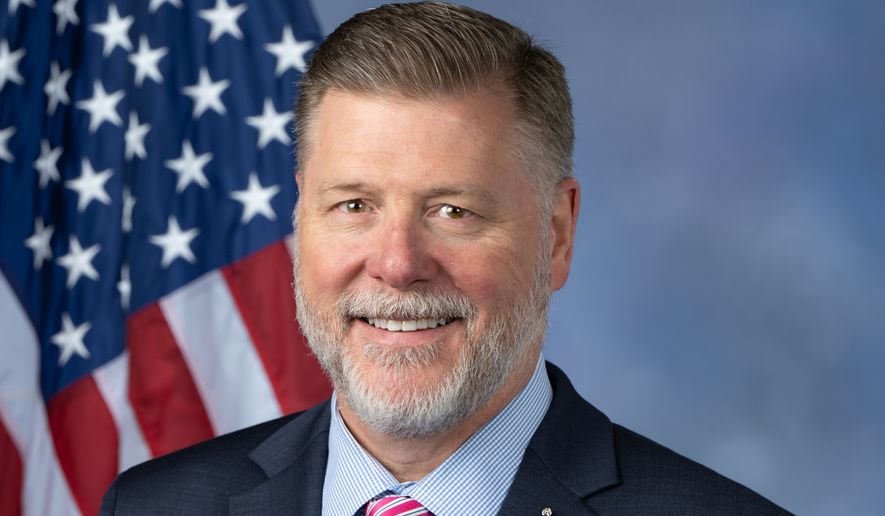
• Eric A. “Rick” Crawford is Chairman of the House Permanent Select Committee on Intelligence (HPSCI) and represents Arkansas’s First Congressional District in the U.S. House of Representatives. First elected in 2010, he began serving in Congress in January 2011 and is currently serving his eighth consecutive term. He has served on the HPSCI since 2017 and was appointed Chairman in January 2025.
Please read our comment policy before commenting.