


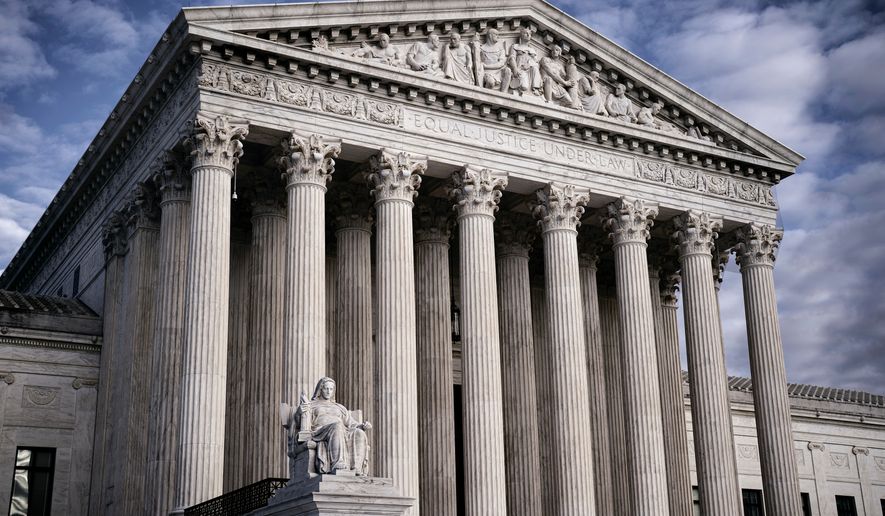

The Supreme Court will kick off its new term Monday with a case testing the ability of states and localities to try to punish energy companies for the impacts of climate change.
Sen. Kevin Cramer, North Dakota Republican, said if Boulder, the Colorado jurisdiction that sued Suncor Energy for damages, prevails in the case, it would create a national mess of energy policy.
“At the end of the day, you simply can’t have a patchwork of laws,” Mr. Cramer said at The Washington Times’ “Court Watch” Climate Lawfare forum on Wednesday.
People were interested in these podcasts
The case before the justices will determine whether state laws can be wielded against energy firms when it comes to climate impacts.
Boulder argues that the firms misled the public about climate change, and so can be held liable under Colorado’s consumer protection laws.
The companies say trying to use state law to control activities in other states is a stretch too far.
West Virginia Solicitor General Michael Williams, also appearing at The Times’ event, said the high court will have to decide whether state tort claims trample on Congress’ right to set interstate commerce policy and, even if they don’t, whether the federal Clean Air Act preempts states from trying to act.
“At the end of the day this really is another opportunity for the Supreme Court to figure out who decides these important federal, national-level issues,” Mr. Williams said.
More than 30 climate-impact lawsuits have been filed against energy companies, and the court’s ruling could wipe them away or allow them to continue.
The Trump Justice Department is backing the energy firms.
At least four justices had to agree for the high court to take up the appeal.
After the case was granted — just a week before arguments were heard — Justice Samuel A. Alito Jr. announced he would not be participating in the case.
SEE ALSO: Climate Lawfare: Senator says it wears down energy firms, but courts are pushing back
Justices don’t have to give a reason for sitting out a case.
Climate activist groups had called on him to recuse himself, citing his ownership of stock in several energy companies, though none of them are parties to the specific case. The activists said the outcome of the case could affect the firms Justice Alito does have an interest in.
He had declined the recusal as the case made its way to the justices, through briefing and the grant of certiorari to hear the case.
Mr. Williams said the case really should not boil down to one vote, but it is tough for the companies to lose Justice Alito’s participation.
“It makes it a harder road for the energy companies and the United States’ position,” he said.
Even as the court takes up the issue, Mr. Cramer said there’s room for Congress to act.
He pointed to legislation just announced by a bipartisan group of senators on energy permitting reform. He said it would limit what sorts of plaintiffs can sue, and how long they have to challenge an action.
The outcome, he said, could be to constrain the onslaught of cases.
“If everybody’s allowed to be a plaintiff, guess what? You don’t even have to come close to being successful to screw the whole thing up,” Mr. Cramer said.
Contact the author


Please read our comment policy before commenting.