


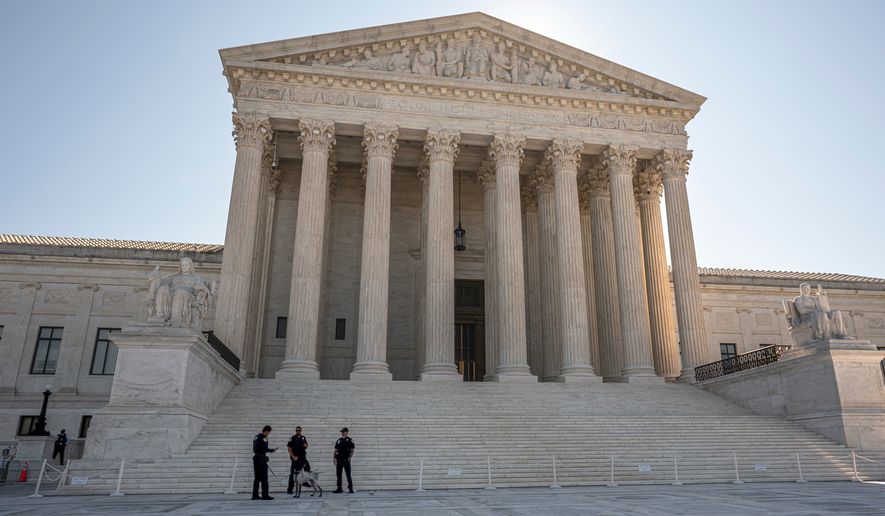

The Supreme Court said Thursday it will take up a new religious liberty case that could determine how much churches and other houses of worship must bow to local land-use rules.
The Missionaries of St. John the Baptist, a group of Catholic priests, wanted to build a grotto with a shrine to the Virgin Mary next to its church in Park Hills, Kentucky. It won a variance from local officials to proceed with construction.
But the state’s Supreme Court said the size of the grotto violated local zoning laws and rejected the priests’ defense that its religious practice trumped those laws.
People were interested in these podcasts
At issue is the Religious Land Use and Institutionalized Persons Act, passed in 2000, which protects houses of worship from unfair zoning and landmarking laws.
The priests said that law should guarantee them the right to build, as the shrine is carrying out a religious mission. And they said building it next to their church, rather than in another location, is crucial to that mission. They said that was consistent with Mary’s directions in the Lourdes apparitions in France.
Two Park Hills residents, Joel and Elizabeth Frederic, opposed the plans, fretting about increased traffic.
They took their case to the courts, where first an appeals court and later the Kentucky Supreme Court agreed with them.
The judges said the priests knew the ordinance would limit construction even before they leased the land.
Those courts said a smaller shrine would be permissible in another location, and that would let the church pursue its mission, albeit in line with local land-use rules.
The priests pointed out that golf courses and country clubs have been granted exceptions and said that same grace must be applied to religious organizations under the 2000 law.
“The question is whether a complete prohibition on constructing a shrine to the Virgin Mary on a selected location is a substantial burden on that contemplated form of religious exercise — not whether petitioner is able to build a smaller grotto in a different place,” they argued in their petition to the justices.
It takes at least four of the nine justices to agree for a case to be granted.
The high court also announced Thursday that it would take a case about military veterans’ retirement pay and how it’s handled in some divorce cases.
And the justices added another immigration detention case to their docket.
Contact the author

Please read our comment policy before commenting.