


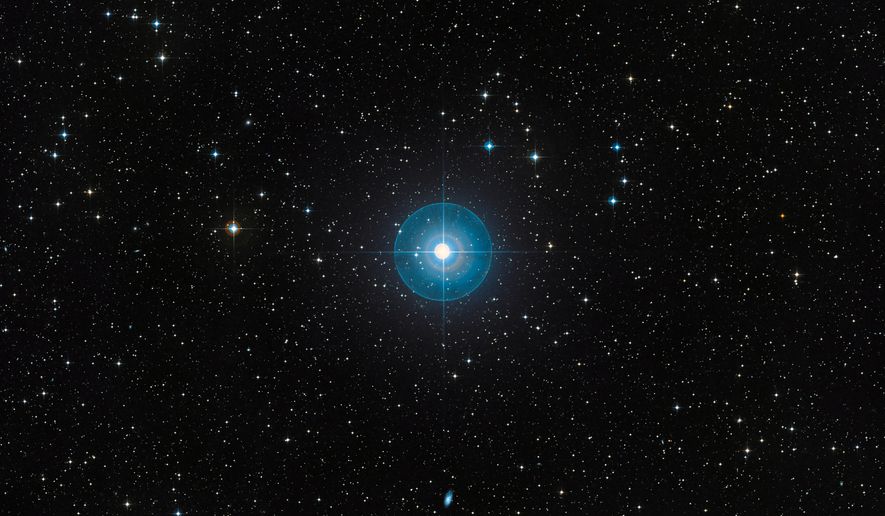

A gigantic structure in space lies 63 light-years away, and it’s 93 billion miles long.
The structure, in the Beta Pictoris system and dubbed “Cat’s Tail,” is believed to be made mainly of dust. It was first seen in infrared light by NASA’s James Webb Space Telescope in 2024.
New pictures taken by the Hubble telescope reveal more detail of the structure. A story in last month’s Astrophysical Journal Letters details the University of Arizona’s team being wowed by the “Cat’s Tail.”
People were interested in these podcasts
“Oddly, this feature had previously only been seen with the James Webb Space Telescope, which detects infrared light, but remained invisible at shorter wavelengths, which has puzzled the community for a while,” said Arin Avsar, a University of Arizona doctoral student Arin Avsar in a statement. “We think the Cat’s Tail has eluded our observations in visible light until now because of what it’s made of.”
Scientists think the structure resulted from Pluto-like planetary bodies colliding and sending dust across great distances.
The Beta Pictoris system is 23 million years old, relatively young by space terms. By comparison, our solar system is 4.6 billion years old.
Please read our comment policy before commenting.