



OPINION:
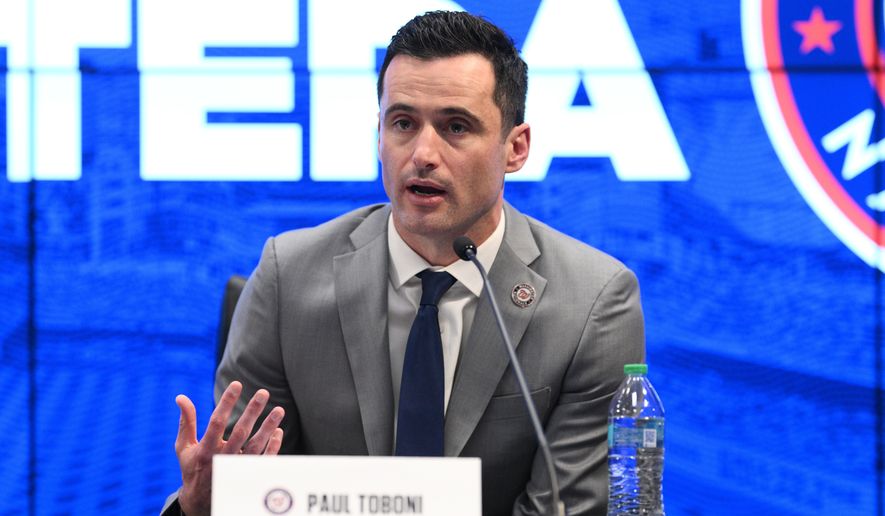
It’s shopping time for baseball teams, when personnel bosses like Washington Nationals President Paul Toboni look for new faces to put on the field — and in the clubhouse — to prepare their teams to compete in a baseball universe where the Milwaukee Brewers are the world champions.
The Nationals seem well-positioned to make those moves. They were surprisingly competitive for much of the 2026 season, finishing with 77 wins — a dozen over the over/under number of 65 that bookmakers set.
Even after Toboni tore the heart out of the season at the trading deadline by dealing away their best pitcher, Foster Griffin, and one of their most productive bats, Luis Garcia (never let a wild-card race get in the way of a rebuild), the Nationals recovered to go .500 in September.
People were interested in these podcasts
Washington is also well-positioned financially to spend — as if such a concept exists for the owners of this team. Because the Stephen Strasburg $245 million contract albatross is off the books, the Nationals now have the lowest payroll in baseball — $79 million after everyone on the roster is paid for next season — about $50 million less than last year’s bottom-feeding spending.
In other words, even if the Lerners spend what they did last year — an embarrassingly low amount already — it will give Toboni money to spend on free agency or increased salaries through trades.
If indeed he has the money to spend, Toboni will likely be careful whom he spends that money on — not just for production, but also the chemistry of picking players who will fit in with the culture he appeared to have built within the organization.
The team president seemed to have created a special baseball environment built on new-age baseball, fueled by analytics and progressive coaching. Agree with the methods or not, the players appeared to have embraced the culture and thrived on it.
Ironically, I think it was the Lerners’ refusal to spend money on payroll this past season that helped Toboni’s culture take hold. I’m not sure he would have even been willing to bring in veterans earning moderate salaries at best, let alone big paychecks.
The risk could have been what happened in Boston.
After what should have been viewed as a successful season, coming back after a 32-46 start to finish 52-25 and make the playoffs, a lot of bad feelings were in the Red Sox clubhouse after being crushed by the Yankees in the wild-card series. Veterans sounded off on the team’s reliance on analytics.
Boston’s starter Sonny Gray was not happy he was taken out by manager Chad Tracy with two outs in the fifth inning down 1-0 — after throwing just 70 pitches.
“I think I’m the best pitcher in the American League going through the order the third time,” he told reporters. “I think that’s a fact. I would have liked to live or die with me in that moment, but that’s the competitor I am. I think you can probably ask the (players), and they felt the same way.”
First baseman Willson Contreras also took a shot.
“We have to do a lot of different stuff, and it’s not enough when you have talent or you have data or you have computers telling you what to do,” he said. “This is baseball, and the data is here to help us. But at the end of the day, you’re going to need experience and veteran guys to win games. There’s a lot of stuff that I would love to say, but I’ll stay like that.”
I’m pretty sure if there was a Jayson Werth in the Nationals clubhouse, he would not have allowed several hours of pregame infield workouts and individual batting grading sessions without howling about it and letting the younger players know this wasn’t the way things had been done.
Toboni wrote a letter to season ticket holders Wednesday that didn’t offer much in the way of commitment to spending.
“How do we improve our roster?” he asked. “How do we help our players develop better and faster? How do we create an environment that brings out the best in everyone? What can we do today that will make us a stronger organization six months from now? Maybe most importantly: Is our message to those who work here — players and staff — matching their experiences?”
Those questions never go away. They shouldn’t.
“Our progress in 2026 does not dictate what 2027 will bring,” Toboni wrote. “We cannot assume that the same trajectory will continue. We must find new ways to improve, remain open-minded enough to challenge our own assumptions and hold ourselves accountable to the standards we are establishing. That is what my staff and I remain focused on.”
The whole shopping experience may be held back by the anticipated lockout of players by the owners come Dec. 1 in their labor dispute. But when they open the doors, Toboni may focus only on players who buy into the culture — and come cheap.
• You can hear Thom Loverro on “The Kevin Sheehan Show” podcast.
Follow the author
Please read our comment policy before commenting.