



SEOUL, South Korea — Rival lawmakers sparred Tuesday over the state of South Korea’s alliance with the United States, a day after key Cabinet members blamed for bilateral frictions were given the boot.
Monday’s Cabinet reshuffle was “an admission that South Korea-U.S. ties are not being well managed,” charged National Assemblyman Kim Dai-sik of the conservative opposition People Power Party during a television debate.
Hong Kee-won of the ruling Democratic Party of Korea stated that his party sought to develop the partnership “into a strategic alliance that encompasses cooperation in advanced industries and economic security” but admitted gaps between Seoul and Washington.
People were interested in these podcasts
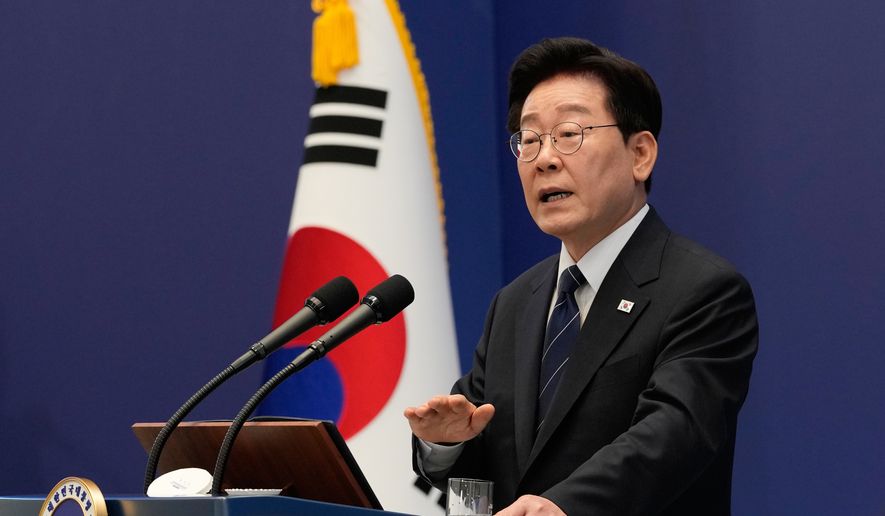
The discussion came a day after President Lee Jae-myung announced a number of ministerial-level changes.
The most recognizable heads to roll were those at the top of the Ministry of Foreign Affairs, the Ministry of Unification, and the National Intelligence Service.
The Unification Ministry’s Chung Dong-young, the leading voice in the Lee government for engagement with North Korea, was the highest-profile victim.
Washington reportedly soured on Mr. Chung when, at a National Assembly hearing in March 2026, he referenced a shadowy North Korean uranium-enrichment site at Kusong, which U.S. officials reportedly stated was a release of classified information.
Mr. Chung shot back that the Kusong site had already been revealed in the public domain.
NIS Director Lee Jong-seok may have been a victim of related distrust.
South Korean media reports — which were not disputed by the NIS — had Seoul being booted by Washington from a June intelligence briefing with Japan on North Korean cyber threats because of American frustration over NIS leaks.
While there were no specific issues linked to Foreign Minister Cho Hyun, the long deterioration of Seoul-Washington relations might have led Mr. Lee to show Mr. Cho the door, multiple media outlets opined.
South Korea’s leading daily, the conservative Chosun Ilbo, said in an editorial, “This reshuffle replaced key figures in diplomacy and security who had faced criticism for worsening South Korea-U.S. relations. … The reshuffle was framed as ‘personnel for maximizing national interests,’ but it was effectively a purge.”
“Reshuffle of Seoul’s foreign affairs, security officials appears aimed at breakthrough with Washington,” was the headline in the Hankyoreh, the leading left-leaning newspaper.
“The move appears aimed at remedying persistent tensions and mistrust in Korea-U.S. relations that have spilled over into a range of issues,” it added.
Whether incoming officials are capable of bridging a yawning bilateral divide, however, is questionable. Multiple issues are roiling the relationship, from the economic to the commercial to the strategic.
In late 2025, South Korea — an export powerhouse that customarily records multibillion-dollar trade surpluses with the U.S. — pledged to invest $350 billion in the United States in order to endure 15% tariffs on its U.S. exports, rather than U.S. President Trump’s threatened 25%.
So far, $22.3 billion of that sum has been invested: under a bilateral memorandum of understanding, South Korea’s investments are capped at $20 billion per year, to safeguard national foreign exchange reserves.
Even so, Mr. Trump has stated his frustration at the slow pace of the investments. He has also announced — to Seoul’s considerable consternation — that South Korean firms are set to invest massively in Alaskan energy projects.
Washington has also offered a sympathetic ear to the management of Coupang, a U.S.-listed online distributor that has been investigated in South Korea. Coupang’s position is that it is being unfairly victimized as a U.S. company.
Seoul’s position is that Coupang, which was founded in and does the bulk of its business in South Korea, is guilty of a massive data breach.
Many Koreans are irked that rather than admitting guilt, Coupang has resorted to Washington lobbyists.
Meanwhile, a deal to provide South Korea with nuclear submarine technologies and fuel OK’d by Mr. Trump in 2025 has gone nowhere.
Alliance ties are strained.
Mr. Lee has made clear his ambition to bring South Korean troops out from under U.S. command in wartime, instead placing them under sovereign authority. Serving and retired U.S. officers say South Korea is not ready for that responsibility.
Yet more differences between the two capitals relate to the use of U.S. Forces in Korea for off-peninsula missions, dubbed “strategic flexibility.”
While Seoul maintains that the threat joint forces face is North Korea, the Pentagon, notably its Under Secretary for Policy Elbridge Colby, considers China the “pacing threat” in the region.
That position worries Seoul, which fears it could be dragged into a potential China-U.S. confrontation.
Contact the author

Please read our comment policy before commenting.