


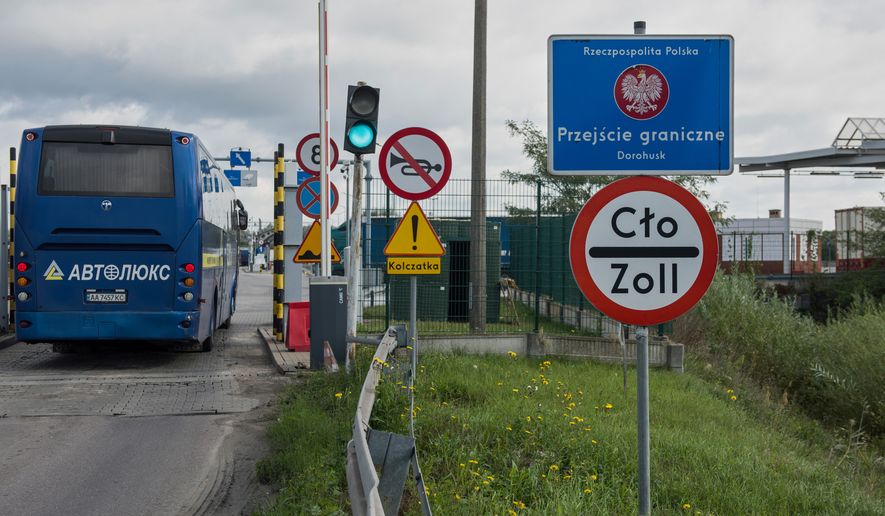

PARIS — Poland sent police and troops to its border with Russia’s Kaliningrad exclave this month after intelligence services warned of potential sabotage, a deployment that may have thwarted a Russian false-flag plot to cause heavy casualties on the border and pin the blame on Ukraine.
Polish Prime Minister Donald Tusk said Thursday that the buildup appeared to have blocked “plans or ideas” for a provocation. “We have no certainty about that, of course,” he told reporters on a flight home from Berlin, where he had met with Ukraine’s allies.
The Polish daily newspaper Rzeczpospolita, citing senior sources familiar with the Polish operation, said Russian intelligence services had planned to sabotage Polish territory in late October or early November.
People were interested in these podcasts
The scenario included a possible border crossing and a staged attack on a site inside Kaliningrad. Britain’s The Times newspaper, citing the Polish reporting, said Russia’s GRU military intelligence service is suspected of being involved in the plot.
“The goal was to halt aid to Ukraine,” one of the newspaper’s sources said. Another said Polish services had intelligence on specific targets, whose identities remain undisclosed.
One source compared the plan to the 1939 Gleiwitz incident, in which Nazi Germany staged an attack on a German radio station, using the incident as justification for its invasion of neighboring Poland.
Polish Defense Minister Władysław Kosiniak-Kamysz said Wednesday that Warsaw had advance warning of a Russian provocation and took steps to prevent it. Poland’s military counterintelligence chief, Brig. Gen. Jarosław Strozyk, told Radio ZET that Polish and allied sources had reported the threat. He cautioned that such intelligence can be difficult to assess.
The Kremlin has not publicly addressed the report. In July, spokesman Dmitry Peskov dismissed earlier warnings of a possible Russian strike on Poland as mere “horror stories.”
Warnings from allies
On Nov. 2, Poland’s national police chief, Marek Boron, said police, soldiers and border guards were working together in two northeastern provinces. Authorities had received warnings that armed groups might try to cross the border in the first half of November.
Shortly after midnight the next day, border guards spotted people with flashlights on the Russian side. Mr. Tusk said Poland quickly sent forces to the area. The people withdrew without crossing the frontier, Polish radio station RMF FM reported.
Their identities and any connection to the reported plot, however, remain unclear.
Polish intelligence coordinator Tomasz Siemoniak met CIA Director John Ratcliffe at the agency’s headquarters on Sept. 8. Two days later, Mr. Tusk said he had received a detailed report from the CIA director about possible incidents in the coming months. The prime minister also cited an October warning from U.S. Gen. Alexus Grynkewich, NATO’s top commander in Europe.
Whether either briefing covered the alleged Kaliningrad plot remains unclear.
In an Oct. 23 warning, Ukraine’s military intelligence agency named Kaliningrad as a possible site for a Russian false-flag operation. It said Moscow was considering attacks that it could then blame on Ukraine in a bid to weaken Western support for Kyiv.
Lithuania’s defense minister said his country’s intelligence officers discussed the border threat with their Polish counterparts on Nov. 3.
The Institute for the Study of War think tank said those public warnings and reinforcements likely deterred or disrupted the alleged operation. An apparent Ukrainian strike from Polish territory, its analysts said, could have given Moscow a pretext to accuse NATO of aiding an attack on Russia.
In a separate case, Polish prosecutors disclosed this month that they had indicted a Ukrainian citizen accused of helping two other Ukrainians sabotage railway infrastructure last year. Prosecutors say the suspect worked for Russian intelligence.
Missiles on Polish soil
Be it through Russian hybrid warfare or missiles and drones, the war in neighboring Ukraine is getting ever closer to Poland.
On Friday, a Russian Kh-101 cruise missile came down near the southeastern Polish village of Nowy Lipowiec. Polish officials found a second apparent missile and suspected drone debris at two other sites. One of the objects exploded. No injuries were reported.
Ukraine’s air force said Russia had fired about 100 missiles and 400 drones in its overnight barrage against the country.
Authorities evacuated air traffic controllers from the tower at Rzeszow-Jasionka Airport, a major gateway for Western military aid to Ukraine.
Mr. Tusk said he suspected a deliberate provocation, citing the timing of military exercises in Poland for a possible postwar mission in Ukraine. He said U.S. officials would be given access to the debris.
A day earlier, President Trump said previous Russian drones and missiles had landed in Poland “by mistake.”
Meanwhile, NATO scrambled fighter jets. NATO Secretary-General Mark Rutte is due in Warsaw on Saturday, and Poland’s defense minister said he would seek more support for the operation NATO launched after Russian drones entered Polish airspace last year.
As investigators examined the wreckage, Poland’s Digital Affairs Ministry said accounts known for spreading anti-Ukrainian material were already circulating false claims that Kyiv was behind the blast.
“I was making coffee, getting the kids ready for school, and then I heard a whistling sound,” local resident Natalia Szponar told Reuters. “And then a thud.”
Contact the author

Please read our comment policy before commenting.