


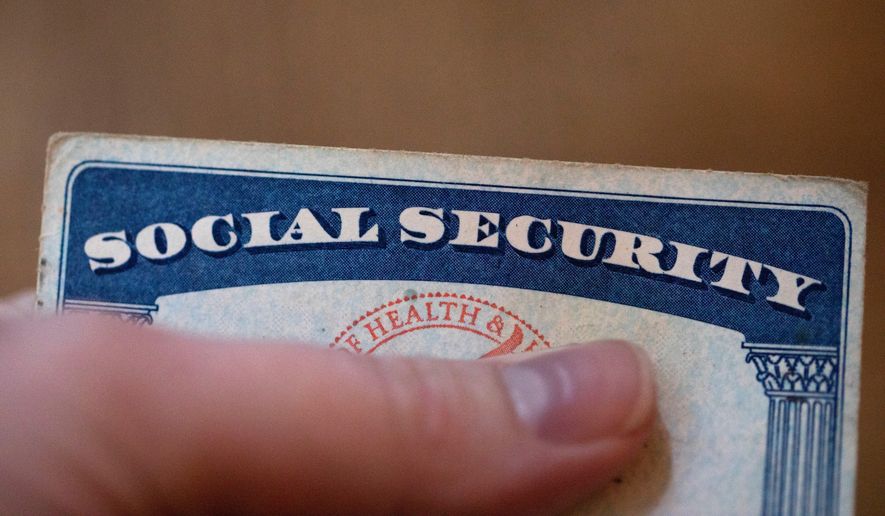

Retirement and survivor benefits could be cut 22% after the Social Security retirement trust fund is projected to run out in late 2032.
The automatic cut is unrelated to the 3.6% cost-of-living increase the Social Security Administration announced Oct. 14. It would take effect if Congress does not act before the fund is depleted.
The Old-Age and Survivors Insurance Trust Fund, which pays retirement benefits to workers and survivor benefits to their families, is projected to run out in the fourth quarter of 2032, the program’s trustees said in a June 9 report.
People were interested in these podcasts
After that, incoming payroll taxes would cover only 78% of scheduled benefits.
The Congressional Budget Office projects a deeper cut.
The agency expects the fund to be exhausted in fiscal 2032, and the Committee for a Responsible Federal Budget, a nonpartisan think tank, said the CBO’s projections point to a cut as high as 26%.
The loss would also vary by household.
The Committee for a Responsible Federal Budget estimated that under the trustees’ 22% cut, a typical dual-earning couple retiring in 2033 would lose $16,900 a year. A low-income dual-earning couple would lose $10,200, and a high-income couple would lose $22,300.
The cut would apply to retirees, survivors and their dependents.
A separate disability trust fund is projected to pay full benefits through at least 2100.
The effect would be greatest in older states.
In Maine and West Virginia, 27% of residents receive Social Security retirement, survivor or disability benefits, followed by Vermont at 26%. The national share is 20%, according to Social Security Administration data.
The projected depletion is six years away, one quarter sooner than last year’s report projected, and lawmakers have not reached an agreement on a fix. The trustees urged Congress to act in a timely way so changes can be phased in gradually.
Contact the author

Please read our comment policy before commenting.