


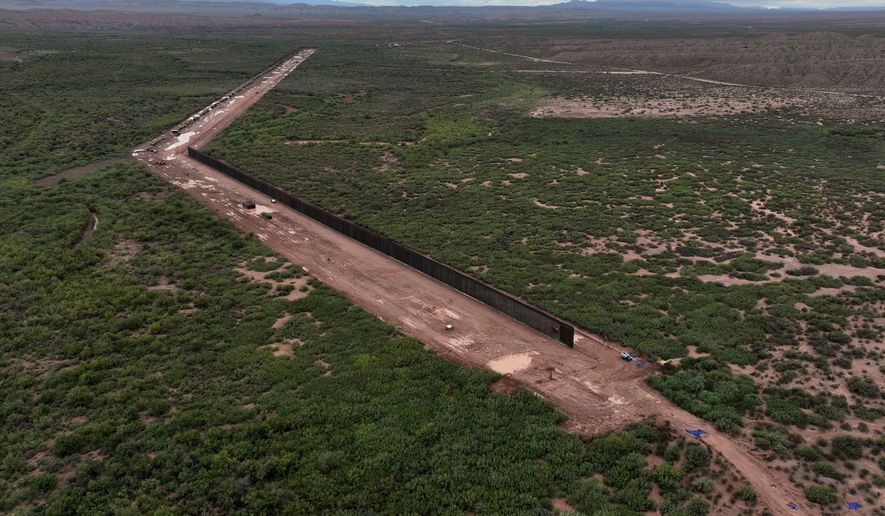

The southwestern border has become so calm that a recent visitor reported that Border Patrol agents are almost bored by the lack of activity.
Agents are called out for fewer search-and-rescue operations; border deaths are down 80% since President Trump took office; drug seizures are up; and the ratio of criminal arrests has soared as the Border Patrol has to spend less time tracking down and caring for illegal immigrants and can devote more time to scouring the people and contraband that do make it across.
Gotaways — migrants who are detected but manage to evade capture — have also plummeted, from thousands a day in 2023 to more than 800 a day in 2024 to an average of just dozens per day now.
People were interested in these podcasts
Some days, there are zero gotaways, said Todd Bensman, who served as a senior adviser to the Homeland Security Department and the Border Czar’s office during the Trump administration and is now a senior research fellow at The Heritage Foundation.
“I would argue that Border Patrol and the military forces down there don’t have enough to do,” Mr. Bensman said. “They’re bored. They get very excited when there’s any kind of movement anywhere.”
It is a shocking turnaround for a border that several years ago was the most chaotic in history, with agents regularly recording daily arrest totals of 10,000 illegal immigrants. Now the Border Patrol averages fewer than 300 a day.
The arrest numbers are just part of the story.
Search and rescue operations have dropped from more than 37,000 in fiscal year 2023 to just 1,129 in the just-completed fiscal year 2026, meaning fewer people are endangered.
Drownings, exposure deaths and fatal falls from the border wall are also rarer.
Less chaos also means more of what comes through is being spotted. Border Patrol agents guard the 1,954-mile boundary; Customs and Border Protection officers man the official border crossings.
“I walked that border for almost 30 years, and I can stand here today and attest to you today, it is more secure than it has ever been in our history. Not just because of the numbers, but because we know more today about what’s crossing the border than we ever have in our history,” CBP Commissioner Rodney Scott told reporters earlier this month.
Smugglers are starting to change tactics.
With the land largely denied to them, they have turned to the water borders.
Authorities on Tuesday announced 81 people apprehended in four separate smuggling attempts off the coast of Southern California. A combination of Border Patrol, Coast Guard and CBP Air and Marine officers responded to intercept the boats.
White House border czar Tom Homan, standing alongside Mr. Scott, acknowledged “some vulnerabilities.”
“We knew once we locked down the southern border, they’re going to take to the water. They’re going to take to the air. They’re going to take to Canada to try to come across,” he said.
It remains to be seen whether the results of the midterm congressional elections change the situation.
Several migrant caravans have been reported forming in southern Mexico in the weeks around the election.
Mr. Trump has vowed they will fail to breach the U.S., and Mexican authorities are working to disperse them before they reach the boundary between the two nations, hoping to forestall Mr. Trump’s threat of increased tariffs should the caravans make it.
Experts said Mr. Trump and his team forged the calm border using tools that have long been on the books but never flexed.
Among those was the presidential declaration of an illegal immigrant “invasion,” which Mr. Trump used to shut down border asylum claims — claims that had become a loophole illegal immigrants used to gain a quick catch-and-release into the U.S.
“Immigrants will not come, they will not cross, if they know they’re not going to get in,” Mr. Bensman said.
CBP said in a statement to The Washington Times that more agents, more surveillance towers and more miles of the smart wall system have also helped.
“These resources, along with policies that strengthen enforcement consequences and empower officers and agents to do their jobs again, have delivered the most secure border in history. Historically low monthly border crossings and fewer aliens getting away undetected are both indicators of increased operational control and border awareness,” the agency said in a statement.
Andrew “Art” Arthur, a former immigration judge and resident fellow in law and policy at the Center for Immigration Studies, said migrants who a few years ago would have strolled across the border are now taking their chances at the official border crossings instead.
Even there, the end of Biden-era “parole” programs has left the CBP officers at the ports with more time to screen people.
“Now that the border is secure, they can’t simply cross illegally without impunity, and so they have to make the much more risky trip through the ports of entry,” Mr. Arthur said.
The Trump administration also designated the major Mexican smuggling cartels and international gangs such as MS-13 as foreign terrorist organizations, adding tens of thousands of new names to the terrorist watch list.
The result has been a massive jump in terrorism suspects detected coming through the ports of entry.
That means that when a known cartel associate crosses, they show up as watch list hits — and the government can keep tabs on them, giving an even better look into cartel activities.
In fiscal year 2023, at the height of the Biden border surge, the Border Patrol recorded 172 encounters with watch list figures. That fell to 73 in fiscal year 2026. At the ports of entry, however, CBP officers reported a dramatic increase — from 73 in 2023 to 12,570 in 2026. Nearly all of those were at the southern border.
Other numbers also suggest CBP is doing a better job sniffing out what is coming across.
The ratio of immigrants with criminal records detected has soared tenfold. The rate of gang member arrests also increased tenfold.
Immigrant rights advocates say the better border numbers come with a human cost. They point to migrants they say desperately need humanitarian protections such as asylum, but who are denied the chance because of the border crackdown.
The Supreme Court has agreed to hear a case challenging part of Mr. Trump’s asylum shutdown. The justices are expected to decide whether the government must still allow applications to be filed — even if all will be rejected.
The administration has warned that any change could give illegal immigrants a new incentive to rush the border.
Contact the author

Please read our comment policy before commenting.