


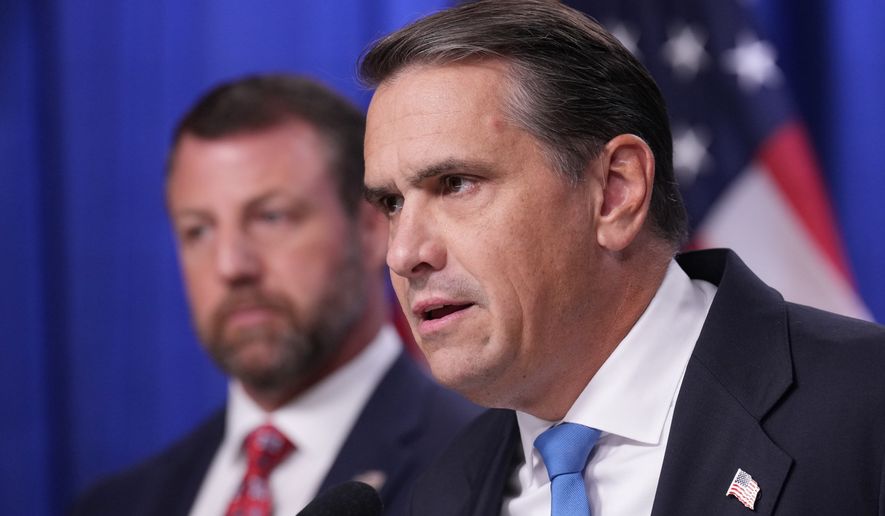

Federal prosecutors in Washington state said they lack the resources to keep up with the number of cases of detained immigrants seeking release from ICE custody.
The Office of the U.S. Attorney for the Western District of Washington said it will no longer defend many of the habeas corpus cases, allowing judges to rule without government opposition.
A habeas corpus petition asks a judge to decide whether the government is lawfully holding someone.
People were interested in these podcasts
Acting U.S. Attorney Charles Floyd said in a letter to Chief U.S. District Judge David Estudillo, a Biden appointee, that the large volume of habeas corpus petitions has “severely impacted the government’s ability to respond to specific petitions that require appreciable attorney time.”
It has also “negatively impacted the government’s ability to respond to other civil litigation filed against the government in the District,” Mr. Floyd said in the letter dated Oct. 26.
“Thus, going forward, in order to conserve resources, there will be many habeas cases in which the USAO will no longer assume responsibility for providing a defense on behalf of the respondents,” Mr. Floyd said.
The U.S. attorney’s office represents U.S. Immigration and Customs Enforcement in the cases and receives dozens of petitions each week, according to the letter.
Mr. Floyd said his office will keep reviewing each petition and will enter appearances in cases where it determines it is appropriate. If the office files no notice of appearance within seven court days of a scheduling order, the court may assume it will not respond and rule on the petitioner’s papers alone.
He said the change is expected to speed resolution of most petitions.
Mr. Floyd, a former immigration judge, joined three other judges in urging that immigration courts be barred from granting bond to detainees, a question now before the Supreme Court.
Contact the author

Please read our comment policy before commenting.