


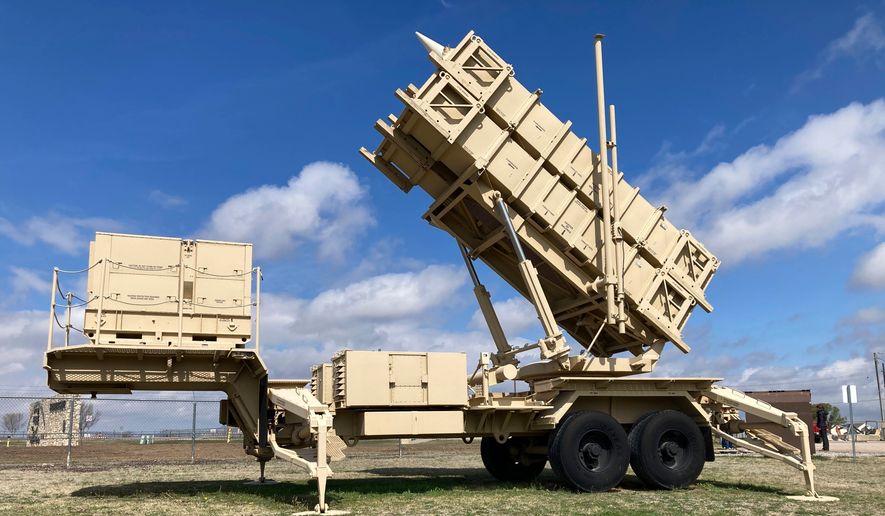

Russia unleashed a devastating weekend of missile and drone strikes on Ukraine after Friday’s announcement that the U.S. approved the sale of 500 additional Patriot interceptor missiles to Kyiv for an estimated price of $2.1 billion.
The Russian missile strikes left hundreds of thousands in Ukraine without power on Sunday. Ukrainian President Volodymyr Zelenskyy said power infrastructure in four regions in the country had been damaged overnight.
“The intensity of the strikes is extremely high, and the Russians are trying to take maximum advantage of the shortage of ballistic missile interceptors,” he said in a post on X.
People were interested in these podcasts
The Patriot missile replenishment deal will improve Ukraine’s ability to counter current and future threats and will sustain existing Patriot systems in the country, the U.S. State Department said Friday in a statement.
The deal will also be paid entirely by partners in Europe and North America, with no U.S. funds contributing, the State Department said.
“This proposed sale will support the foreign policy and national security objectives of the United States by improving the security of a partner country that is a force for political and economic stability in Europe. Ukraine will pay for this purchase with donations from Canada, Germany, and Norway via the JUMPSTART program and national funds, financed by the European Union’s Ukraine Support Loan,” the statement reads.
The sale follows repeated warnings from Mr. Zelenskyy that his country was running dangerously low on Patriot interceptors as Russia escalated its attacks on energy infrastructure.
Lockheed Martin will be the principal contractor behind the deal, which will not require “assignment of any additional U.S. Government or contractor representatives to Ukraine.”
The State Department also said the sale will have no “adverse impact” on U.S. defense readiness.
The sale comes at an inflection point for U.S.-Ukraine relations, as the Trump administration pushes for a permanent settlement to Russia’s war with Kyiv.
President Trump in recent weeks has forcefully criticized Mr. Zelenskyy for attacking Russian oil refineries, asserting the policy is leading to higher oil prices.
The two leaders have also been at odds over Mr. Trump’s decision to waive oil sanctions on Russian energy, which critics say will only provide Moscow with more money for its war.
There is also mounting concern that the U.S.-Israeli war with Iran has severely depleted U.S. stockpiles of critical munitions, such as Patriot missiles.
Before the Iran war, which Mr. Trump launched with Israel in February, the U.S. military had an estimated 2,300 Patriot interceptors. After extensive use countering Iranian ballistic missile attacks, the U.S. has fewer than 1,000 interceptors, according to an analysis by the Center for Strategic and International Studies.
As Ukraine and Russia traded strikes over the weekend, on corner of Ukraine’s southeastern Kherson region enjoyed one last day of a humanitarian truce negotiated by U.S. first lady Melania Trump.
The Associated Press reported that citizens were bracing for the Sunday night end of a localized ceasefire that began early Tuesday to allow besieged residents in the front-line city of Oleshky a chance to be evacuated or resupplied on Saturday.
An estimated 2,000 civilians were in Oleshky when the temporary truce took hold. They were offered the choice of evacuating to territory controlled by Ukraine or Russia, or remaining in the city with replenished food and medical supplies. For the safety of those who have stayed, exact numbers were not released after the evacuation.
At the Ukrainian border Saturday, family members waited for a glimpse of their loved ones, while the residents of nearby villages lined the highway waving flags and flashlights to greet the humanitarian convoy.
This article is based in part on wire reports.
Contact the author

Please read our comment policy before commenting.