


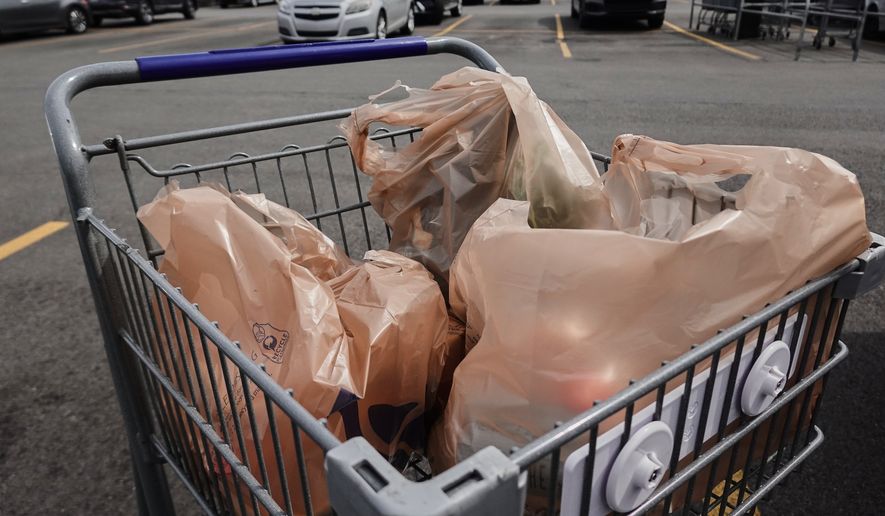

NEW YORK | Soft, stretchy plastics can make up grocery bags, bubble wrap and more. They’re impossible to avoid and harder still to properly dispose of.
If thrown in the trash, they can take up to hundreds of years to degrade in landfills and release harmful microplastics into the environment. Over 3 million tons of plastic bags, sacks and wraps in the United States went to landfills in 2018, according to the Environmental Protection Agency.
Grocery bags dumped in curbside recycling bins, on the other hand, can create problems for recycling.
People were interested in these podcasts
“Once they get shredded or even before, a lot of times they just clog recycling equipment,” said Erha Andini, a Delaware-based chemical engineering expert and science communicator.
Learning how to manage such plastics is worthwhile, as there likely won’t be a slowdown in production anytime soon: negotiations for a global plastic treaty have stalled in recent years, with the U.S. and other oil-producing countries resisting any limits on the production of plastics, which are made predominantly from oil.
Disposing of these flexible products, known as plastic films, can differ based on which ones you have and where you’re located.
While it’s difficult to live a plastic-free life, there are simple ways to get rid of the most common culprits, as well as other ways you can make a difference.
“It’s a problem of volume,” said Gary Dusek, founder of Precious Plastic NYC. “So literally the tiniest thing definitely moves the needle.”
Here are some tips:
How to identify plastic films
There are many different plastics, from harder kinds like water bottles and takeout containers to softer plastic films. Experts say the best way to describe plastic films is with examples: think bread bags, plastic cereal bags and overwrap for bulk items like toilet paper.
To identify a plastic film, you can also look for the classic three-arrow logo with a number inside it. That logo identifies what kind of plastic an object is made of - not whether it’s recyclable in a curbside bin.
Many plastic films are labeled with the numbers two or four, meaning they are made of either high or low-density polyethylene. These can be dropped off for recycling at some designated local grocery or convenience stores.
Items without these numbers may be more complex and made with multiple kinds of plastic layered together. For example, the plastic wrap that keeps meat fresh at the grocery store, Ms. Andini said, can be made of up to five or more film layers, depending on the packaging design.
Putting such films in general recycling bins with the hope they’ll end up in the right place - a concept known as wishcycling - can make it harder to process other plastics, so it’s worth considering other options.
Don’t put plastic bags in recycling bins
Instead of stashing plastic films with household recycling like cardboard or cans, leave them in the specific drop-off bin at a grocery or convenience store. Once dropped off, the bags are given to recyclers who reprocess them into materials for new things like furniture.
The company Trex makes outdoor decking out of recycled plastic films and has a locator on its website to find drop off points by zip code, said Stephanie Hicks, the organization’s materials and recycling manager.
Grocery bags and soft plastics labeled with the numbers two and four are generally accepted at these bins. To figure out what other kinds of plastic you can bring, look up recycling regulations for the specific store and your area.
Before dropping something off, make sure it’s not covered in food residue or too degraded. Such plastics aren’t good candidates for recycling and should go in the trash. Don’t forget to remove stray items like receipts from plastic bags.
Some grocers have eliminated in-store drop-off programs over concern that the stretchy plastics end up in landfills instead of getting recycled. If that’s a concern, other organizations in your area might also accept plastic donations.
NOVA Creative Reuse Center in Virginia repurposes donated bubble wrap for artwork. Precious Plastic NYC melts plastics to make clipboards and clothes hangers and accepts donations by appointment. And online tutorials offer at-home inspiration, like making plastic yarn out of old grocery bags to crochet new totes.
“All we’re really trying to do is take this stuff out of the environment, and put it into something where we know what it is,” said Mr. Dusek, with Precious Plastic NYC.
Please read our comment policy before commenting.