


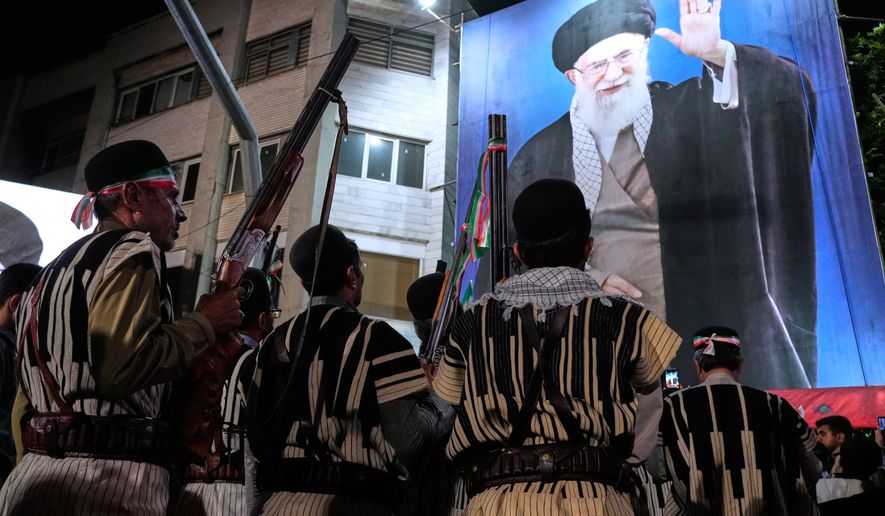

President Trump and Vice President J.D. Vance gave a clear ultimatum to Iran on Tuesday, demanding that Tehran either agree to a peace deal that prevents it from getting a nuclear weapon or face another military bombardment.
Mr. Trump issued a short timeline for potential U.S. military strikes on Iran. He gave Tehran “two to three days” to make a deal to end the war or face “another big hit.”
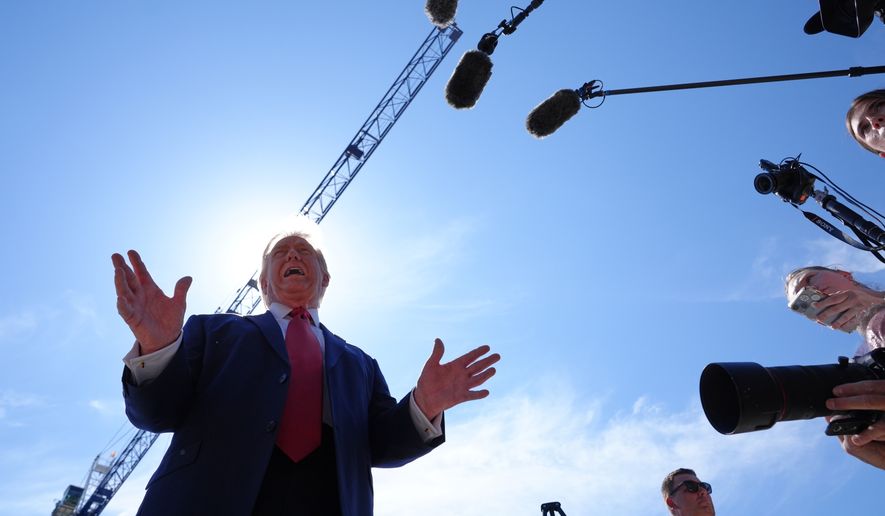
While on a morning walking tour of the construction site of the White House ballroom, the president reiterated his willingness to restart military strikes but said he would let negotiations play out a bit longer.
People were interested in these podcasts
“Maybe Friday or Saturday, early next week. A limited period of time,” he said when asked how long he would wait to restart strikes.
He also complained that Democratic lawmakers are impeding the war negotiations.
“You’re winning every point. But in Washington, they want to stop you from negotiating,” Mr. Trump said. “They want to stop you, and it’s only political. It’s the Democrats. They’re dumb.”
Mr. Vance echoed those comments, saying the president does not want to restart strikes but would if Iran stalls.
“It takes two to tango,” Mr. Vance said at the White House briefing, which he led in Karoline Leavitt’s absence while she is on maternity leave. “We’re locked and loaded. We don’t want to go down that pathway, but the president is willing and able to go down that pathway if we have to.”
The U.S. and Israel launched the war against Iran on Feb. 28, declaring that the Islamic republic could never obtain a nuclear weapon. The two sides agreed to a two-week ceasefire in April, which has since been extended indefinitely.
Iran insisted Tuesday that the extended ceasefire has given its armed forces plenty of time to prepare.
Mohammad Akraminia, chief spokesman for the Iranian army, said the armed forces have treated the ceasefire “as a time of war” and have positioned themselves to respond to any attacks by the U.S. and Israel.
He added that if Iran is attacked again, its military will open “new fronts” with new tools and methods, though he did not detail what those would be.
Although Mr. Trump has repeatedly boasted that Iran’s formal navy is “at the bottom of the sea” and that its air force has been destroyed, Iran’s asymmetric warfare capabilities remain a persistent threat.
The president threatened to relaunch strikes over the weekend after rejecting Iran’s latest peace proposal and convened a meeting with senior military staff to discuss options. However, he publicly called off an imminent attack Monday on the advice of Persian Gulf leaders from Saudi Arabia, the United Arab Emirates and Qatar.
The U.S. and Iran continue to exchange diplomatic proposals through Pakistani mediators in hopes of breaking a stalemate in the Strait of Hormuz.
Washington has demanded that Iran dismantle its nuclear infrastructure and hand over its stockpiles of highly enriched uranium, eliminate its support for proxy groups, and allow for the free movement of commercial vessels through the Strait of Hormuz.
Iran has repeatedly refused to discuss the nuclear issue until hostilities have officially ended and has called for sanctions relief, the unfreezing of Iranian assets and war reparations. Tehran has said it is open to discussing pauses of its nuclear program after it receives assurances that the U.S. will not resume attacks.
Iran also has demanded that the U.S. recognize its control over the Strait of Hormuz, the narrow waterway connecting the Persian Gulf and the Gulf of Oman, and has insisted that it will govern the passage even after the war ends.
Iran has effectively kept the strait closed since early March with a combination of small boats, missiles and drones.
At least 20% of the world’s oil travels through the strait, and its closure has driven up oil prices and U.S. gas prices. Crude prices hovered just over $100 a barrel Tuesday, and average U.S. gas prices stood at $4.53 a gallon.
Mr. Trump has sought to downplay the war’s economic effects and argued Tuesday that the higher prices are “peanuts” compared with preventing Iran from obtaining a nuclear weapon.
“We want to see the world exploded? You want to see a problem?” Mr. Trump said. “This is peanuts, and I appreciate everyone putting up with it for a while; it won’t be much longer.”
Mr. Trump has said prices will fall quickly this year once pent-up supply is released upon the end of the war. Democratic lawmakers have cast the president’s comments about rising prices as out of touch with the struggles of everyday Americans.
Mr. Vance argued that the president does care about the cost of gas but is mostly concerned with winning the war.
“What he said is that when he is negotiating with Iranians, he is focused on the national security objectives that he is trying to achieve,” the vice president said.
Contact the author


Please read our comment policy before commenting.