


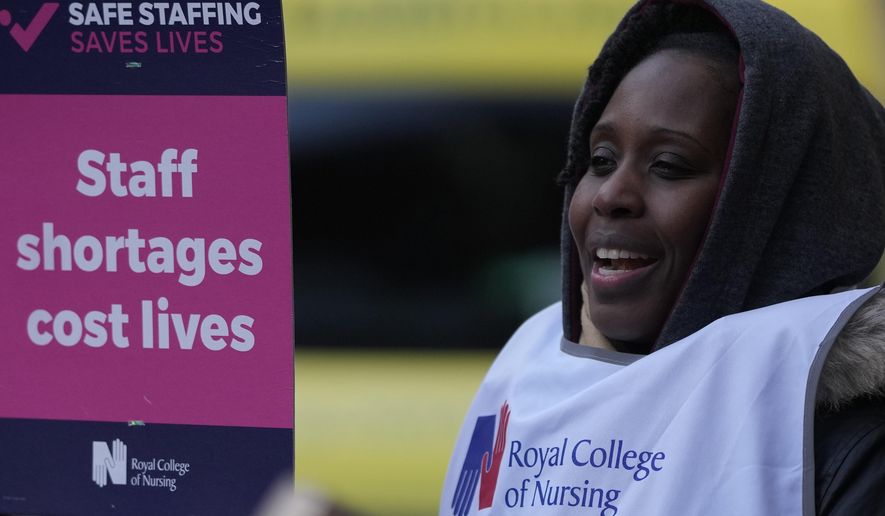

More than 300 people per week died in English emergency rooms in 2025 in connection with excessive wait times, as a damning new report from the Royal College of Emergency Medicine found that deadly overcrowding in National Health Service hospitals has become normalized across the country.
The college’s State of Emergency Medicine in England report, published Monday, estimates 15,860 excess deaths last year were associated with prolonged waits in English emergency departments — the equivalent of 305 lives lost every week. The figure represents a nearly tenfold rise from approximately 1,657 associated excess deaths recorded in 2015.
While the 2025 figure is slightly lower than the 16,644 excess deaths associated with long waits in 2024, the college characterized its estimate as conservative.
People were interested in these podcasts
The report’s authors attributed the crisis primarily to a phenomenon emergency physicians call “exit block” — the inability to move patients out of emergency departments because the rest of the hospital is too full to accept them. The RCEM found that general and acute hospital bed occupancy averaged 93.1% in 2025, well above the level considered necessary for operational effectiveness, while an average of 12,906 patients per day were medically fit for discharge but remained in hospital beds, restricting patient flow throughout the system.
The college found that nearly half a million people — 489,138 patients — waited 24 hours or more in English emergency departments last year, an increase of roughly 150,000 patients over just three years. An additional 1,688,555 patients waited 12 hours or more before being admitted, discharged or transferred.
The NHS constitutional standard requires that 95 percent of emergency patients be seen, treated and either admitted or discharged within four hours of arrival. That benchmark has not been met nationally since July 2015. The RCEM report found that just 60.5 percent of patients in 2025 were admitted, transferred or discharged within four hours at major emergency departments — well below the NHS standard — while nearly 17 million people attended those departments, the highest attendance figure ever recorded.
The college’s methodology draws on research published in the Emergency Medicine Journal, establishing that for every 72 patients who wait between eight and 12 hours in an emergency department before being admitted, there is one additional death. Risk of death begins rising after five hours and grows with each subsequent hour of delay.
Dr. Ian Higginson, president of the Royal College of Emergency Medicine, called the situation heartbreaking and questioned whether the government would act.
“Each year, as this analysis is completed, it leads me to question how many more deaths it will take before we see a determined, meaningful plan to end the crisis,” he said in a statement accompanying the report.
“As an emergency doctor, it’s heartbreaking that patients arrive to our emergency departments in their time of need, and we can’t do our jobs properly because we are full,” Dr. Higginson added. “To make things worse, we are being asked to focus on the least sick patients to try and marginally improve headline statistics, rather than on those who need our services the most.”
Prof. Carl Heneghan, director of Oxford University’s Centre for Evidence-Based Medicine, said the death toll would prompt national outrage if it originated from any other recognized safety failure in the NHS. “Emergency department overcrowding deserves the same urgency and the same response,” he said.
The report also warned that nearly one in five patients in English emergency departments is being cared for in spaces not designed for patient care — including corridors, cupboards, waiting rooms and chairs — and that privacy, dignity and clinical safety are “impossible to maintain” in such environments. A survey of emergency medicine clinical leads found 97% described the situation as unsustainable in the long term.
A Department of Health and Social Care spokesperson said it was “unacceptable for patients to face long waits for emergency care” and cited a government investment of more than £215 million in 40 new and expanded same-day emergency care and urgent treatment centers across England. The spokesperson added that NHS performance this past winter was the strongest in half a decade despite record demand.
The RCEM called on the government to eradicate mortality associated with long emergency department waits by the end of the decade, adhere to the four-hour waiting standard, and follow through on a commitment to end corridor care by the close of the current Parliament.
This article was constructed with the assistance of artificial intelligence and published by a member of The Washington Times' AI News Desk team. The contents of this report are based solely on The Washington Times' original reporting, wire services, and/or other sources cited within the report. For more information, please read our AI policy or contact Steve Fink, Director of Artificial Intelligence, at sfink@washingtontimes.com
The Washington Times AI Ethics Newsroom Committee can be reached at aispotlight@washingtontimes.com.
Please read our comment policy before commenting.