



OPINION:
Next week, Kevin Warsh will chair the Federal Reserve’s policymaking committee. Through the post-meeting statement and press conference, we may finally get a glimpse of the real man.
Mr. Warsh resigned as a Fed governor in 2011, partly because of discomfort with Chair Ben S. Bernanke’s quantitative easing, or the Fed’s money printing to buy Treasury securities and push down long-term interest rates after the global financial crisis.
He also criticized Jerome Powell’s easy money in the wake of COVID-19, which accelerated the inflation we suffer today.
People were interested in these podcasts
Then Mr. Warsh shifted to a dovish stance in 2025, as he emerged as a candidate to succeed Mr. Powell.
The Fed is the only major central bank with a mandate to both maximize employment and achieve price stability.
The former gives presidents the license to pressure for lower interest rates.
As we learned with President Nixon’s pressure on Arthur Burns and President Biden’s hesitation to nominate Mr. Powell for a second term in 2021, caving to such impulses is akin to smoking cigarettes. The political benefits of lower interest rates may be immediate, but the addiction and debilitating consequences are tough to quit.
As the opposition party, Senate Democrats let us down during Mr. Warsh’s confirmation hearing. They focused on whether there was a deal between Messrs. Trump and Warsh to win the most prized presidential nomination this side of the chief justice of the United States.
Obsessed with wealth, they quizzed Mr. Warsh about his considerable fortune. In Washington, deals on matters such as Supreme Court justices’ abortion views and lower interest rates for the Fed governors are implicit.
You say in public what the president wants to hear, and he measures how sincere you may be.
The latter was a low bar for Mr. Warsh after the blowback Mr. Trump received when National Economic Council Director and White House stooge for tariffs Kevin Hassett appeared likely to be nominated for Fed chair.
Still, central bankers are not lawyers.
We expect the defense counsel to argue that a thief caught beside a jewelry store’s broken window with a fistful of diamonds was just an innocent bystander scooping up loot dropped by the real felon, who ran.
In contrast, central bankers must have some plausible economic theory or explanation grounded in observable marketplace conditions when deviating from orthodoxy or flipping positions.
Mr. Warsh attempted both.
Other than those who work for the organized left — such as the Roosevelt Institute or very progressive senators — economists in general believe that printing too much money is almost certain to cause inflation.
So, to keep his shirt unstained, Mr. Warsh needed a rationalization to advocate easy money to appease Mr. Trump.
In recent years, the economy has endured four major inflationary shocks: Russia’s invasion of Ukraine, COVID-19, Mr. Trump’s tariffs, and the war with Iran and the closure of Persian Gulf nations’ access to global commerce.
All are manageable.
However, greater security of access to primary resources — crude oil, liquefied natural gas, helium for chipmaking and fertilizer for agriculture — comes with a hit to economic efficiency.
If we bear the costs in terms of labor market and cost-of-living disruptions, the inflationary consequences become transitory.
Yet if we pander to unions (remember Messrs. Biden and Trump supporting the United Auto Workers during their last round of negotiations as they pursued political advantage during the 2024 campaign primaries?) or simply dole out government payments to compensate for lost purchasing power financed by printing-press central bank policies, those inflationary impulses become like the consequences of smoking.
Now, Mr. Warsh has a pill to cure smokers’ cancer. He says artificial intelligence will save the day.
I am a great advocate of letting AI disrupt civilization to accelerate growth, as transcontinental railways, electricity and the internet did.
Yet Mr. Warsh has argued that AI will make workers more productive, enabling businesses to raise wages without increasing prices.
Apple was founded in 1976, and the desktop computer did not save us from the inflation caused by the Nixon-Burns duopoly.
During Mr. Trump’s first year, the economy enjoyed a surge in productivity thanks to AI, growing at better than 2% without adding many jobs.
Yet inflation is about 3%.
Mr. Warsh’s theory made him a plausible enough monetary policy dove to get Mr. Trump’s nomination, but it does not make him correct about economics.
Now he has the job, and with Mr. Trump likely a lame duck after a midterm Republican shellacking, Mr. Warsh can revert to his hawkish roots and reclaim legitimacy with the dismal science.
Otherwise, if he now champions lower interest rates, then he might as well tell us smoking is good for the nerves and has no unhealthy side effects.
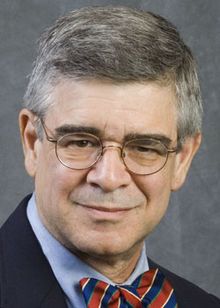
• Peter Morici is an economist and emeritus business professor at the University of Maryland, and a national columnist.
Follow the author
Please read our comment policy before commenting.