



Graham Platner is looking to put another nail in the coffin of puritanical politics.
The Maine Democrat is poised to win his party’s Senate nomination Tuesday despite a campaign roiled by offensive Reddit posts he wrote years ago, a chest tattoo widely recognized as a Nazi symbol, and more recent reports of unsettling behavior toward women. This trajectory would place him among a growing number of politicians whose personal failings have not derailed them at the ballot box.
“Maine had my back,” Mr. Platner told supporters at a rally in Bar Harbor over the weekend. He credited voters for sticking with him as untoward details of his past surfaced. He cast the controversy as part of “a personal journey through PTSD and darkness of recovery and accountability and growth.”
People were interested in these podcasts
Barring a surprise, Mr. Platner is on a collision course with five-term Sen. Susan M. Collins, a Maine Republican icon who chairs the powerful Senate Appropriations Committee, which oversees all federal discretionary spending.
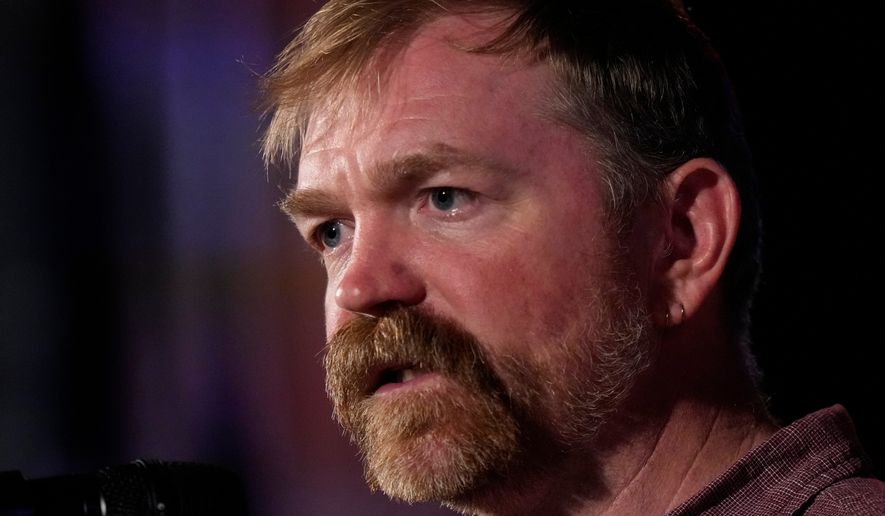
A former Marine and oyster farmer, Mr. Platner rocketed onto the scene so quickly that Gov. Janet Mills’ bid for the Democratic nomination never gained traction. She suspended her campaign, though she remains on the ballot, clearing the way for Mr. Platner to secure the nod.
During his rapid rise, he has faced scrutiny over old Reddit posts suggesting that women concerned about sexual assault should avoid drinking to the point of blacking out. More recently, he has confronted blowback from reports that campaign staff raised concerns after his wife alerted them last year that he had sent sexual text messages to other women. The New York Times published accounts from former girlfriends who described some of his behavior as unsettling.
Republicans say the controversies are far from over. “The worst is yet to come,” said Dave Carney, a Republican consultant working with the Collins campaign. “He is a disgusting human being.”
If he wins the Democratic nomination, Mr. Platner will join a lengthening roster of politicians who have survived — and in some cases thrived — despite personal conduct that once might have ended a career.
President Trump was accused of sexual assault by dozens of women and was found liable for sexual abuse in a civil case, yet he won two presidential elections.
Texas Attorney General Ken Paxton weathered well-documented extramarital affairs and recently won a landslide victory in the Texas Senate primary runoff over longtime incumbent Sen. John Cornyn, who spent tens of millions of dollars highlighting his rival’s scandals. Mr. Paxton still faces a general election in November.
President Clinton’s sexual relationship with White House intern Monica Lewinsky nearly ended his presidency but left his political standing largely intact.
Voters will demonstrate again Tuesday whether both parties have grown more willing to separate personal conduct from fitness for office.
For many Maine Democrats, the calculation is straightforward: Defeating Ms. Collins matters more than Mr. Platner’s past.
“My bottom line is chasing Susan Collins out of there, and all the BS she has pulled on us,” said Maurie Hill, a Democratic activist. “I hate to make it all about the negatives with Susan Collins, but I think sometimes you have to do that.”
Ms. Hill said she is willing to look past Mr. Platner’s personal history, even if she does not fully understand it. “I just want somebody who is going to win,” she said. “I know he has got issues — some of that is generational. I don’t understand tattoos, I don’t understand sexting, I don’t understand any of that.”
James Melcher, a political science professor at the University of Maine at Farmington, said the drive for party unity around a singular goal is helping Mr. Platner weather the storm.
“I think a lot of it is a pressure in the Democratic Party here to be united because they very much want to take Susan Collins down,” he said. “They see her as being an enabler of Trump.”
Mr. Melcher said Mr. Platner’s insurgent appeal also may be tapping into something deeper. “He might be more in line with challenging the establishment, much like the tea party did in 2010. There is a lot of restlessness and desire for something different, particularly among young people who are economically aggrieved,” he said.
Mr. Platner has drawn support from prominent figures on the left, including Sen. Bernard Sanders of Vermont, Sen. Elizabeth Warren of Massachusetts and Rep. Ro Khanna of California. He has also energized young voters with his anti‑establishment message, working‑class economic pitch, and criticism of Israel’s military actions in the Gaza Strip.
The general election stakes could hardly be higher.
If Democrats hope to flip control of the U.S. Senate, then they likely need to win Maine, where Ms. Collins has held her seat since 1997. She is reminding voters of the federal dollars she has steered home as chair of the Appropriations Committee.
Mr. Platner argues that Ms. Collins’ moderate reputation is a carefully constructed illusion. He points to her 2018 vote to confirm Supreme Court Justice Brett M. Kavanaugh, saying she told voters Roe v. Wade was settled law before Mr. Kavanaugh helped overturn it.
“Either she lied to us, or she’s a fool,” he told the Bar Harbor crowd. “Either way, you shouldn’t be a United States senator from the state of Maine.”
He has also accused Ms. Collins of using her Appropriations Committee leadership to stage‑manage her image rather than wield real power for constituents.
He noted that Ms. Collins voted against President Trump’s One Big Beautiful Bill Act on the Senate floor after doing little to slow it in committee. “It is constant Collins tactics to pretend that she’s standing up for people, and then when it counts, she doesn’t,” he said.
Beyond his attacks on Ms. Collins, Mr. Platner has built his campaign around a working‑class economic message, arguing that the prosperity of previous generations has been systematically dismantled. He noted that the number of American billionaires has grown from fewer than 80 in 1990 to more than 900 today, while wages have stagnated and essential services have eroded. “Do we have 10 times the schools, 10 times the hospitals?” he asked. “Do our paychecks go 10 times as far? No.”
Mr. Platner, a disabled combat veteran, has drawn on his biography to make the case for universal healthcare. He said Department of Veterans Affairs coverage gave him the freedom to return home and build a life.
“I don’t get to be an oyster farmer without my VA healthcare,” he said.
Whether that message can carry him past Ms. Collins in November remains an open question. Maine has a long history of rewarding incumbents, and Ms. Collins has survived difficult cycles before. Republicans are betting that the drip of revelations about Mr. Platner’s past will prove more damaging to the general electorate than it has to Democratic primary voters.
Mr. Platner is betting the opposite: that voters are less interested in who he was than in what he is promising to do. “The state of Maine raised me, and the state of Maine saved me,” he told the Bar Harbor crowd.
Please read our comment policy before commenting.