



OPINION:
A secure border means a safe and prosperous America. That is a central tenet of the Trump presidency.
In the first days of President Trump’s second term, he moved with speed and force to halt the human invasion of illegal aliens across our southern border. Now he is applying that same principle to America’s other border: the customs border.
Every day, millions of goods enter the United States through ports, airports, express carriers, warehouses and e-commerce channels.
People were interested in these podcasts
Many come from honest companies that follow the rules, pay the duties owed and compete fairly. Yet too many come from bad actors that hide behind shell companies, foreign importers of record, phony paperwork, undervaluation schemes, counterfeit labels and transshipment routes designed to evade U.S. tariffs and trade laws.
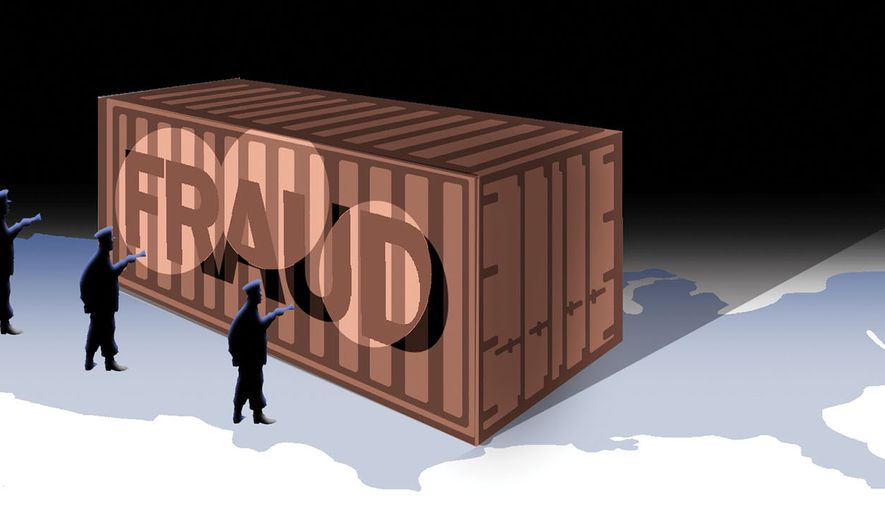
That is neither free nor fair trade. That is customs fraud.
Mr. Trump’s new customs border executive order cracks down hard on the criminals, smugglers and trade cheats who evade tariffs, import illicit drugs and ship counterfeit, unsafe and/or illegally sourced products directly into American homes.
Just as importantly, the order will accelerate a new artificial-intelligence-enabled “Detective Border” now being rapidly deployed by an innovative Customs and Border Protection agency.
Historically, CBP has had to fight customs criminals and smugglers with human resources, paper forms, after-the-fact audits and fragmented data systems. As global trade volumes, e-commerce shipments and transshipment networks have exploded, CBP has been forced to police a 21st-century threat environment with too many 20th-century tools.
The new Detective Border changes that equation. By collecting better importer data, stronger disclosure requirements, foreign customs documentation, ownership information, broker diligence and risk-based bonding, CBP can feed AI-enabled systems the information needed to detect fraud patterns before illicit goods flood American markets.
That means CBP can exponentially increase and enhance its oversight of cargo as it moves from foreign ports to Los Angeles, Seattle, Baltimore, New York/Newark, Savannah and every other major gateway into the American marketplace.
Instead of merely reviewing isolated entries one form at a time, CBP can connect the dots across importers, brokers, routes, declared values, claimed origins, ports, affiliates and repeat offenders.
The first purpose of this order is to work synergistically with the Detective Border to close the customs loopholes that bad actors exploit.
For too long, foreign shippers and shell importers have been able to enter goods into the U.S. market with too little information, too little financial accountability and too little risk of meaningful punishment. Repeat violators could change names, shift entities, hide ownership, undervalue merchandise, mis-declare origin or route goods through third countries to disguise where the goods were really made.
This executive order attacks that problem at the importer-of-record level. It requires importers to provide more information about who they are, who owns them, who they are affiliated with, what assets they have in the U.S. and what kinds of import volumes they expect.
It tightens the rules for foreign importers of record, restricts their use of informal entry and requires stronger bonding, domestic assets or both.
It creates a regime in good standing so companies that repeatedly violate U.S. law, fail to pay customs debt and/or import deadly substances can and will lose the privilege of importing to America.
That is the right principle. Access to the American market is a privilege, not a loophole to be exploited.
The second purpose of the order is to level the playing field for honest American businesses and compliant importers.
When a company plays by the rules, it pays its duties. It documents origin. It follows forced-labor laws. It complies with product safety standards. It uses legitimate brokers. It invests in compliance.
Still, that honest company cannot compete fairly against a cheater that hides behind a foreign shell, declares a false value, transships Chinese-origin goods through a third country or treats customs penalties as a routine cost of doing business.
That kind of fraud does not merely cheat the Treasury; it also steals market share from lawful businesses. It undercuts American workers, punishes domestic manufacturers and rewards the worst actors in global trade.
Mr. Trump’s order changes the incentive structure. It raises standards for transparency, bonding, broker diligence, importer accountability and penalty enforcement. It gives CBP stronger tools to identify who is importing, to compare paperwork, detect undervaluation, enforce origin rules, seize noncompliant goods and impose meaningful consequences.
The broader goal is to modernize an outdated customs system so it can deal with today’s threats: fentanyl and precursor chemicals, counterfeit goods, unsafe products, forced-labor-tainted supply chains, tariff evasion, misclassification, undervaluation and a global transshipment scam network.
Each of these reforms will bring more and better data to CBP’s new Detective Border. The executive order does not merely give CBP more authority; it also gives CBP better visibility, which means better targeting. Better targeting means faster interdiction, stronger enforcement and fewer criminals slipping through the cracks.
Importantly, these reforms will also bring U.S. customs practice closer to the standards used by many of our trading partners, where foreign importers often face stricter requirements and importation is treated as a regulated privilege.
Industry will have time to adjust through rulemaking and implementation periods. Compliant businesses will have notice, process and the ability to adapt.
President Trump secured the human border against illegal immigration. Now he is securing the customs border, proving once again that economic security is national security.
• Peter Navarro is the White House senior counselor for trade and manufacturing. www.peternavarro.com
Follow the author
Please read our comment policy before commenting.