



OPINION:
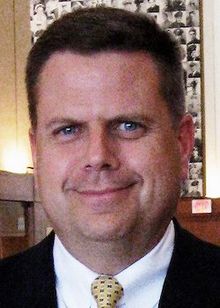
Bobby Charles grew up in Wayne, Maine, a small (and alliterative) town of 500 souls. He was an Eagle Scout who spent the summers of his youth working the outside crew at a camp. His mother was a teacher for 40 years; his father was enlisted in the U.S. Navy.
After an extensive and providential academic and legal career that featured stops at Dartmouth, Oxford and Columbia Law School and a turn clerking in the 9th U.S. Circuit Court of Appeals (before it went crazy), Mr. Charles spent three years working off and on in the Reagan White House as a temporary appointee.
After Republicans took control of the House in 1995, he turned his hand to oversight and federal investigations.
People were interested in these podcasts
Having seen all that, he signed up for the Navy and became an intelligence officer, arriving just in time to experience 9/11 and its various aftermaths. He finished that portion of his career as a lieutenant commander.
For Mr. Charles, the good fortune — made possible by skill and hard work — kept rolling. He was nominated and confirmed as an assistant secretary of state, a position that led him to manage billions of dollars, downsize parts of the department, run the department’s substantial air wing, establish police training in Iraq and Afghanistan, and oversee counternarcotics and law enforcement programs in places such as Colombia and Kosovo.
Mr. Charles never really left home, though. He spent parts of every year in Maine, bought a home there in 2005, and moved back for good in 2022. He was dismayed to discover that, in his words, “the state that I moved back to was not the state that I grew up in; it was radically different. It had been taken over by progressives.”
In the crisp staccato of the Pine Tree State, he is quick to point out that the progressive apparatus has damaged the state. “I mean, a Republican-led state, South Dakota, with similar demographics as Maine, had 65 fatal overdoses last year, while Maine had hundreds.”
Also, “our property taxes top the country, while we are one of the poorest and oldest states.” He has said that “high-income taxes are compounded by the highest jump in energy costs in the country” and asked, “How can we have gone from having the top public education system in the country in 1992 to number 50? It makes no sense.”
In addition, he said, “We have more fraud proportionally … than in the federal government.”
Mr. Charles places the blame for the pathologies exactly where they belong: with the progressive element that has overtaken Maine’s one-party government, decimating formerly well-functioning systems, abandoning any sense of accountability and eroding trust.
His solution? “I’m living in what’s becoming — at least operationally — a highly centralized, almost communist state, no accountability, no checks and balances on one-party government, no sense that the people are in charge. … I do have a moral obligation, the same way that if you were a doctor and saw a person with a broken leg, you would have a moral obligation to set that leg.”
Riding that logic train, about a year ago, Bobby Charles — motivated in this instance by his own sense of responsibility, service and duty — entered the race for Maine governor.
Unlike many other candidates who seem to be running as the captain most likely to make the Titanic’s journey to the bottom of the sea as pleasant as possible, his campaign has the flavor of a mission. Mr. Charles believes (correctly) that “we’re all where we are meant to be; God has a plan, and I think he has me here for a reason. … I’m going to help save the state, save thousands of lives, get the income tax out over four years, reduce property taxes, get energy costs down by 30 to 40%. We’re living in a nightmare, a Democratic, progressive-driven nightmare. I can fix it, and I’m going to fix it.”
At the same time, Mr. Charles is clear about the larger stakes involved in this election. “This is a very important moment for Maine. I believe Maine, this cycle, will prove to the country that you can, in fact, take a blue state and turn it red. Once we make the blueprint operational, others can follow that process.”
The scope of his vision and the experience of his career arc match the task at hand. Let us hope Mr. Charles has “fair winds and following seas” in his dedicated, sincere and timely effort to save his corner of the nation.
• Michael McKenna is a contributing editor to The Washington Times.
Follow the author
Please read our comment policy before commenting.