


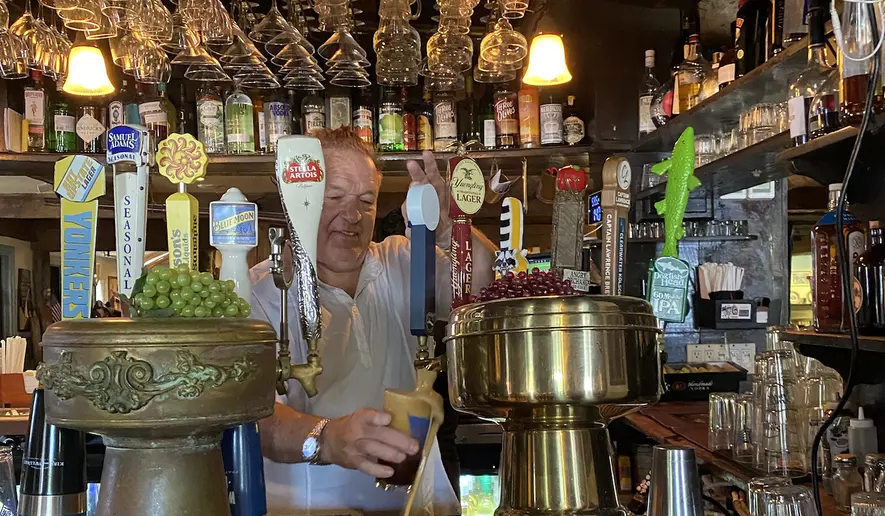

TAPPAN, N.Y. — As you make your way around the wood-paneled interior of the Old ’76 House tavern, you might notice an upside-down portrait of Benedict Arnold on a back wall.
That is not an accident. That was how George Washington left it.
Founded around 1686 in the Hudson River Valley, the Old ’76 House is one of the country’s oldest taverns in continuous operation since the Revolutionary War. It was also one of Washington’s favorite haunts, the prison of Arnold’s collaborator, and where Alexander Hamilton occasionally slept.
People were interested in these podcasts
Current owner Robb Norden regales customers with stories about the tavern’s role in the country’s founding. He is especially fond of pointing out where Great Britain’s colonial administrator met with the rebel general who would become the first president of the United States of America.
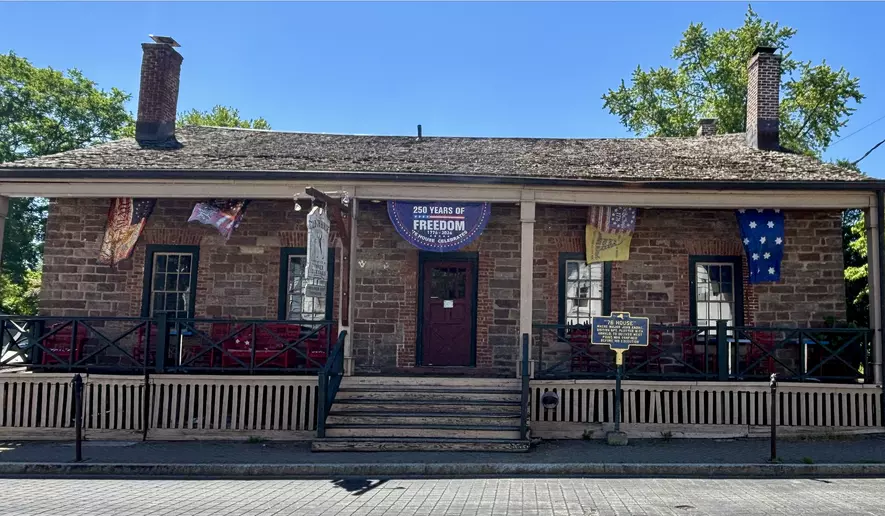
“Exactly where you’re sitting, Sir Guy Carleton met with Washington, handed Washington the plans of the British evacuation, and on behalf of the British Parliament declared America free and independent of Great Britain,” Mr. Norden told a reporter. “That’s May Third, 1783, which is truly our real independence day. That’s the day that England acknowledged American independence. May of 1783. Right here, right where you’re sitting.”
History buffs may argue that point, but what cannot be denied is the sense of history that pervades the establishment. The tavern’s low ceilings bear original wooden panels from the 17th and 18th centuries, creating a cozy, lived-in atmosphere. A fireplace mantel displays artifacts and pictures, and muskets and antique handwritten letters in picture frames adorn the walls.
Yet the Old ’76 House is not alone in celebrating 25 decades of food and beverage service. Here are some other taverns of the original 13 Colonies
New Hampshire: Freese’s Tavern
Freese’s Tavern in Moultonborough lays claim to the title of the oldest tavern in the state. It has operated as a tavern, general store, post office, library and town hall since 1780. Now known as The Old Country Store, it features historical displays.
The land was originally sold by Revolutionary Army Brig. Gen. Jonathan Moulton in 1777. It eventually was acquired by trader George Freese, whose store was noted as the only building in that part of town by 1784.
Over the decades, it has hosted town meetings and served as a stage stop. It remains one of the oldest businesses of any kind in the country.
Massachusetts: Warren Tavern
Located in Charlestown, the Warren Tavern is not only one of the oldest in the state but also one of the most historic in the country.
According to Warren Tavern’s website, the building was constructed in 1780 and was one of Paul Revere’s favorite pubs. It was also where the funeral speech for Washington was delivered, with the famous line “First in war, first in peace and first in the hearts of his countrymen.”
The tavern is named after Joseph Warren, a physician and patriot who died at the Battle of Bunker Hill at age 34.
Rhode Island: White Horse Tavern
The building was constructed in 1652 by English immigrant Francis Brindley and converted to a tavern in 1673 when William Mayes purchased it, though it was not officially named The White Horse Tavern until 1730.
William Mayes Jr., son of the tavern’s first operator, happened to be a pirate who operated in and around the Red Sea and returned to Newport with his plunder to run the tavern as the innkeeper.
Loyalists and British troops reportedly stayed at the tavern during the British occupation of Newport during the American Revolution.
For about 100 years, the tavern also served as the meeting place of the Colony’s General Assembly, the Criminal Court and the City Council.
Connecticut: 1754 House
The 1754 House is an inn, restaurant and tavern that is still in operation.
Built in 1736 by Anthony Stoddard, the tavern officially opened in 1754 in Woodbury. The inn showcases wide-plank flooring, exposed beams and fireplaces, and was originally known as The Curtiss House Inn.
Pennsylvania: King George II Inn
Located in Bristol, the tavern was purchased and opened in 1681 as a ferryhouse by Englishman Samuel Clift and was rebuilt in 1765. As is common throughout the early history of the U.S., the inn served as a town meeting hall, and its wine cellar was even used as a jail.
The inn served as Revolutionary Army Col. John Cadwalader’s headquarters in December 1776, when he was stationed in Bristol with 3,000 soldiers to guard against British attacks along the Delaware River.
The inn was also involved in preparations for Washington’s Christmas night crossing of the Delaware River to a surprise attack on Hessian soldiers in Trenton, New Jersey.
New Jersey: Ye Olde Centerton Inn
The original owner’s name is lost to history, but this tavern in Pittsgrove has operated since 1706 and serves fresh, locally grown food. The decor reflects the original building’s vintage architectural charm.
The inn has long served as a station for locals and travelers on their way to the seashore or west toward Philadelphia. It currently serves as a restaurant offering inside dining and catering, and is known for its seafood and steak.
Delaware: Jessop’s Tavern
The building dates to 1674 and operated as Abraham Jessop’s home and barrel-making business in 1724. The tavern has been named after him since the Day family bought and opened it in 1996.
“Jessop’s was opened to honor the diverse history of the Dutch, Swedish and English settlers to Historic New Castle,” tavern owner Justin Day said in an email. “Our Tavern is designed to offer the experience of dining and drinking in a Colonial atmosphere, thus creating a little escape from the modern world.”
Staff members serve customers in Colonial-style clothing on holidays and during special events, always offering 300 Belgian beers. The restaurant has won Delaware’s Reader’s Choice Best Beer Selection award.
“No TV’s, Pewter Plates, Authentic Cuisine. We Serve History While Serving You,” Mr. Day wrote.
Maryland: Middleton Tavern
Middleton Tavern provided a resting spot for travelers journeying between Rock Hall on Maryland’s Eastern Shore and Annapolis, where the tavern is located.
It is said that Washington, Thomas Jefferson, Benjamin Franklin and the Marquis de Lafayette visited the tavern, and Washington reportedly spent the night there.
Members of the Continental Congress are said to have visited the tavern after the Treaty of Paris was ratified and the Revolutionary War officially ended in January 1784.
Virginia: 1710 Tavern
With its 315-year history, 1710 Tavern is known as the oldest tavern in the commonwealth. The building in Tappahannock was completed between 1710 and 1712 and converted into a tavern in 1732.
Many of the original fixtures have been preserved, including the dining room floors, windows, ceilings and fireplaces. The bar is made from 300-year-old walnut.
The building is said to predate roads, which is why the tavern faces the Rappahannock River rather than the street.
“The tavern also faced the river where large sailing ships from England docked on wharves, and travelers would dine and sleep there,” tavern owner Greg Huff said in an email.
North Carolina: Salem Tavern
Established in 1772, Salem Tavern is part of the Old Salem Historic District in Winston-Salem.
Washington, who stayed there in 1791 while touring battlefields, reportedly spent two evenings at the tavern.
The tavern was a point of contact for the Moravians, a Protestant denomination that founded Salem and became the town’s political center.
The tavern’s original site is a museum, open to visitors with guided tours as part of the Old Salem Museums & Gardens. Next door, The Tavern in Old Salem serves meals in the historic setting.
Sarah Ebans, the tavern’s front-end manager, says the food is “divine.”
South Carolina: McCrady’s
McCrady’s in Charleston closed in 2020 during the height of the COVID-19 pandemic but remains known as the oldest tavern in South Carolina.
It dates to 1767, when barber Edward McCrady bought the building; he later opened it as a tavern in 1778, after serving in the Revolutionary War.
It is best known for the Society of the Cincinnati hosting a banquet for President Washington in the Long Room, attended by the governor of South Carolina, members of Congress and other dignitaries in May 1791.
Georgia: The Pirates’ House
The Pirates’ House was established in 1734 in Savannah and served as a meeting place for seafarers and pirates alike. It is said to be the oldest standing structure in the state and to have inspired Robert Louis Stevenson’s 1883 novel, “Treasure Island.”
A secret chamber was found underneath the house during remodeling in 1953. To this day, no one knows why or when the chamber was built.
Like many old taverns, The Pirates’ House is said to be haunted. Many report seeing a boy in a white shirt on the staircase and objects thrown out of thin air. Security cameras have caught a liquor bottle flying off a shelf.
Robb Norden, owner of New York’s Old ’76 House, does not dwell on spirits who may still patronize his establishment but takes immense pride in his tavern’s legacy.
“In 1780, the tavern keeper, whose name was Casparus Mabie, handed Washington the recipe to make what we now call our Tavern Keeper Ale. And Washington actually brewed the ale at Mount Vernon,” Mr. Norden said. “So he loved it so much that that’s why he frequented this tavern more than any other tavern in America.”
He can also attest to the dark side of history. The tavern was where British spy John Andre — a co-conspirator with Benedict Arnold — was held and tried as a spy before his execution. Andre was the first British aristocrat hanged by the Colonists.
Washington turned the portrait of Arnold upside down when he learned of his onetime friend’s betrayal of the revolution. A sign bearing the word “Traitor” hangs beneath the picture.
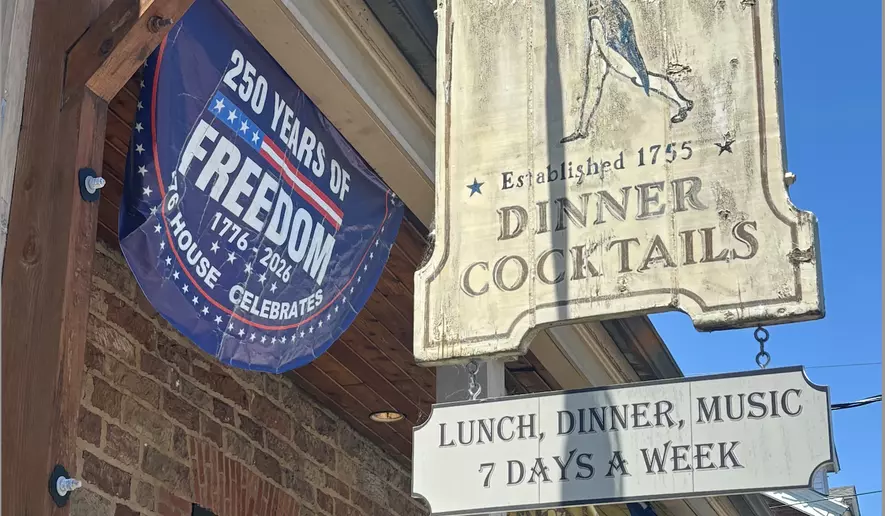
Today, ’76 House hosts live music every night and serves beer-battered fish and chips made with Washington’s favorite ale, among other offerings.
The tavern also hosts live reenactments such as “Drink a Beer with George Washington” and “The Trial of John Andre.” Family-friendly events and community activities are also hosted there.
Contact the author

Please read our comment policy before commenting.