



President Trump announced Monday that Iran will be subject to weapons inspections as part of a comprehensive peace deal despite Tehran’s assertion that negotiators made no new commitments during the first round of talks in Switzerland over the weekend.
Mr. Trump wrote in a Truth Social post that Iran had agreed to “major weapons inspections” to ensure “Nuclear Honesty” in the future.
He followed up his comments later by threatening to strike Iran again if the ruling regime fails to adhere to the existing agreement.
People were interested in these podcasts
“If Iran doesn’t live up to their agreement or doesn’t behave, I will do what I have to do,” Mr. Trump said during an Oval Office event to discuss quantum computing. “As long as Iran shows respect toward the United States, there will be no problems between the two countries.”
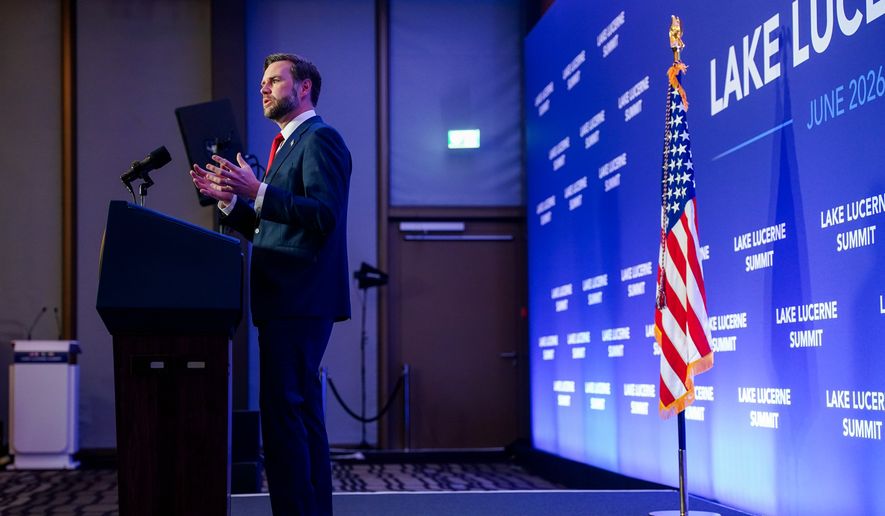
Vice President J.D. Vance announced earlier Monday that Iran had agreed to allow International Atomic Energy Agency inspectors to examine its nuclear sites. He said the move was part of a “good foundation for a successful final deal” to end the war, which began nearly four months ago.
“The final deal is in the house,” Mr. Vance told reporters in Switzerland after marathon negotiations with the Iranian leaders. “We have set the foundation. We haven’t built the house, but we’ve laid a successful foundation to get to a good place for the American people.”
However, Iranian Foreign Ministry spokesman Esmail Baghaei denied that negotiators had agreed to allow IAEA inspectors back into the country. Mr. Baghaei told reporters that Iran’s cooperation with the IAEA will continue “in accordance with current procedures” and with parliament’s approval.
Iran expelled IAEA inspectors in June 2025 after Operation Midnight Hammer, the U.S.-Israeli effort to bomb Tehran’s largest uranium enrichment sites.
The Treasury Department cited Iran’s apparent commitment to allow IAEA inspectors back into the country and the reopening of the Strait of Hormuz as justification for issuing a 60-day license allowing Iran to sell previously sanctioned oil.
The license meets a major Iranian demand that predates the current negotiations and provides Tehran with a pathway to earn billions of dollars through international oil trade.
Iranian oil has been heavily sanctioned in the West for years, dramatically limiting the price per barrel and the pool of customers for Tehran’s key source of revenue. Sanctions have forced Tehran to offer steep discounts for its energy. China buys about 90% of Iran’s oil and transports it through a network of shadow tankers, the Treasury Department said.
The U.S. issued temporary waivers on Iranian oil to lower international oil prices after Tehran closed the Strait of Hormuz, a vital waterway through which at least 20% of the world’s oil passes.
The U.S.-Iran memorandum of understanding indicates that the Treasury Department must immediately move to “issue waivers for the export of Iranian crude oil” until a final agreement is reached.
The memorandum’s sanctions relief component has drawn sharp criticism from those in the U.S. and Israel who say the deal rewards Iran for closing the strait. Also, opponents of the deal say the U.S. gave up important leverage by agreeing to remove its naval blockade of Iran’s ports.
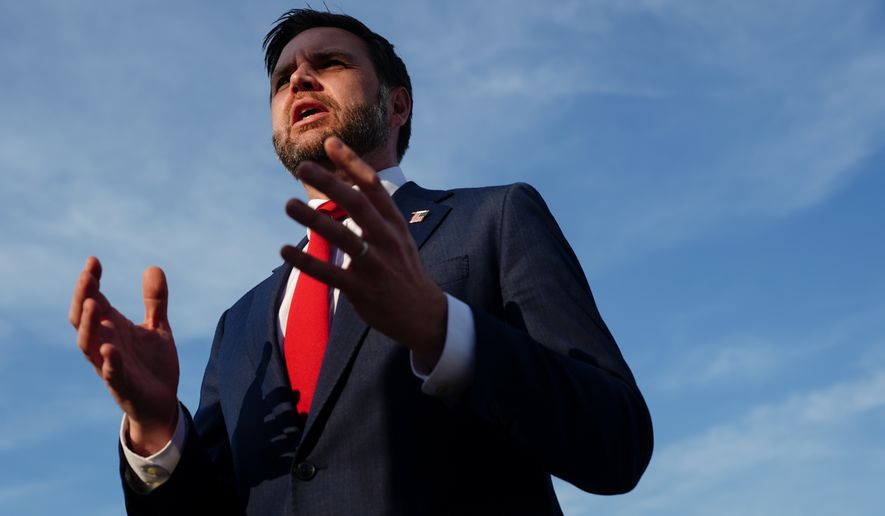
Speaking to reporters in Switzerland, Mr. Vance pushed back on concerns that Iran would use revenue gained from sanctions relief to fund terrorism. He said the U.S. had proposed that any unfrozen Iranian assets be used to buy American goods such as soy or wheat.
Mr. Trump heralded that point of the agreement as a victory for American farmers.
“Money that is being unfrozen is going to be used to buy food and the food is going to be bought exclusively through the United States from our farmers,” the president said.
Iranian state-affiliated media denied that Iranian negotiators had discussed any such proposal during the weekend talks.

Still, Iran touted the success of the first round of negotiations. Iranian Foreign Minister Abbas Araghchi wrote on social media that the two sides had made significant progress on several thorny issues, including a ceasefire in Lebanon, oil exports, the status of Iran’s frozen assets and a $300 billion reconstruction fund.
Mr. Baghaei said U.S. and Iranian negotiators agreed to create “executive mechanisms” to supervise the implementation of provisions in the memorandum of understanding. Pakistan and Qatar, which have been mediating discussions between Iran and the U.S., announced the creation of the mechanisms earlier Monday.
In particular, Mr. Baghaei pointed to the articles in the agreement covering a ceasefire in Lebanon, the removal of the U.S. blockade and the unfreezing of Iran’s assets.
U.S. Central Command last week announced the end of the naval blockade of Iran’s ports, which had been in place since April. The blockade was lifted only after Iran agreed to reopen the Strait of Hormuz, U.S. officials said.
Lebanon has emerged as perhaps the most consequential outstanding issue going into negotiations, as Israel seemed prepared to maintain its assault on Hezbollah despite Iran’s threats to back out of the deal if the attacks continue.
However, a ceasefire between Israel and Hezbollah, reached Friday, largely held over the weekend, giving further U.S.-Iran talks a window for progress.
Pakistan and Qatar announced the creation of a “de-confliction cell” to oversee a ceasefire in Lebanon. The body will include representatives from Lebanon, the U.S. and Iran.
The memorandum of understanding’s first provision includes a ceasefire on all fronts of the war, including in Lebanon, where Israel has been fighting Hezbollah militants since early March.
The Israeli military is occupying several square miles of territory in southern Lebanon that it has deemed a “security zone” and has refused to withdraw despite the ceasefire with Hezbollah.
“We don’t have territorial ambitions in Lebanon, but we will not withdraw from the security zone and expose our citizens to Hezbollah’s attacks and possible invasion,” Israeli Foreign Minister Gideon Sa’ar wrote on X.
Contact the author

Please read our comment policy before commenting.