



A version of this story appeared in the daily Threat Status newsletter from The Washington Times. Click here to receive Threat Status delivered directly to your inbox each weekday.
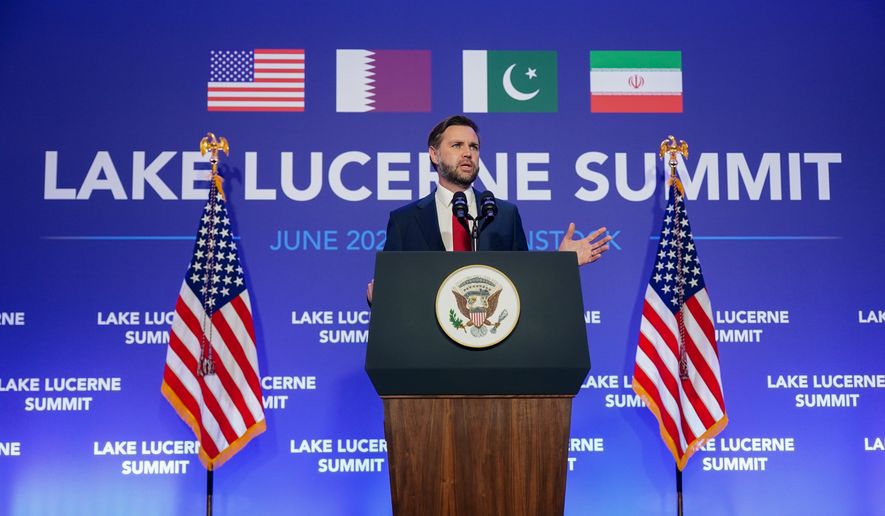
Vice President J.D. Vance on Monday said Iran has agreed to allow inspectors from the United Nations’ nuclear watchdog agency to inspect its nuclear sites, calling the move part of a “good foundation for a successful final deal” to end the war that began nearly five months ago.
“The final deal is the house,” Mr. Vance told reporters in Switzerland after marathon negotiations with the Iranian leaders. “We have set the foundation. We haven’t built the house, but we’ve laid a successful foundation to get to a good place for the American people.”
Iranian Foreign Minister Abbas Araghchi said on X that the meeting delivered “major progress to end [the] Lebanon War,” and noted progress on oil exports, the blockade of the Strait of Hormuz, frozen Iranian assets and major reconstruction plans for Iran.
People were interested in these podcasts
Mr. Vance acknowledged several hiccups in the talks, including a threat by Iran’s team to walk out of the talks because of inflammatory social media posts by President Trump threatening a fresh round of attacks on the country because of its support for Hezbollah in Lebanon, an Iranian proxy that has attacked Israel.
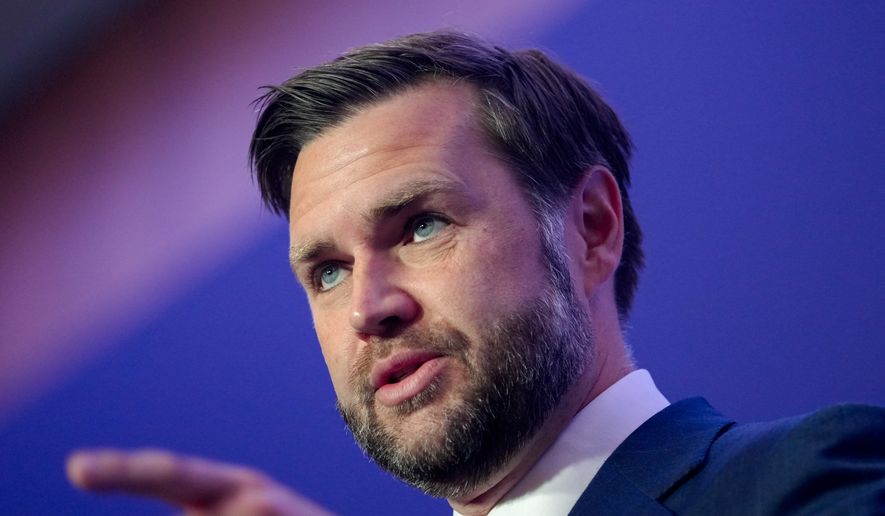
“What we told the Iranians yesterday is when you guys engage in what us millennials might call ‘trash talk,’ you can’t expect the president of the United States not to respond and not to correct the record,” Mr. Vance said.
Perhaps the biggest deal struck during the talks that began Sunday and lasted through Monday was Iran’s agreement to allow International Atomic Energy Agency inspectors to begin identifying sites of enriched material.
SEE ALSO: Iran wants ‘commitment for commitment’ during negotiations with the U.S.
A leaked version of the memorandum of understanding — the pact which both countries are using as the framework to end the war — said that Washington and Tehran agreed that Iran’s enriched nuclear material will not be removed, but rather diluted inside Iran under IAEA supervision. Mr. Vance did not confirm that.
The vice president also said that Jared Kushner, Mr. Trump’s son-in-law and one of the lead U.S. negotiators, came up with the idea of unfreezing Iranian assets and having Iran use those funds to buy American corn, soy and wheat to benefit the nation’s farmers.
Qatar, which is overseeing the mediation, would have to approve the process, but the thinking is that lifting Iranian sanctions would free up money to buy American agricultural products.
Other key points that Mr. Vance said showed progress included establishing a mechanism for keeping the Strait of Hormuz open, coordination for the ceasefire between Israel and Hezbollah in Lebanon and a process to negotiate the points that remain.
Iran has not acknowledged any of the measures and, as an agricultural nation, doesn’t have much of a demand for U.S. crops.
Sunday’s high-level talks were the first discussion under the U.S-Iran memorandum of understanding, with officials from both sides present alongside the mediating nations of Pakistan and Qatar.
SEE ALSO: Trump threatens to hit Iran ‘very hard’ over proxies, while Vance tries to negotiate peace
The foreign affairs ministries of Pakistan and Qatar issued a joint statement describing the session as “positive” and “constructive.”
Pakistan and Qatar said the main success of Sunday’s talks was the creation of a “High Level Committee” which will have political oversight of the mediation and agreed on a road map towards reaching “a final deal within 60 days, laying the foundation for the immediate commencement of further technical talks” on Iran’s nuclear program, sanctions and dispute resolution, the statement said.
Talks are scheduled to continue for the rest of the week.
Please read our comment policy before commenting.