


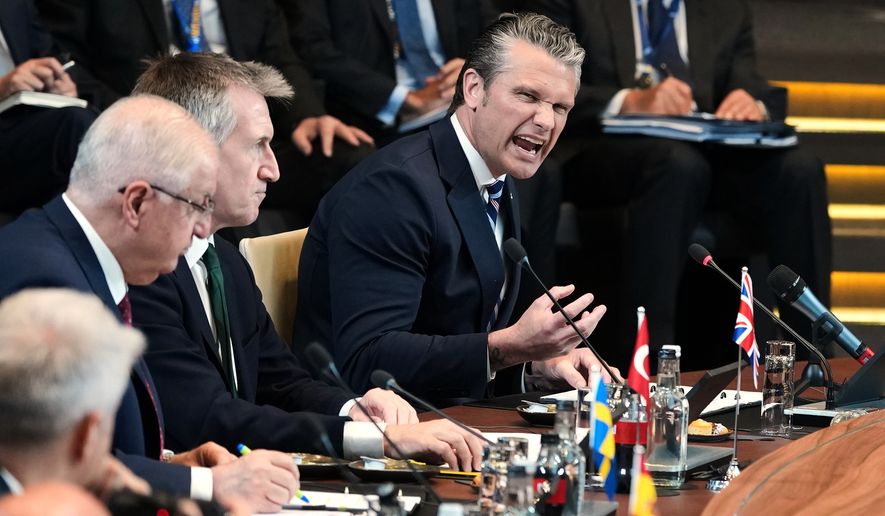

Tucked inside the Senate’s annual National Defense Authorization Act is a provision to withhold 75% of Defense Secretary Pete Hegseth’s travel budget unless the Pentagon turns over information on the bombing of an Iranian elementary school and the U.S. strikes on alleged drug boats.
The must-pass defense policy bill, which the Senate Armed Services Committee filed Tuesday, demands an unredacted civilian harm investigation, including all supporting documents for the strike on the school in Minab, Iran, on Feb. 28, that killed more than 150 people, most of whom were children.
They also requested unedited videos of lethal attacks against alleged drug smuggling vessels in the waters off Latin America, which kicked off in September and drew criticism over a “double-tap” strike that killed survivors.
People were interested in these podcasts
Under the bill, the material would be handed to the House and Senate Armed Services committees.
It reflects growing frustration in Congress with the Pentagon’s lack of transparency at national security briefings and slow-walking response to congressional requests.
A similar provision was slipped into last year’s defense legislation, in which lawmakers gave the Defense Department two options: cut Mr. Hegseth’s travel budget by 25% or hand over the videos and reveal the specific order behind the attacks.
The House Armed Services Committee did not include a travel budget cut in this year’s NDAA, so lawmakers will have to debate whether the provision survives.
Since September, over 200 “narco-terrorists” have been killed in a minimum of 64 strikes against what the administration says are drug trafficking vessels in the Caribbean and Eastern Pacific.
What particularly concerned lawmakers was a “double tap” strike in September that killed survivors of an initial attack against a suspected drug boat.
The Trump administration framed the boat strikes as part of an effort to protect the U.S. from the influx of illegal drugs, but human rights organizations and Democrats have said the government is violating international law, amounting to war crimes.
Senate Armed Services Chair Roger Wicker, Mississippi Republican, concluded that there was “no evidence of war crimes” in the strike authorized by Navy Adm. Frank Bradley that killed two survivors.
The Pentagon’s internal watchdog began its probe last month into whether the U.S. military followed an established targeting framework when conducting those attacks.
The day of the U.S.-Israeli strikes on Iran that kick-started the war, Shajareh Tayyebeh elementary school was struck, killing mostly children.
Pentagon officials have said the incident was under investigation, but have not confirmed the lethal strike was the fault of the U.S.
Outside analysts have suggested that U.S. target maps were not up to date or checked, leading to the mass casualties.
When asked about the internal investigation on Wednesday, President Trump said, “I could have a report for you tomorrow. I would ask Pete Hegseth that question because they have it under investigation.”
Contact the author

Please read our comment policy before commenting.