



A version of this story appeared in the daily Threat Status newsletter from The Washington Times. Click here to receive Threat Status delivered directly to your inbox each weekday.
OPINION:
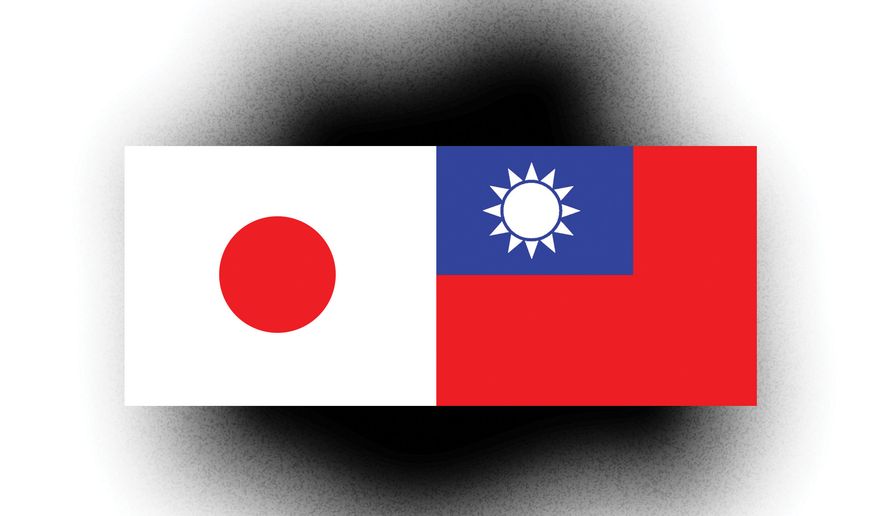
Japan and the Philippines recently announced maritime boundary negotiations in waters that China claims overlap with areas east of Taiwan.
Beijing responded by denouncing the talks as “illegal” and dispatching coast guard vessels to conduct law enforcement operations near the island, underscoring its growing concern that America’s allies are coordinating more closely in areas that could prove critical during a Taiwan contingency.
For years, Beijing has sought to isolate Taiwan diplomatically while portraying the island’s future as an issue to be resolved solely between Taipei and the mainland. Yet China’s response suggests it increasingly views cooperation among Japan, the Philippines and the United States as part of a broader security architecture that could complicate any attempt to seize Taiwan by force.
People were interested in these podcasts
To that end, Japan is signaling with increasing clarity that Taiwan’s security is inseparable from its own. In November, Japanese Prime Minister Sanae Takaichi said a Taiwan contingency involving Chinese military force, including a naval blockade, could constitute a “survival-threatening situation” under Japan’s security legislation.
Amid continuing uncertainty about how the United States would respond to a Taiwan crisis, Japan has emerged as a committed and capable partner should a conflict unfold in the Western Pacific.
Under Article 9 of Japan’s constitution, Japan’s military is oriented toward defensive purposes, a legacy of its defeat in World War II. Although Tokyo spent decades rebuilding itself into an economic powerhouse, its Self-Defense Forces evolved into one of the most technologically advanced naval forces in the world.
Today, the land of the rising sun fields roughly 150 to 160 active naval vessels. These include dozens of destroyers, eight of which are equipped with the Aegis Combat System for advanced ballistic missile defense, as well as 23 advanced diesel-electric submarines regarded as among the quietest and most capable non-nuclear submarines in the world. Japan’s Izumo-class helicopter destroyers are also being modified to operate short-takeoff and vertical-landing F-35B stealth fighters.
The Aegis Combat System uses advanced radar to provide 360-degree coverage, enabling it to serve as a wide-area shield capable of tracking more than 100 targets simultaneously, including low-flying cruise missiles and ballistic missiles in flight. The result is a naval force capable of creating a layered maritime missile defense system.
China’s navy has an estimated 370 to 400 warships, making the People’s Liberation Army Navy formidable. Still, war games conducted by the Center for Strategic and International Studies suggest that Japan’s involvement would substantially improve the chances of preventing a successful Chinese invasion of Taiwan.
The United States maintains tens of thousands of troops and extensive military infrastructure across Japan while enjoying expanded access to military facilities in the Philippines under the Enhanced Defense Cooperation Agreement. Meanwhile, the 7th Fleet oversees one of the world’s most powerful forward-deployed naval forces in the Western Pacific.
Closer security coordination between Washington and Tokyo aimed at preserving Taiwan’s security would provide a powerful deterrent to Beijing. It would also maintain America’s strategic partnership with Taiwan, whose semiconductor industry produces roughly 90% of the world’s most advanced chips, which are essential to artificial intelligence, advanced weapons systems and modern communications networks.
After the Chinese Communist victory in the Chinese Civil War in 1949, President Chiang Kai-shek relocated the Republic of China government and roughly 1 million people to Taiwan, where it continued to claim legitimacy over all of China.
With significant American economic assistance, Taiwan stabilized its currency, implemented land reforms and laid the foundation for the export-driven growth that would later become known as the Taiwan Miracle.
When the Korean War began in 1950, President Truman ordered the 7th Fleet into the Taiwan Strait, helping deter an invasion of Taiwan and preventing hostilities across the strait.
In 1973, Taiwan established the Industrial Technology Research Institute, which helped nurture the island’s emerging technology sector. ITRI later played a key role in the creation of United Microelectronics Corp. and Taiwan Semiconductor Manufacturing Co., helping transform Taiwan into the world’s leading center for advanced semiconductor manufacturing.
In 1979, Congress passed the Taiwan Relations Act, which committed the U.S. to maintaining the capacity to resist coercion against Taiwan and established a framework for providing Taiwan with the defensive arms necessary to maintain its self-defense.
Taiwan endured a dark chapter of repression under Chiang during decades of martial law, but democratic reforms in the late 20th century transformed the island into a flourishing democracy. The Democratic Progressive Party’s victory in the 2000 presidential election marked the first peaceful transfer of power between rival political parties.
Japan’s recent statements and actions represent one of Tokyo’s clearest signals that it is prepared to play a larger security role in the Indo-Pacific. Washington should welcome that development and work closely with Tokyo to strengthen deterrence and ensure Beijing understands that Taiwan will not stand alone.
America and Taiwan have a special relationship that should not be abandoned. Protecting Taiwan will help prevent China from gaining control over semiconductor production that is critical to the U.S. economy and future military technology.
Our destinies are intertwined, but Taiwan’s security will ultimately depend on credible deterrence. By strengthening cooperation with Japan and demonstrating a sustained commitment to stability in the Western Pacific, Washington can help preserve peace and reduce the likelihood that Beijing will ever choose force.
• Jeffrey Scott Shapiro is a former senior U.S. official who serves on the editorial board of The Washington Times.
Follow the author

Please read our comment policy before commenting.