


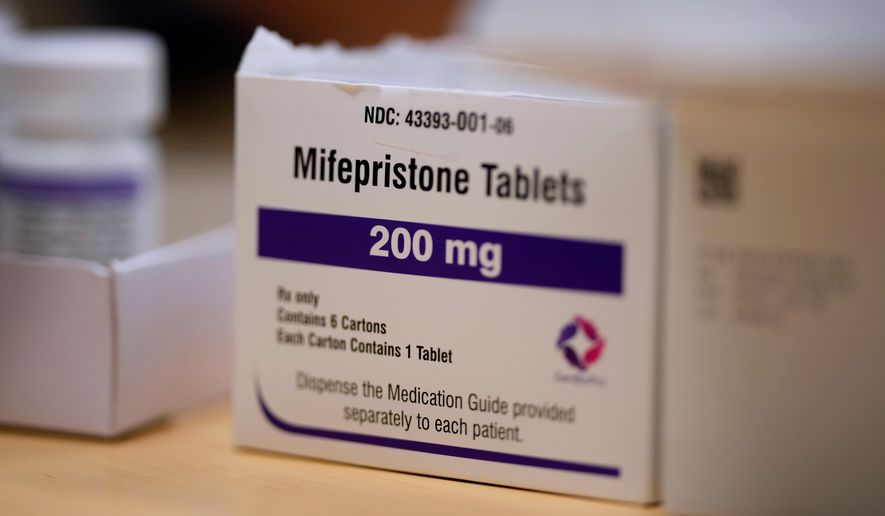

Many American women who underwent medication abortions said they wished they had received more information about potential complications, according to a peer-reviewed study published Tuesday by researchers affiliated with the Charlotte Lozier Institute, a pro-life research organization.
The study, published in the journal PLOS ONE and first reported by the Daily Caller News Foundation, surveyed women aged 23 to 55 who had undergone medication abortions in the United States. Of the 508 women who met eligibility criteria, 362 responded to the survey. The study measured respondents’ perceptions of the informed consent process, not whether providers actually omitted disclosures or violated any legal standard.
More than half of respondents, 52.5%, said bleeding was a complication about which they would have wanted more information than they recalled receiving. Forty-eight percent said the same about pain, and 33.7% cited mental and emotional health. Nearly 30% said they wished they had received more information about incomplete abortion with retained tissue, while 21.3% cited concern about a failed abortion with a continued living fetus.
People were interested in these podcasts
The study also found that some women described pain and bleeding as a source of confusion, reporting uncertainty about whether their symptoms were normal. The paper notes that some respondents expected more severe symptoms than they experienced, while others were caught off-guard by the intensity. Nearly 5% of respondents reported complications, including incomplete abortion with retained tissue requiring further treatment, according to the study’s findings as described by CLI researchers; the full methodology is available in the published paper.
“These findings raise real questions about whether women are being given all the information they want and need to be fully informed,” CLI Senior Research Associate Tessa Cox said in a statement. “Informed consent for abortion drugs needs to be far more than just a box to check. Given the broader context of the increasing availability of abortion drugs online and through the mail, there are serious ramifications, not only as the lives of unborn babies are ended by these drugs but also as women’s safety is put at risk.”
“The stakes are too high for informed consent to be treated as a formality,” Ms. Cox added.
Lead author and CLI Associate Scholar Dr. Maka Tsulukidze said the research drew on two sources — a thematic analysis of online narratives and the national survey — that yielded consistent results. “When findings converge like this, it gives us greater confidence that we are capturing something real about women’s experiences,” Dr. Tsulukidze said.
Respondents reported a range of emotional reactions, most commonly relief, sadness, anxiety, guilt, depression, stress and grief. Nineteen percent said they felt happiness, 17.4% reported regret, 14.4% felt anger and 6.3% expressed a desire to stop or reverse the abortion.
The report called on healthcare providers to “seek ways to enhance women’s informed consent for medication abortion.”
The findings come as medication abortions have grown increasingly common. An estimated 1,126,000 clinician-provided abortions were performed in the United States in 2025, according to the Guttmacher Institute, a reproductive health research organization. Medication abortion accounted for 65% of all clinician-provided abortions as of 2023, the most recent year with available data.
The Charlotte Lozier Institute is the research arm of Susan B. Anthony Pro-Life America. The survey relied on self-reported retrospective experiences and, according to researchers, was not designed to be a nationally representative sample of all medication-abortion patients.
This article was constructed with the assistance of artificial intelligence and published by a member of The Washington Times' AI News Desk team. The contents of this report are based solely on The Washington Times' original reporting, wire services, and/or other sources cited within the report. For more information, please read our AI policy or contact Steve Fink, Director of Artificial Intelligence, at sfink@washingtontimes.com
The Washington Times AI Ethics Newsroom Committee can be reached at aispotlight@washingtontimes.com.
Please read our comment policy before commenting.