


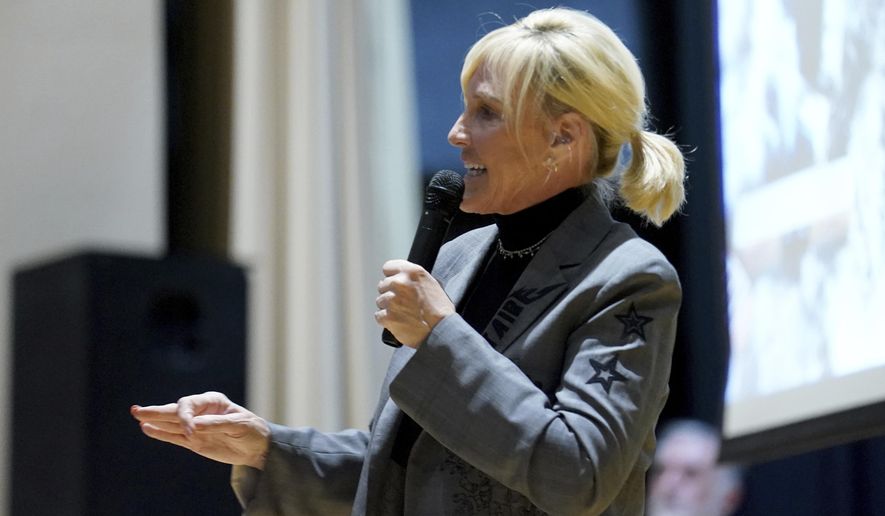

Environmental activist Erin Brockovich has added thousands of community concerns to her nationwide data center tracking map in a single week, as polling and local legislation confirm growing public opposition to the artificial intelligence infrastructure boom.
The map, hosted at brockovichdatacenter.com, allows residents to report operational, under-construction or proposed data centers near their homes. Ms. Brockovich launched the platform in late May, and submissions flooded in almost immediately. By June 2, the map had logged just over 3,000 reports. By Tuesday, another 2,000 had been added, pushing the total past 5,000. Ms. Brockovich said on Facebook that the map reports represent only a portion of those who have contacted her, writing on May 31 that “6,615 submissions have been sent in and counting.”
The Trump administration has framed accelerated data center development as essential to keeping the United States ahead of China in the AI race, but communities near proposed and existing facilities have raised a wide range of concerns. According to the website, the most commonly reported issues involve electricity consumption, water use for cooling, noise pollution, strain on local infrastructure, electronic waste from hardware turnover and vulnerability to natural disasters or geopolitical disruptions.
People were interested in these podcasts
The breadth of opposition is not limited to Ms. Brockovich’s platform. A Gallup poll conducted in March found that 7 in 10 Americans oppose the construction of an AI data center in their local area, including 48% who said they are strongly opposed.
The water issue is particularly acute. Large data centers can consume up to 5 million gallons of water per day, equivalent to the water use of a town of 10,000 to 50,000 people, according to the Environmental and Energy Study Institute. One report estimated that U.S. data centers collectively consume nearly 450 million gallons of water daily and more than 160 billion gallons annually, while researchers at the University of California, Riverside, estimated that generating a 100-word AI response can consume roughly one bottle of water.
On electricity, data centers consumed about 4.4% of total U.S. electricity in 2023 and are expected to consume between 6.7% and 12% by 2028, according to a Lawrence Berkeley National Laboratory report commissioned by the Department of Energy.
The opposition has translated into legislative action across the country. More than 50 cities have enacted bans or moratoriums on new data center construction nationwide. Seattle’s City Council unanimously adopted an emergency one-year moratorium on Tuesday covering facilities with power capacity exceeding 20 megavolt-amperes, with the option to extend it an additional six months. The 9-0 vote came in response to concerns about the implications of AI infrastructure for the city’s power grid, water supply, utility rates and economy.
In Kentucky, Daviess County — home to more than 100,000 people and the city of Owensboro — is among a growing number of cities and counties across the state considering moratoriums or implementing zoning restrictions on data center construction. Barren County’s Joint City-County Planning Commission also approved a one-year moratorium on data center development.
In Georgia, Palmetto and Fayetteville joined Atlanta in prohibiting data centers in February and March, with Fayetteville amending its unified development ordinance to effectively ban new projects within city limits. Monterey Park, California, similarly moved to ban new data center development following a landslide council vote.
As reports continue flowing into Ms. Brockovich’s platform, her map is on track to become one of the most visible public databases tracking both the footprint of data center expansion and the communities pushing back against it.
This article was constructed with the assistance of artificial intelligence and published by a member of The Washington Times' AI News Desk team. The contents of this report are based solely on The Washington Times' original reporting, wire services, and/or other sources cited within the report. For more information, please read our AI policy or contact Steve Fink, Director of Artificial Intelligence, at sfink@washingtontimes.com
The Washington Times AI Ethics Newsroom Committee can be reached at aispotlight@washingtontimes.com.
Please read our comment policy before commenting.