


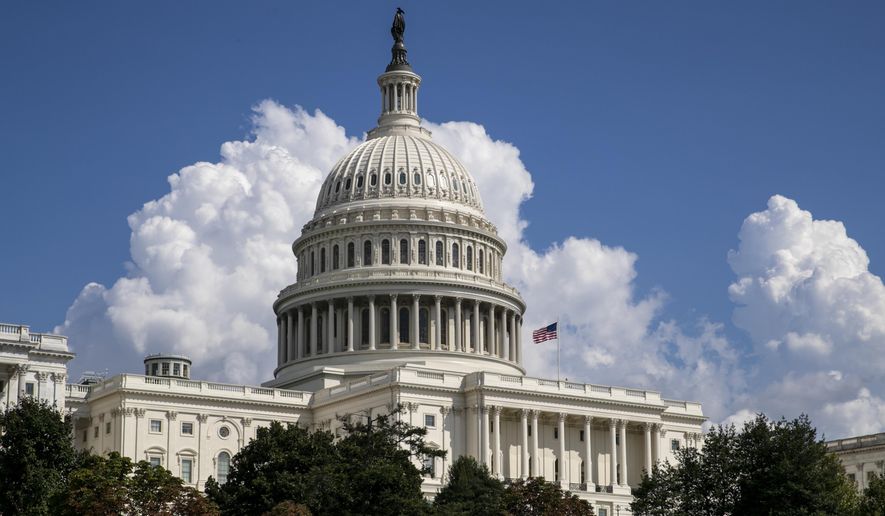

The bipartisan housing bill that President Trump has refused to sign will go into effect by the end of the week — with or without his signature.
The 21st Century ROAD to Housing Act, which overwhelmingly passed both chambers of Congress in June and largely aims to address the housing affordability crisis, was sent to the president’s desk on June 29.
But hours before Mr. Trump was slated to sign the legislation, he abruptly canceled the ceremony, declining to sign it unless Congress moves forward with the Safeguard American Voter Eligibility Act.
People were interested in these podcasts
The housing measure would automatically become law without the president’s signature due to the Constitution, which provides for the outcome if the president neither signs nor vetoes a bill within 10 days, excluding Sundays, after it was presented while Congress is in session.
Its 10-day deadline is Friday. But that window is not the only variable.
The Constitution offers a second path: If Congress adjourns before the 10 days run out, the bill would instead die via a “pocket veto,” because the president cannot return it to a chamber that is not sitting to receive it.
This scenario is unlikely, however, because the housing bill’s 10-day clock and Congress’ regular summer schedule are not expected to collide.
Now, the most significant federal housing legislation since the 1990s may go into effect without Mr. Trump’s backing — a move that could prove to work against the GOP in the upcoming midterm elections.
With affordability a key voter concern and campaign focus, the president’s refusal to sign has not sat well with voters, a large majority of whom support the comprehensive housing package. Mr. Trump’s own housing approval is sliding, as his disapproval on housing ticked up a few points between June and July since the refusal.
The housing package limits large institutional investors from buying up single-family homes, creates pilot programs to expand access to smaller mortgages and temporarily prohibits the Federal Reserve from establishing a digital dollar.
The president said last week that he is undecided on whether to sign the housing bill, deeming it “of minor importance” and a “yawn” compared to the SAVE America Act.
But he backed this bill until he changed course, as Mr. Trump and House leaders reached agreement on the final text in May. Now, he’s using it as leverage on the unrelated issue.
The SAVE Act, which is tied up in opposition from Senate Democrats and some GOP lawmakers, would require proof of citizenship to register to vote and photo ID to cast a ballot. It remains stalled in the upper chamber due to the 60-vote filibuster threshold.
Mr. Trump has repeatedly pressed Senate Majority Leader John Thune, South Dakota Republican, to abolish the filibuster to pass the bill — a maneuver around Democrats that Mr. Thune says will not work because Republicans do not have enough votes.
Contact the author

Please read our comment policy before commenting.