



The U.S. military launched a set of strikes against targets in Iran Tuesday evening after attacks on three commercial tanker ships in the Strait of Hormuz, placing further pressure on the ceasefire agreement and throwing future negotiations into question.
U.S. Central Command, which oversees military operations in the Middle East, said in a statement that the strikes on Iran were launched to “impose heavy costs for targeting and attacking commercial shipping crewed by innocent civilians.”
“Iran’s demonstrated aggression was unwarranted, dangerous and a clear violation of the ceasefire,” the statement read.
People were interested in these podcasts
Neither the White House nor President Trump immediately commented on the strikes. Mr. Trump was in Turkey for the NATO summit.
The exact targets of the attacks were not immediately clear, though Iranian state media reported that several explosions were heard in the southern part of the country.
The strikes follow retaliatory moves by the Treasury Department to revoke an authorization from June that allowed Iran to legally export its oil.
The Treasury’s Office of Foreign Assets Control said in a statement that the revoked license has been replaced with a new authorization that halts any further purchases or loading of Iranian crude oil.
Businesses have until July 17 to “wind down” existing transactions authorized under the June license, according to the office.
Iranian Deputy Foreign Minister Kazem Gharibabadi said the move was a clear violation of the Islamabad Memorandum of Understanding, signed by the U.S. and Iran last month. He said Iran will take “decisive actions” to preserve its security.
Hours before the U.S. attacks started and the license was pulled, maritime authorities reported three attacks on tanker ships traveling through the Strait of Hormuz.
The United Kingdom Maritime Trade Operations center received a report of an early morning attack on the Al Rekayyat, 8 miles east of Limah, Oman. The unidentified projectile struck the ship’s port side and sparked a fire, though no casualties were reported.
Two other vessels also came under attack in the strait, the center said.
The first tanker was hit by an unidentified projectile while exiting the strait, 16 miles off the coast of the United Arab Emirates. The ship reached its next port of call without any casualties.
An additional tanker was hit by what the trade operations center called a drone 6 miles off Oman’s Musandam Peninsula. The attack caused minor structural damage, but no casualties were reported.
The country of origin and the names of the two additional vessels hit in the waterway have not been released.
In response to the attacks, the trade operations center raised its Strait of Hormuz threat level to “severe” and said “deliberately hostile action” was likely.
“The recent confirmed incidents highlight that the threat environment remains heightened and warrants extreme vigilance. The Iranian Revolutionary Guard Corps’ hailing and routing pressure continue, particularly for vessels with active automatic identification systems,” the agency said in a statement.
It was not clear whether the Treasury’s revocation of the oil authorization was a response to the attacks in the strait. The Washington Times reached out to the White House for comment.
Iranian state media reported that the Al Rekayyat was transporting liquefied natural gas from Qatar and was targeted by Iranian authorities after ignoring warnings against traveling through Omani waters in the Strait of Hormuz.
Iranian Foreign Ministry spokesman Esmaeil Baghaei said earlier Tuesday that Iran was fulfilling its responsibilities under the memorandum and that commercial ships moving through the strait without assistance from Iranian authorities face serious risks.
Still, the Qatari Foreign Ministry blamed Iran for the attack on the Al Rekayyat. It called the incident a violation of international law.
“The targeting of the Qatari tanker Al Rekayyat as it was passing near the Strait of Hormuz is an unacceptable attack on the security and safety of international navigation and the security of global energy supplies,” Qatari Foreign Ministry spokesperson Majed Al Ansari wrote on X.
Qatar summoned Iran’s deputy ambassador in protest of the attack and called on Iran to halt all activity that could endanger global navigation.
The UAE and Saudi Arabia also blamed Iran for the attacks and condemned them as severe threats to international navigation.
Tehran has consistently said that, while the Strait of Hormuz is open, commercial shipping vessels must travel through Iranian-controlled waters and coordinate with Iran’s military or face severe consequences.
Iranian diplomats are in talks with Oman to hammer out an agreement for governance over the strait. Iran reportedly wants to create a framework that would let authorities impose “service fees” on vessels traveling through the waterway.
The strait was considered international waters before the war began in late February, and U.S. officials have insisted they will not tolerate Iran charging fees on commercial ships.
Under the terms of the memorandum, Tehran must keep the strait open and toll-free for at least 60 days while negotiators hammer out a permanent peace deal.
Iran’s attacks on tanker ships and U.S. retaliation are the latest setbacks to the beleaguered peace process between Washington and Tehran. The two sides are in the middle of a 60-day window, outlined in the memorandum, reserved for direct negotiations over Iran’s nuclear ambitions and possible sanctions relief.
Yet constant disagreements over interpretations of the memorandum and occasional retaliatory strikes from both sides have significantly hampered progress toward a comprehensive deal.
In late June, a commercial vessel was struck by an unidentified projectile while trying to travel through the strait via Omani waters. Iran did not claim responsibility for the attack but was quickly blamed by the U.S., which launched strikes on Iranian military targets shortly afterward.
Iran retaliated with a series of missile and drone attacks on U.S. military installations in the Persian Gulf region.
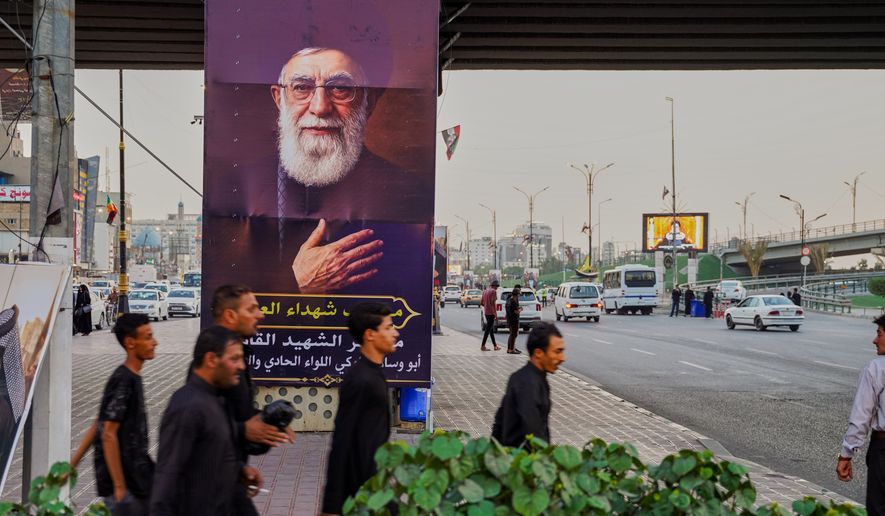
Iranian and U.S. diplomats met for two days of indirect negotiations last week after the retaliatory strikes. Qatari and Pakistani mediators said the talks were productive, but that further direct negotiations would take place sometime after Iran’s weeklong funeral for Ayatollah Ali Khamenei, who was killed in a military strike on Feb. 28.
The agreement also calls for a ceasefire on all fronts and for the U.S. and Iran to begin technical negotiations over Tehran’s nuclear program and sanctions relief.
Shipping has picked up significantly in the strait since the U.S. and Iran signed the memorandum, but traffic is still well below prewar levels. Recent attacks on the waterway are likely to deter commercial shipping companies.
Oil prices jumped almost 2% on Tuesday after attacks on three tankers. Brent crude futures rose $1.86 to $72.85 a barrel, still far below their peak of more than $100 during the war.
Contact the author

Please read our comment policy before commenting.