



OPINION:
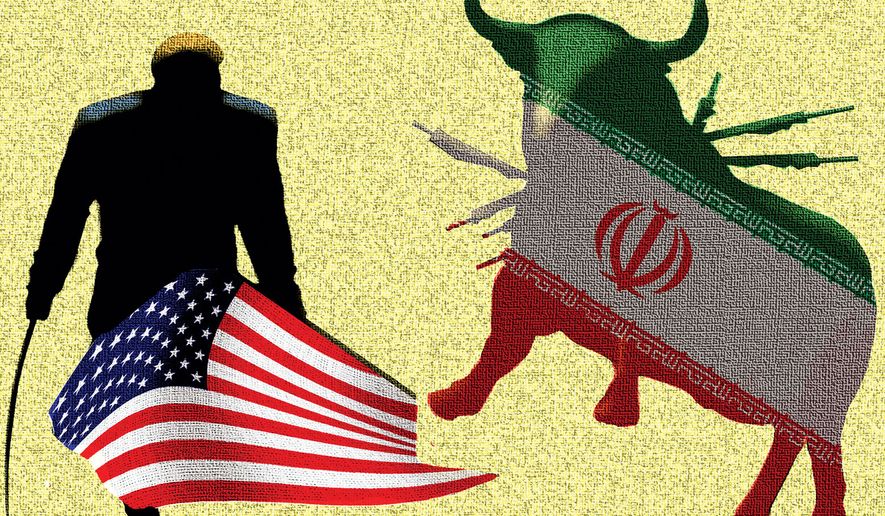
An old saying goes that a battle plan never survives first contact with the enemy. In many cases, as President Trump is finding out, the same is true of wars.
Mr. Trump’s plan for Iran required that the war last only two or three weeks. After that, as the president said repeatedly, Iran would be desperate to make a deal.
However, the ayatollahs’ regime is not interested in any deal. As the president is discovering, the regime intends to break any agreement it may make.
We are now into the war’s fifth month, and there is no end in sight. Mr. Trump is reportedly angry and frustrated that the war will not end on his terms. Two things are driving the president’s frustration.
The first is that Iran has not been defeated, nor has its ideology. The U.S. compelled the surrender of Japan and Germany in World War II. Neither nation nor its ideologies could withstand the devastation that we and our allies had visited upon them. They surrendered after nuclear bombs fell on Japan and Adolf Hitler was dead by his own hand.
Still, that was not the real end.
Nazism was defeated and crushed. The Japanese ideology of Bushido and the religious belief in the emperor’s infallibility were both proved wrong. Neither Iran nor its Islamic ideology, which is as strong now as it was in 1979, has been defeated.
The second problem is that the president now faces a widening war. Both belligerents are seemingly trapped in an upward spiral of escalation. Is it an upward spiral or a roller-coaster ride? Mr. Trump seems undecided.
The Houthis have threatened a blockade of Saudi shipping, and Bahrain and Kuwait have secretly attacked Iran. These attacks may have been one-offs.
Mr. Trump has threatened retaliation against Iran for any attacks by the Houthis, who have already struck two Saudi tankers in the Red Sea. Saudi oil exports are now far more heavily routed through the Suez Canal, which the Iranians have not yet attacked.
The president has said that damage caused by any further attacks, either in the Red Sea or the Strait of Hormuz, should be paid for out of Iranian assets held by the U.S.
Iran, of course, is indignant, saying that no such use of its assets would be allowed (not that it has any way to control such payments).
The Houthis have also shot missiles into the southern Saudi city of Jizan.
The reported secret attacks on Iran by Bahrain and Kuwait have also widened the war. They were the first such attacks on Iran by Arab nations, demonstrating that these countries are as frightened of Iran as they are of the war’s outcome.
Mr. Trump has, for now, halted military strikes on Iran, saying he always favored a negotiated settlement. Still, that does not square with Tehran’s accelerated attacks on Saudi Arabia via the Houthis, the Bahraini and Kuwaiti attacks on Iran, or the fact that Tehran never means to live up to any deal.
How does Mr. Trump’s restraint teach the ayatollahs that they should not accelerate the war?
It does not and cannot. Deterrence means that the enemy is threatened with the cost of an attack that it will find unacceptable for the proposed gain. We deterred Russia and China from nuclear war and still do with the promise of nuclear retaliation.
However, in smaller conflicts such as the Iran war, that strategy fails quickly because those at war with us, as the Iranians have been since 1979, do not fear nuclear retaliation.
We clearly cannot deter the Iranians from firing missiles at our bases in the Middle East or attacking any nation’s ships in the Strait of Hormuz. We cannot even deter the Houthis from striking at the Saudis.
Mr. Trump may believe that his nearly two weeks of airstrikes have deterred the Iranians from further missile and drone strikes, but the temporary respite is only until the ayatollahs order more strikes on our bases, our allies and our allies’ ships.
We cannot deter Hezbollah from attacking the Israelis, but the Israelis can and have by imposing a cost on Hezbollah that the terrorists find unacceptable. That is what the Saudis and we must do to the Houthis. The Iranian regime is another matter.
Mr. Trump continues to threaten massive military strikes against Iran. He cannot be content with a stalemated war. That means he has to strike at Iran’s leadership, parliament, bridges, power plants and everything else that enables Iran to function.
• Jed Babbin is a national security and foreign affairs columnist for The Washington Times and a contributing editor for The American Spectator.
Follow the author

Please read our comment policy before commenting.