




OPINION:
Recently, Shabbos Kestenbaum, a Harvard Divinity School graduate and host of the PragerU podcast “Theological,” interviewed Rabbi David Wolpe, a former visiting scholar at Harvard Divinity School. Rabbi Wolpe is also the Max Webb emeritus rabbi of Sinai Temple in Los Angeles and a scholar-in-residence at the Maimonides Fund.
On the show, Rabbi Wolpe denied the Old Testament’s historicity. For example, when asked about the story of Israel’s exodus from Egypt, he responded: “I don’t take these stories literally.” He then added, “Faith is not determined by empirical truth. We cannot turn to the Torah for scientific advice [or] for accurate historical accounts.”
Rabbi Wolpe also contended that the Bible is not static, but is rather an evolving document. He then argued that “as society changes, so does the way that God instructs us change.”
People were interested in these podcasts
Finally, he defended same-sex marriage by indignantly asking, “Do you mean that the Torah says that someone’s deepest impulses are just evil? I just don’t believe that’s true.”
Whether you are Jewish or Christian (or neither), this should cause you to raise an eyebrow or two. A former visiting scholar from one of the world’s foremost theological schools just said he does not believe in original sin or that the Exodus was real. I mean, what Bible is the man reading?
Let us first consider Rabbi Wolpe’s assumption of human goodness. Everyone with a Sunday-school-level understanding of the Bible should know that, if anything is clear in both the Old and New Testaments, it is that our desires are evil, not good. Here are just a few examples.
“Every imagination of the thoughts of his heart was only evil continually.” (Genesis 6:5)
“The heart is deceitful above all things, and desperately wicked. Who can understand it?” (Jeremiah 17:9)
“Indeed, there is no one on earth who is righteous, no one who does what is right and never sins.” (Ecclesiastes 7:20)
“The same destiny overtakes all. The hearts of people … are full of evil and there is madness in their hearts while they live.” (Ecclesiastes 9:3)
“They are corrupt, their deeds are vile; there is no one who does good. … All have turned away, all have become corrupt; no one does good.” (Psalm 14:1-3)
“There is none righteous, no, not one … their feet are swift to shed blood.” (Romans 3:10-18)
“For out of the heart of man come evil thoughts, fornication, theft, murder, adultery, coveting, wickedness, deceit, licentiousness, envy, slander, pride, and foolishness.” (Mark 7:21, 22)
Now, lest I be accused of just thumping my Bible, theists and atheists alike have acknowledged the same.
For example, in “The Rape of Nanking,” Iris Chang writes, “Almost all people have this potential for evil, which would be unleashed … under certain … social circumstances.”
Paulo Coelho echoes the same in his book, “The Devil and Miss Prym.” “About the nature of human beings,” he writes, “I discovered that confronted by temptation, we will always fall. Given the right circumstances, every human being on this earth would be willing to commit evil.”
Then there is the seminal quote of G.K. Chesterton, who wrote in “Orthodoxy” that certain new theologians “dispute original sin, which is the only part of Christian theology which can really be proved.” He went on to bemoan that some followers of the Reverend R.J. Campbell “admit divine sinlessness, which they cannot see even in their dreams. But they essentially deny human sin, which they can see in the street.”
Finally, we have Malcolm Muggeridge, who succinctly added: “The depravity of man is at once the most empirically verifiable reality but at the same time the most intellectually resisted fact.”
Rabbi Wolpe’s argument for this metaphorical view of Scripture reminds me of my doctoral research at Michigan State University some 30 years ago. I attempted to define how contemporary evangelicals view Scripture. I will never forget how one of Michigan State University’s most iconic professors told me that the “death, resurrection, virgin birth and miracles of Jesus could be ’message statements,’” not “reality statements.”
This low view of Scripture, whether from Christians or Jews, makes faith pallid and inconsequential. There is no question that the Bible features several genres of literature, such as poetry, prose, prophecy and parables. No one disputes that. Still, dismissing its historicity and reducing it all to feel-good allegories and metaphors ultimately makes it all meaningless to anyone but you.
When culture rather than God defines your faith, its impact is of little consequence. If your religion is indistinct from the history-denying existentialism of the alphabet soup world around you, your influence is reduced to nothing and you will be ignored.
“When the salt has lost its savor … it is thenceforth good for nothing, but to be cast out, and to be trodden under foot of men.” — Jesus (Matthew 5:13)
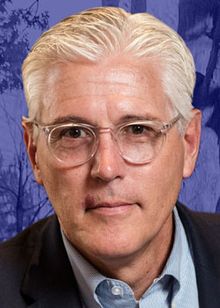
• Everett Piper (dreverettpiper.com, @dreverettpiper), a columnist for The Washington Times, is a former university president and radio host. He is the author of “Not a Day Care: The Devastating Consequences of Abandoning Truth” (Regnery). He can be reached at epiper@dreverettpiper.com.
Follow the author
Please read our comment policy before commenting.