



OPINION:
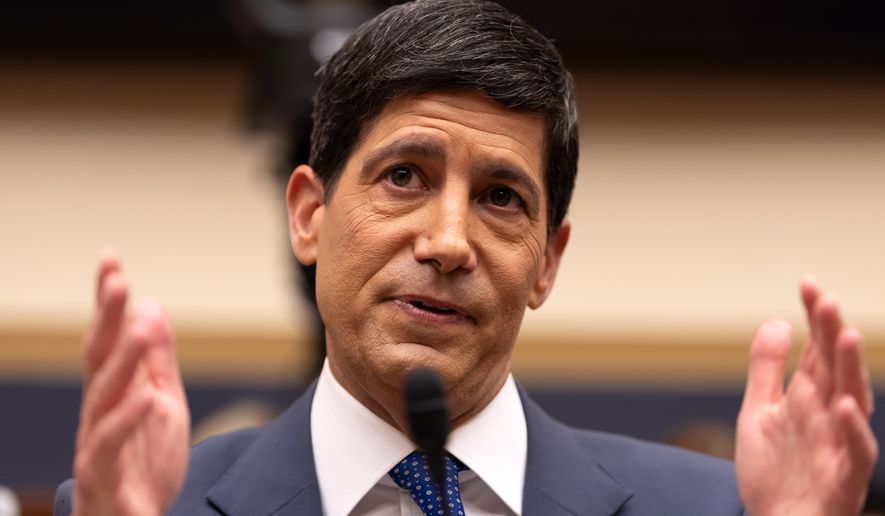
Americans are like Dorothy in Oz. We expect the Wizard — Federal Reserve Chair Kevin Warsh — and the bank’s other policymakers to solve our toughest economic problems by manipulating interest rates.
Unfortunately, the Fed is hardly alone in making monetary policy. The actions of Congress and the president contribute to the nation’s prosperity and woes through channels too often ignored.
Most fundamentally, the Fed influences interest rates by expanding and contracting its balance sheet.
People were interested in these podcasts
At $6.7 trillion, the Fed’s assets include its holdings of Treasury securities, mortgage-backed securities and other assets. To acquire these, it effectively prints money, which in turn influences the availability of credit and interest rates.
Businesses, individuals and central banks around the world transact in dollars and invest in dollar-denominated assets, such as U.S. Treasurys. Treasury securities are good substitutes for dollars if businesses and investors effectively structure the maturity of their holdings to coincide with anticipated cash needs to make payments.
The federal government deficit annually increases the supply of Treasurys in circulation by 5.8% of U.S. gross domestic product, or about $1.9 trillion. This greatly complicates the Fed’s work.
If the Fed began selling off its balance sheet, it would substantially increase the supply of Treasurys, and investors would demand much higher interest rates to hold Treasurys and most other forms of debt.
That would make mortgages, car loans and carrying credit card balances more expensive.
By holding $6.7 trillion in Treasurys and other securities, the Fed is helping keep down interest rates.
Still, its ability to lower interest rates to boost home and car sales, support business investment, create demand for additional workers and lower unemployment is limited.
The Treasury is competing with the Fed by selling so many new Treasurys to finance a bloated federal deficit. That pushes up interest rates on new and outstanding U.S. debt and in credit markets generally.
The Treasury has become almost as active in setting interest rates as the Fed.
If President Trump wants lower interest rates, then he and Congress must do something about the federal deficit: Either raise taxes or cut entitlement spending on programs such as Obamacare, food stamps and Medicaid.
There is not much political appetite for these, because voters have been anesthetized about the consequences of government assistance for everything from health insurance to income support to college expenses.
If Mr. Warsh is to have a free hand in taming inflation, then Americans must stop pretending that their government can create spending power out of thin air.
Back in the days before Obamacare and the global financial crisis, when the federal deficit was less than 3% of GDP, the Fed’s capacity to keep a lid on interest rates was much greater than in an era of nearly 6% federal shortfalls.
Since September 2024, the Fed has lowered the rates it charges banks for overnight loans and pays on member bank deposits by 1.75 percentage points.
Still, the rate on 10-year Treasurys is up 0.9 percentage points. That is the key benchmark for mortgages, other consumer loans and the credit market generally.
That is the Treasury competing with the Fed by issuing so many bonds to cover Congress’ profligate spending.
Other government policies and global events profoundly affect the Fed’s ability to control inflation.
Since 2020, the global economy has suffered five inflationary shocks: COVID-19, Russia’s invasion of Ukraine, Mr. Trump’s tariffs, war with Iran and the closure of the Persian Gulf, and the data center build-out.
These have tightened supplies of oil and natural gas, products such as plastics and computer chips that petroleum helps make, metals like aluminum and copper, fertilizer and agricultural commodities.
These have raised inflation well above the Fed’s 2% target for the past five years and have likely locked in worker and consumer expectations that inflation will remain elevated for the foreseeable future.
For each of these inflationary shocks, Presidents Biden and Trump acted in ways that either prolonged or exacerbated their inflationary consequences.
Both presidents overspent on COVID-19 assistance, which juiced consumer spending and inflation long after the crisis ended.
U.S. aid to Kyiv to repel Russian invaders was slow in coming and then withheld.
Mr. Trump raised tariffs 10%, and these will translate into 9% higher prices, even before the knock-on effects are considered.
He has hesitated in taking decisive action to dismember the terrorist regime in Iran and has become bogged down in negotiations that are unlikely to succeed.
According to surveys by the Federal Reserve Bank of New York, consumers expect inflation to be 3% over the next five years, well above the Fed’s 2% target.
That is the Fed’s lost credibility.
If Mr. Warsh wants to restore the institution’s reputation, the Fed should stop pretending it can tame inflation through balance sheet management alone when Congress and presidents spend so much and behave recklessly.
• Peter Morici is an economist and emeritus business professor at the University of Maryland, and a national columnist.
Follow the author

Please read our comment policy before commenting.