


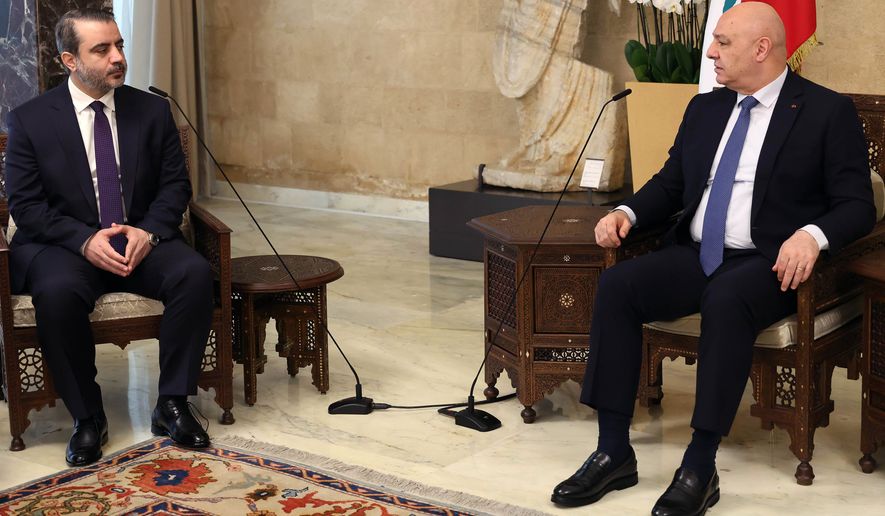

Syria’s foreign minister, Asaad Hassan al-Shaibani, on Thursday began a diplomatic tour of Lebanon as his country looks to maintain comfortable relations with its unstable neighbor.
The diplomat initially met with Lebanese President Joseph Aoun to discuss ways to strengthen cooperation between the two nations.
According to reports, Mr. Aoun emphasized a mutual commitment to bolstering security along the shared border, with a particular focus on curbing the illicit trafficking of weapons and people.
People were interested in these podcasts
Similarly, Mr. al-Shaibani said his discussions with Lebanese Parliament Speaker Nabih Berri, one of Hezbollah’s most prominent allies, covered strengthening bilateral relations.
Mr. al-Shaibani denied that the two discussed Hezbollah during their conversation on Thursday, but added that Syria would be interested in meeting with the group’s leadership.
The meetings come on the heels of President Trump’s suggestion last month that Syria could take over Israel’s role in fighting Hezbollah in Lebanon.
Syrian President Ahmed al-Sharaa dismissed the idea in an interview just days later, saying his government would not repeat Assad-era failures by intervening in Lebanese affairs.
Former President Bashar Assad’s government retained significant influence over Lebanese politics even after Syria withdrew its forces from the country in 2005, using intelligence networks to support Hezbollah.
Israel and Hezbollah have been at war since early March, when militants fired rockets into Israeli territory in retaliation for the killing of Iran’s leader, Ali Khamenei.
The Israelis have since invaded southern Lebanon, where they occupy several hundred square miles of territory they deem a “security zone.”
The Israeli offensive has drawn sharp rebukes from Syria and international organizations.
The Lebanese Health Ministry, which does not distinguish between civilians and combatants, reported this week that at least 4,200 people have been killed and 12,196 wounded since March. Over 1 million people, more than 20% of Lebanon’s population, have been displaced as a result of the war, according to U.N. figures.
Contact the author

Please read our comment policy before commenting.