



OPINION:
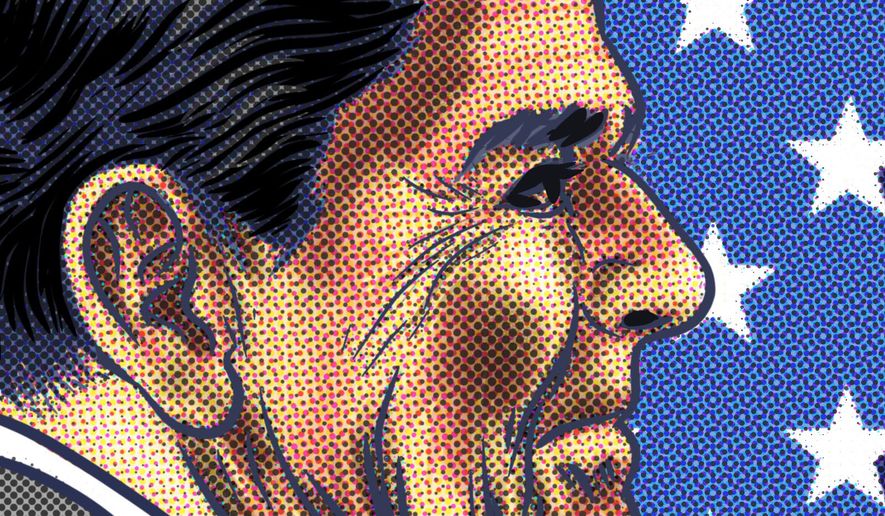
On July 4, 1986, President Ronald Reagan gave one of the most powerful addresses of his career. Yet it did not draw particular attention because it was part of a massive Liberty Weekend that marked the 100th year anniversary and multi-year restoration of the Statue of Liberty.
Reagan began, “My remarks tonight will be brief, but it’s worth remembering that all the celebration of this day is rooted in history. It’s recorded that shortly after the Declaration of Independence was signed in Philadelphia celebrations took place throughout the land, and many of the former Colonists — they were just starting to call themselves Americans — set off cannons and marched in fife and drum parades.”
“What a contrast with the sober scene that had taken place a short time earlier in Independence Hall. Fifty-six men came forward to sign the parchment. It was noted at the time that they pledged their lives, their fortunes, and their sacred honors. And that was more than rhetoric; each of those men knew the penalty for high treason to the Crown. “We must all hang together,’’ Benjamin Franklin said, “or, assuredly, we will all hang separately.’’ And John Hancock, it is said, wrote his signature in large script so King George could see it without his spectacles. They were brave. They stayed brave through all the bloodshed of the coming years. Their courage created a nation built on a universal claim to human dignity, on the proposition that every man, woman, and child had a right to a future of freedom.”
People were interested in these podcasts
The president went on to say: “Last night when we rededicated Miss Liberty and relit her torch, we reflected on all the millions who came here in search of the dream of freedom inaugurated in Independence Hall. We reflected, too, on their courage in coming great distances and settling in a foreign land and then passing on to their children and their children’s children the hope symbolized in this statue here just behind us: the hope that is America. It is a hope that someday every people and every nation of the world will know the blessings of liberty.”
He continued: “I’ve seen the beaches of Normandy and stood again with those boys of Pointe du Hoc, who long ago scaled the heights, and with, at that time, Lisa Zanatta Henn, who was at Omaha Beach for the father she loved, the father who had once dreamed of seeing again the place where he and so many brave others had landed on D-day. But he had died before he could make that trip, and she made it for him. ’And, Dad,’ she had said, ’I’ll always be proud.’”
“And I’ve seen the successors to these brave men, the young Americans in uniform all over the world, young Americans like you here tonight who man the mighty U.S.S. Kennedy and the Iowa and other ships of the line. I can assure you, you out there who are listening, that these young are like their fathers and their grandfathers, just as willing, just as brave. And we can be just as proud, declared the President.”
“All through our history, our Presidents and leaders have spoken of national unity and warned us that the real obstacle to moving forward the boundaries of freedom, the only permanent danger to the hope that is America, comes from within. It’s easy enough to dismiss this as a kind of familiar exhortation. Yet the truth is that even two of our greatest Founding Fathers, John Adams and Thomas Jefferson, once learned this lesson late in life. They’d worked so closely together in Philadelphia for independence. But once that was gained and a government was formed, something called partisan politics began to get in the way. After a bitter and divisive campaign, Jefferson defeated Adams for the Presidency in 1800. And the night before Jefferson’s inauguration, Adams slipped away to Boston, disappointed, brokenhearted, and bitter.”
“For years their estrangement lasted. But then when both had retired, Jefferson at 68 to Monticello and Adams at 76 to Quincy, they began through their letters to speak again to each other. Letters that discussed almost every conceivable subject: gardening, horseback riding, even sneezing as a cure for hiccups; but other subjects as well: the loss of loved ones, the mystery of grief and sorrow, the importance of religion, and of course the last thoughts, the final hopes of two old men, two great patriarchs, for the country that they had helped to found and loved so deeply.
“’It carries me back,’ Jefferson wrote about correspondence with his cosigner of the Declaration of Independence, `to the times when, beset with difficulties and dangers, we were fellow laborers in the same cause, struggling for what is most valuable to man, his right to self-government. Laboring always at the same oar, with some wave ever ahead threatening to overwhelm us and yet passing harmless … we rowed through the storm with heart and hand … ’ It was their last gift to us, this lesson in brotherhood, in tolerance for each other, this insight into America’s strength as a nation. And when both died on the same day within hours of each other, that date was July 4th, 50 years exactly after that first gift to us, the Declaration of Independence.”
These words are just as important today as they were when Reagan spoke them 40 years ago. And the founding principles of our country are just as important as when our founders gathered together 250 years ago. Happy Independence Day!
• Scott Walker is a columnist for The Washington Times. He was the 45th governor of Wisconsin and launched a bid for the 2016 Republican presidential nomination. He can be reached at swalker@washingtontimes.com.
Follow the author
Please read our comment policy before commenting.