


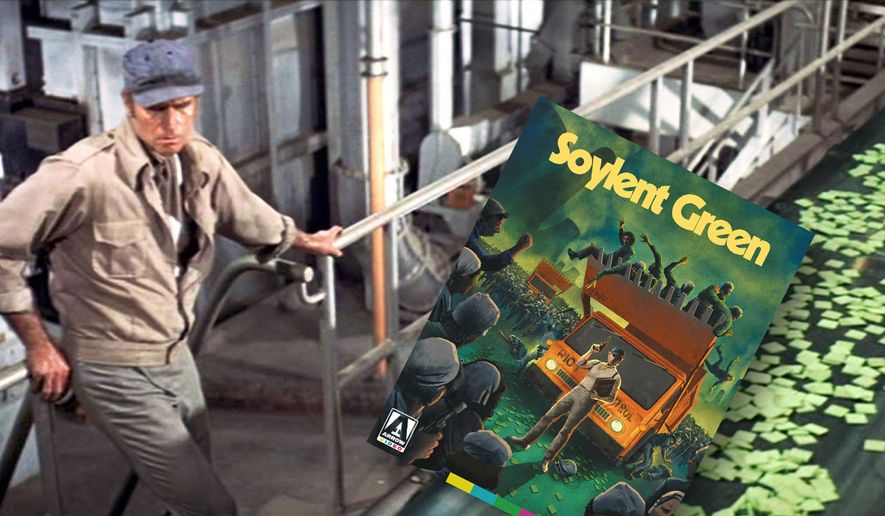

Director Richard Fleischer’s 1973 dystopian crime thriller, loosely based on Harry Harrison’s 1966 novel “Make Room! Make Room!,” gets a much-needed 4K restoration in Soylent Green: Limited Edition (Arrow Video, rated PG, 2.39:1 aspect ratio, 97 minutes, $49.99).
Offering the final performance of legendary actor Edward G. Robinson, the film also gave audiences one of the most famous lines of dialogue in the history of sci-fi films (I will not spoil the treat).
Set in 2022, viewers watch Earth, ravaged by pollution, global warming and overpopulation, turn New York City into a horror show for the miserable masses.
People were interested in these podcasts
They live in hopelessly overcrowded and unhealthy conditions and can only afford to consume vegetable-based wafers from the Soylent Corp., with a new “plankton” version called Soylent Green being distributed that is so popular that it causes riots.
NYPD Detective Robert Thorn (Charlton Heston), working with best friend and apartment mate, police researcher Solomon Roth (Robinson), lives in the mess and occasionally gets relief when Detective Thorn benefits from the spoils when investigating the upper class.
His latest case involves the death of one of that wealthy and opulent minority William Simonson (Joseph Cotten), an executive of the Soylent Corp.
The detective gets caught up in romance with the man’s mistress Shirl (Leigh Taylor-Young) and, more importantly, uncovers a conspiracy at the highest levels about the shocking origin of the food supply.
The routine procedural police drama gets propelled by the shocking revelation that will sucker punch the audience and turn “Soylent Green” into a cautionary tale of mankind’s downfall at the hands of corporate greed and unchecked environmental policies.
4K in action: The newly minted presentation arrives remastered from a 4K, 16-bit scan of the original 35mm camera negative, then digitally cleaned up and color graded.
In very good news, the troublesome visuals, from previous Blu-ray and DVD releases, of the polluted outdoor scenes that were artistically applied with a sickly smoggy green and yellow filters, now look chokingly realistic.
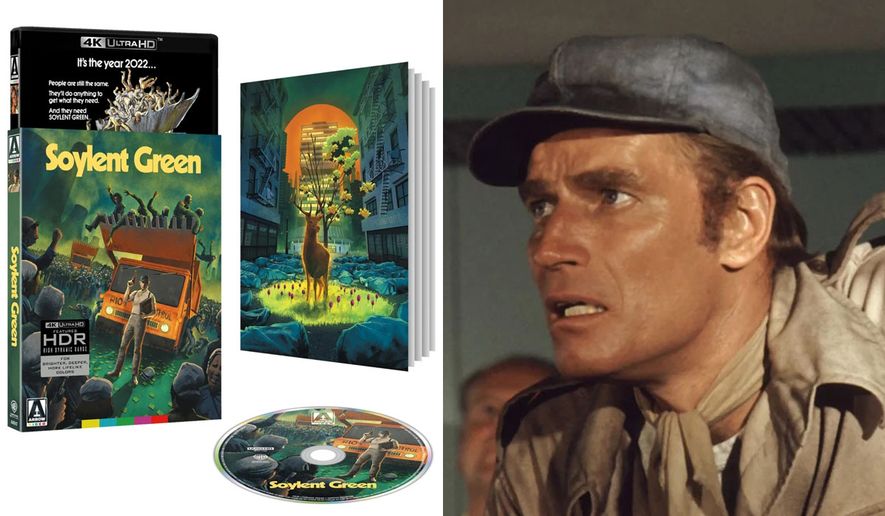
Background color palettes throughout often are very dense and drab, allowing spotlight bursts of primary colors as seen in a bright yellow lab coat, bright blue suit jacket (looking almost like velvet) and the red tailcoat of the building manager.
Detail comes alive in areas such as Heston’s sweaty amber skin tone; a circular, ornate textured glass shower; and a stucco ceiling.
The creepy moment that highlights all of the 4K artisan’s efforts finds Mr. Roth lying on a slab in a euthanasia parlor bathed in orange light surrounded by walls of video memory screens.
Best extras: For the first time that I can recall, Arrow Video comes up a bit short in the usually overwhelming amount of digital goodies.
Still, fans will find the select items more than enough to explore the film and its legacy.
First, an all-important vintage audio commentary from 2003 with Fleischer and Ms. Taylor-Young, offers a sporadic but insightful collection of memories.
These include working with an almost deaf Robinson, the reasons for the film’s global following, Heston’s state of relaxation when making the film, Ms. Taylor-Young’s deconstruction of her character and the magic behind creating the smog.
Next, a new and very insightful audio track with film historians Michael Brooke and author Johnny Mains finds the pair relaying interesting facts such as the opening photo montage showing the cluttered industrialization of the planet created by documentarian filmmaker Charles Braverman based on his short “American Time Capsule.”
They also offer insight on sex dolls, Robinson’s initial problems with the script, and Harrison’s thoughts on the script and participation in the movie to name just a few of the topics covered.
Next, viewers can listen to an audio track from an on-stage, 96-minute interview with a very well-spoken Heston at the British Film Institute from 1985, played over the film.
Heston has much to offer in detail about with his career initially focused on Orson Welles’ “Touch of Evil” and discussing that, sociologically, “Soylent Green” was the most important film he has ever made.
Having to watch the movie while listening to his remarks is a distraction, and it would have been better as simply as an audio file with maybe a slideshow from the film and his career.
Next, an on-stage interview (96 minutes) with Fleischer at the British Film Institute, after a screening of his film “Compulsion,” has the director offering great stories about working with Orson Welles, Kirk Douglas and Rex Harrison.
He also covers his directing style, creating Flicker Flashback comedy shorts, his disastrous second movie “Banjo,” and an overall look at his career, touching on “The Vikings,” “20,000 Leagues Under the Sea,” “10 Rillington Place” and a little about “Soylent Green.”
The package offers a 32-page, full-color booklet featuring a well-sourced retrospective essay by film historian Frank Collins and analysis by critic Alexandra Heller-Nicholas.
A reversible sleeve for the plastic case includes the original film poster and newly commissioned artwork by Nathanael Marsh.
Contact the author

Please read our comment policy before commenting.