



A federal judge on Monday voided a controversial settlement between President Trump and the Justice Department, accusing the administration of abusing the court system to establish a $1.776 billion “anti-weaponization” taxpayer fund.
Judge Kathleen Williams said the case was part of a pattern of Mr. Trump “misusing the courts to serve political purposes.”
She said the settlement is null, and she barred the parties to the case — Mr. Trump, the Justice Department and the IRS — from citing it as legal authority for future actions.
People were interested in these podcasts
She also ordered that copies of her ruling be sent to the New York and District of Columbia bars for disciplinary review of acting Attorney General Todd Blanche, referred one of Mr. Trump’s personal attorneys to the Florida Bar for an investigation and barred another from attempting to file briefs in the federal court in the Southern District of Florida.
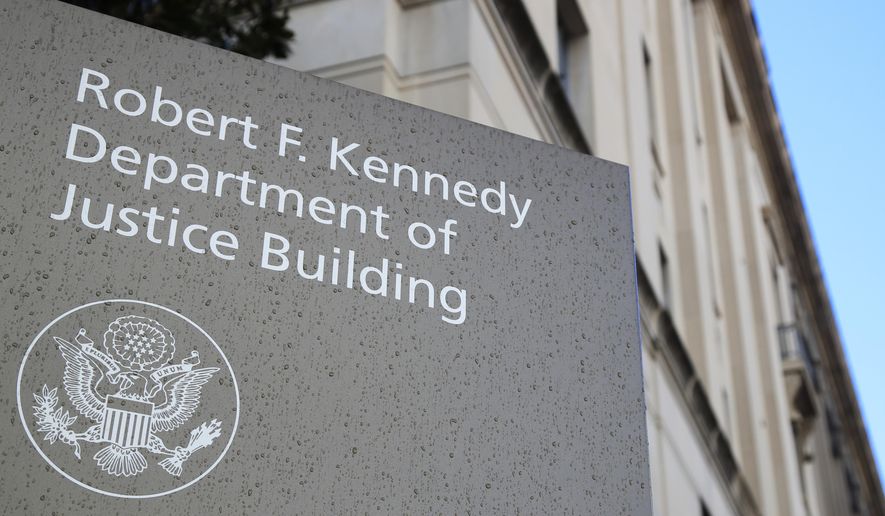
“The court finds that this matter was brought for an improper purpose — to gain the imprimatur of judicial legitimacy for a ‘settlement’ that had no viable basis in law or fact,” the Obama appointee wrote.
The action came on a $10 billion lawsuit Mr. Trump had filed against the IRS and the Treasury Department after a contract employee during his first term leaked his secret tax information to The New York Times and ProPublica.
Mr. Blanche agreed to a settlement with Mr. Trump, his boss, that called for the president to drop the lawsuit in exchange for the Justice Department creating a $1.776 billion “anti-weaponization” fund that was to pay “victims” of the Biden administration’s Justice Department.
The defendants in the Jan. 6, 2021, mob intrusion into the Capitol were widely considered the fund’s intended primary beneficiaries. Mr. Trump agreed not to take any compensation.
After the fund drew broad denunciations, including from Republicans on Capitol Hill, Mr. Blanche said he was scrapping the idea.
Despite the reversal, Trump opponents rushed to Judge Williams to ask her to officially nullify the agreement.
She was scathing in her ruling Monday, repeatedly putting the word “settlement” in quotes and questioning the entire chain of events that led to the agreement.
She said it was unprecedented for Mr. Trump, the president, to sue his own government agency, the IRS, and then have a separate agency under his purview, the Justice Department, handle the matter.
She had appointed an outside lawyer to advise her on the issues involved. Four days later, however, without addressing those concerns, the Justice Department and the president’s team announced they had settled, created the fund and dismissed the case.
Mr. Blanche had insisted that the settlement was standard legal protocol. He pointed back to one reached by the Obama administration’s Agriculture Department with American Indian farmers, who said they had faced years of discrimination in loan assistance applications.
Judge Williams rejected that comparison, saying the case involved a decade of negotiation between adverse parties. She said that was “in stark contrast” with the rapid 109-day timeline to settlement for Mr. Trump and Mr. Blanche.
She pointed out that Mr. Trump waited to file his lawsuit until he was back in the White House and had Mr. Blanche, who previously served as one of his personal attorneys, in the Justice Department.
She said it was “risible” to suggest they were not all acting to advance Mr. Trump’s interests.
“This action was never about a party seeking judicial resolution of a legal issue or a factual dispute,” she wrote. “The nature of the suit itself and the conduct of the parties and counsel from its filing make plain that this was an attempt to use the court to provide some legitimacy to an agreement to confer immunity to people and entities affiliated with the president and to earmark billions of dollars from American taxpayers to redress grievances not defined in the law.”
Mr. Blanche, in the case, also purported to reach an agreement conferring immunity from prosecution on Mr. Trump and barring the IRS from future audits of the president, his sons and their businesses.
Six days later, Mr. Trump nominated Mr. Blanche to serve as attorney general.
His confirmation hearing is slated for Wednesday, with a second day of testimony Thursday, and the settlement will likely come up in that proceeding.
Judge Williams said the attempt to grant immunity from an IRS audit is illegal under federal law and would be a dereliction of duty by the IRS and the Justice Department.
Judge Williams ordered that a copy of her ruling be sent to the bar in New York and the District of Columbia, where Mr. Blanche faces disciplinary complaints.
Judge Williams also referred Alejandro Brito, a Trump attorney in Florida, to the state bar there. She said Daniel Z. Epstein, another Trump attorney who is not admitted to practice in the federal court in the Southern District of Florida, will be barred from seeking guest admission for a year.
The White House referred an inquiry about the settlement to Mr. Trump’s personal attorneys.
The Justice Department, for its part, said Mr. Trump sued as a private citizen and DOJ didn’t agree to all his demands in the settlement. For example, the president didn’t receive any monetary payment under the deal.
“There was no collusion in this case, and the partisan judge who speculated otherwise has disregarded decades of precedent,” the department said in a statement.
The Washington Times has reached out to Mr. Brito for this article.
Democrats hailed Judge Williams’ ruling as a roadblock to Mr. Trump.
“Judge Williams saw what Americans saw from the beginning — this lawsuit was nothing more than an attempt to redirect taxpayer dollars to Donald Trump’s bank accounts,” said Rep. John Larson, a Connecticut Democrat who served on the House Ways and Means Committee during the push to obtain Mr. Trump’s tax returns in his first term
He called on the Senate to reject Mr. Blanche’s nomination to the attorney general’s post.
Contact the author

Please read our comment policy before commenting.