



A D.C. Council committee held a public hearing Monday on automated ridesharing vehicles legislation over the objections of local unions.
The Transportation and Environment Committee hearing focused on the Autonomous Vehicle Deployment Authorization Amendment Act of 2026. Introduced by Council member Charles Allen, Ward 6 Democrat, the bill would establish a regulatory framework for autonomous vehicle (AV) providers and create a timeline for allowing robotaxis to operate.
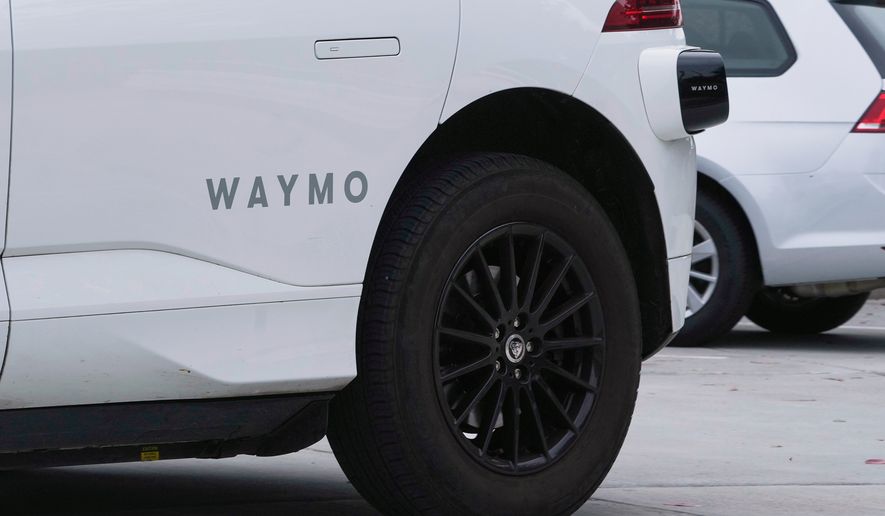
Waymo and Zoox currently have autonomous vehicles operating in the city as part of a pilot program. But the cars aren’t fully self-driving, as humans sit behind the wheel in case of an emergency.
People were interested in these podcasts
The bill proposes a 180-day waiting period and a 250,000-mile requirement before an AV provider can begin offering rides to customers.
Under the legislation, robotaxis would be capped at 200 AVs until 2028. AV companies would pay a $1 million application fee and a $5 million permit fee, as well as a $1 million renewal fee.
AV providers would also be levied a travel tax of 15 cents per mile per vehicle, a measure that aims to prevent passengerless robotaxis from adding to traffic.
India Herdman, a public policy adviser for Tesla, testified that the company opposes each of the financial hurdles. She said that testing in other jurisdictions should count toward the 250,000-mile mark sought by D.C. lawmakers and that the high application and permitting fees are an “unnecessarily burdensome barrier to entry.”
Matthew Walsh, regional head of state and local public policy for Waymo, focused his testimony on the safety benefits of the robotaxis. He said the company has helped prevent 700 injury crashes, including roughly 50 that could have caused serious injury or worse, because of the safety features in the driverless cars.
“At our current scale, that means we are avoiding about 13 injury crashes every single week. Our technology alone won’t fix all of the safety challenges, but it will absolutely contribute to the safe systems approach outlined in the District’s Vision Zero plan,” Mr. Walsh said, referring to Mayor Muriel Bowser’s plan to eliminate traffic fatalities in the city.
Marissa Tuell, who oversees AV policy for Lyft, likened the growth of robotaxis to automation introduced to grocery stores and financial institutions.
“ATMs and self-checkout didn’t eliminate tellers and cashiers,” Ms. Tuell said. “They gave customers more ways to bank and shop, with both options continuing to operate side by side. We expect to see the same here: AVs and human drivers coexisting and complementing each other to meet more rider needs than either could alone.”
Brian Wivell, political and communications director of Amalgamated Transit Union 689, criticized Ms. Tuell’s point in his testimony hours later.
“If anyone honestly tells me today that they believe the consumer experience has been improved by the removal of a large number of cashiers and clerks from stores, I think they’re lying to you,” he said.
Mr. Wivell, whose union represents workers in the Washington Metropolitan Area Transit Authority and several county bus operators, doubted that robotaxis would be able to detect human-like objects, such as marionettes or mannequins, used by street protesters.
Jaime Contreras, executive vice president of SEIU 32BJ, which represents airport service workers and maintenance employees, said he doesn’t want permits to be issued before a full report is issued on public safety and employment implications of AVs.
He said the legislation will have similar impacts on local workers that the North American Free Trade Agreement had nationwide, which is blamed for incentivizing manufacturing jobs to be relocated from the U.S. to Mexico.
People with disabilities, particularly those with vision problems, advocated for the legislation at the hearing.
Claire Stanley, director of advocacy and governmental affairs for the American Council of the Blind, said the arrival of robotaxis is a huge boost to the area’s vision-impaired who often rely on the Metro to get around.
She said AVs would also be more welcoming of passengers such as her with guide dogs, which she said are essential in her day-to-day life.
“Blind persons who use guide dogs to travel around the city are repeatedly denied access to rideshare companies,” Ms. Stanley said. “I have lost count of the number of times I’ve been refused access because of my guide dog.”
Please read our comment policy before commenting.