


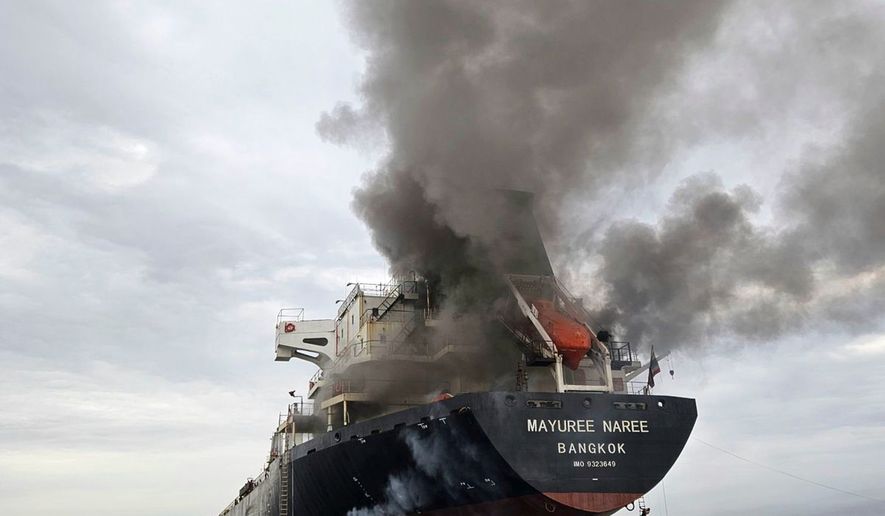

U.S. Central Command said Sunday the Strait of Hormuz is open to all vessels seeking to “lawfully transit” and insisted that Iran does not control the waterway, despite recent strikes on commercial ships.
CENTCOM, which oversees U.S. military operations in the Middle East, posted on social media that its “forces are positioned and prepared to ensure that freedom of navigation remains available despite unwarranted Iranian aggression.”
“Iran does not control the strait. Traffic is flowing,” CENTCOM posted on X.
People were interested in these podcasts
President Trump followed up CENTCOM’s comments later Sunday, telling NBC’s “Meet the Press” that the strait is open for commercial traffic. He added that Tehran agreed to a peace deal that included “no nuclear, no this, no that, no nothing,” after the U.S. military attacked Iran overnight.
The comments contradict statements from Iranian authorities about the status of the Strait of Hormuz. Iran’s Persian Gulf Strait Authority, which Tehran established during the war with the U.S., said Sunday that the waterway is closed due to “illegal movements” by the U.S. military.
Iran has ramped up attacks on commercial vessels attempting to travel through the strait in recent days, especially those moving in Omani waters.
SEE ALSO: Trump says U.S. hit Iran very hard and the Strait of Hormuz is open
Iran closed the waterway in early March after the U.S. and Israel launched airstrikes on Iranian political and military targets. At least 20% of the world’s oil travels through the strait each year, and its closure has caused energy prices to skyrocket.
During the war, Iran insisted that no vessels linked to Western nations could pass through the strait and that it would maintain control of the strait after the war’s conclusion.
Under the terms of the Islamabad Memorandum of Understanding, signed by the U.S. and Iran last month, Tehran must allow for the toll-free transit of commercial ships through the strait for at least 60 days while peace negotiations run their course.
Tehran must also enter into negotiations with Oman to “define the future administration” of the Strait of Hormuz.
However, Iran has insisted that any ships traveling through the waterway must move through Iran-controlled waters and coordinate with military authorities.
CENTCOM on Sunday accused Iran of attacking a Cypriot-flagged vessel in the strait and launched retaliatory attacks on more than 140 targets. Iran confirmed that it struck a vessel in the waterway, which it said was transiting illegally, and launched attacks on U.S. military installations in the Gulf in response.
The latest attacks cap off a week of escalations in the U.S.-Iran war centered around control of the Strait of Hormuz.
Last week, Iran launched attacks on tanker ships traveling in Omani waters through the strait, prompting U.S. strikes on military targets along Iran’s coastline. The strikes were intended to diminish Iran’s ability to impede commercial shipping in regional waters, CENTCOM said.
Iran responded with drone and missile attacks on U.S. military assets in Bahrain, Jordan, Kuwait, Oman and Qatar.
Contact the author

Please read our comment policy before commenting.