


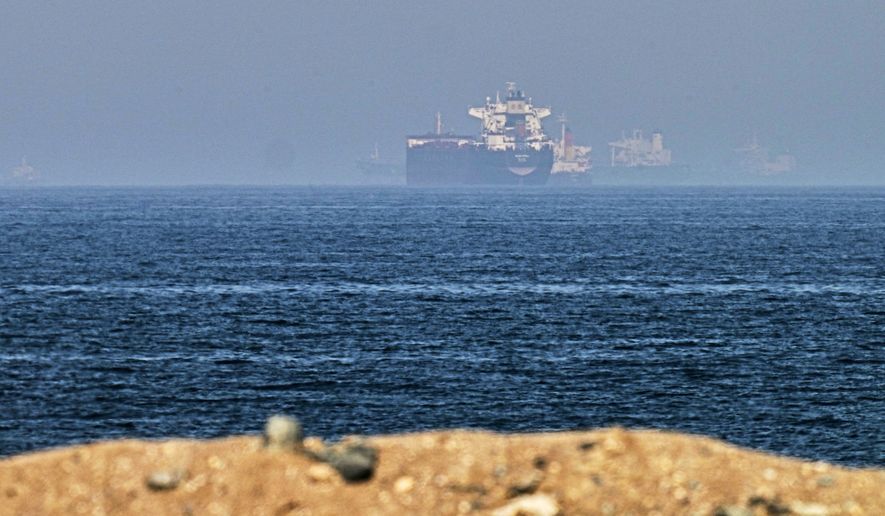

Iran on Wednesday announced that it and Oman agreed on the coordinates of new commercial shipping routes through the Strait of Hormuz after several rounds of negotiations, but stressed that the incoming deal would not end the crisis in the region.
Esmaeil Baghaei, spokesperson for Iran’s Foreign Ministry, told reporters that the reopening of the strait is contingent on the U.S. removing its naval blockade and halting all attacks on Iranian infrastructure.
“An understanding with Oman cannot, in itself, mean that the strait has become safe for passing vessels, because the factors creating insecurity in the Strait of Hormuz — particularly the U.S. naval blockade and other actions against Iran and its interests — remain in place,” he said.
People were interested in these podcasts
Mr. Baghaei added that officials from both nations are finalizing the language of the agreement and it would be released soon.
Reporting from earlier in the day suggested that the deal was finalized and awaited the approval of Iranian Supreme Leader Mojtaba Khamenei.
Iran and Oman have been negotiating a framework agreement that could determine future control over the strait, which has remained effectively closed since the collapse of the Islamabad Memorandum of Understanding in July.
SEE ALSO: Top former U.S. generals say wars in Ukraine, Iran becoming steadily intertwined
Iran closed the Strait of Hormuz, a chokepoint connecting the Persian Gulf and Gulf of Oman, in March in response to U.S. and Israeli strikes in late February. Since then, its forces have consistently threatened commercial vessels trying to transit the waterway with drones, missiles, small boats and mines.
At its narrowest point, the Strait of Hormuz is 21 miles wide and therefore would have no international sea for free navigation if Iran and Oman had the usual 12-mile territorial-water rights.
But under the United Nations Convention on the Law of the Sea, ships have a right of transit through such straits that, among other things, cannot require a toll or vary among nations.
Other such waterways include the Strait of Malacca between Malaysia and Indonesia, the Strait of Gibraltar between Spain, Morocco and Britain, and the Strait of Dover between Britain and France.
While oil prices have dropped significantly since news of a possible deal to reopen the waterway broke this week, the price per barrel still stands far higher than prewar levels. Brent crude oil, the primary benchmark for purchasing oil worldwide, stood at $79 a barrel on Wednesday compared with $67 in February.
Details of the pending agreement remain unknown but carry immediate implications for regional stability.
Some reports this week have suggested that Iran has demanded that fees be imposed on commercial tankers moving through the waterway in the form of service fees for environmental and security protection.
The deal als could include provisions that would require ships to enter the strait through Iranian-controlled waters while exiting through Omani-controlled routes.
The U.S., which has been kept informed of developments in the talks between Iran and Oman, has insisted that it would accept no deal that included tolls in the Strait of Hormuz, which has for decades been considered international waters.
President Trump this week said he noticed significant progress toward a deal that could reopen the strait, but said Iran would face serious consequences if there was no agreement soon.
“We’re knocking the hell out of them. I’d rather make a deal, because I don’t want to kill people,” Mr. Trump said Wednesday during a speech in Las Vegas. “We are talking, let’s see what happens.”
Mr. Trump teamed up with Israel to launch their joint war in late February against Iran, aimed at crippling Iran’s nuclear facilities and fostering regime change.
After several months of attacks and counterattacks, the two sides signed the Islamabad Memorandum of Understanding, which was supposed to create a 60-day window for direct talks between the two countries.
But the agreement quickly disintegrated after Iran attacked commercial ships in the strait, prompting American strikes on targets in southern Iran.
The countries have since returned to a cycle of violence and diplomacy.
Senate Minority Leader Charles E. Schumer, New York Democrat, said Wednesday he was skeptical that any deal to open the Strait of Hormuz would be long-lasting.
“Whenever Trump says there’s a deal, it means one of two things: either the strait is still staying closed, or it opens for only a couple of days, and then it closes again,” Mr. Schumer said. “None of his deals have come to fruition, and gas prices continue to rise.”
The reopening of the Strait of Hormuz could open the door to further direct negotiations between the U.S. and Iran over more technical issues, such as the future of Iran’s nuclear program and possible sanctions relief.
However, it is not clear if the U.S. would accept a deal that would let Iran maintain any form of control over the strait, which American officials have rejected in the past, or if Mr. Trump would be willing to remove his naval blockade of Iran’s ports.
The issue is made more complex by further threats to international commerce in the Red Sea, as Iran-backed Houthi rebels in Yemen target Saudi-connected ships on a near-daily basis.
The Houthis on Wednesday claimed responsibility for two strikes on Saudi vessels traveling in regional waters, one off the coast of the port city of Yanbu and another in the Gulf of Aden.
United Kingdom Maritime Trade Operations is investigating both incidents. There was no immediate comment from Saudi Arabia.
The strikes are the latest Saudi oil tankers the Houthis have said their forces have targeted since the announcement of the blockade, and one of the furthest from the southern strait. Yahya Saree, Houthi military spokesperson, said Wednesday that the Houthis have turned away 29 other tankers since last month.
Contact the author


Please read our comment policy before commenting.