



OPINION:
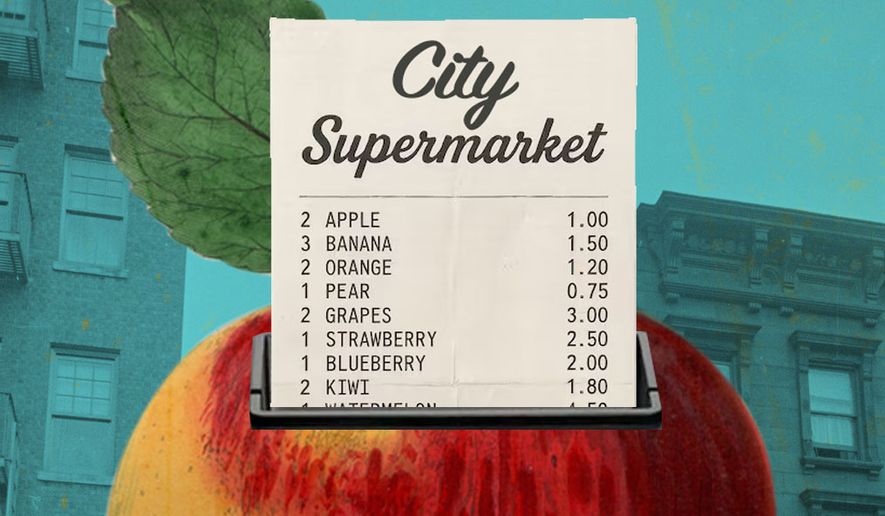
New York City Mayor Zohran Mamdani, a democratic socialist, wants the city government to run five grocery stores to lower prices on eggs, meat, vegetables and other staple goods by up to 30%.
Great idea, given that the mayor has such a long history of running successful businesses.
Oh, wait. Check that. Mr. Mamdani has never run a business. What could go wrong?
People were interested in these podcasts
To think that this or any other mayor can provide a basic function of private enterprise more cheaply and efficiently than the private sector is a stretch.
The proposed city-run stores will be located in each of the city’s boroughs: Manhattan, Queens, Brooklyn, the Bronx and Staten Island. The mayor’s office calculated that the stores will cut the grocery bill of an average city family by 15%, which it estimates is $1,000 a year.
So far, so good. What Mr. Mamdani leaves out (and where the plan is unfair to the thousands of people who work in New York City’s grocery industry) is that the accounting in the stores works only because the city treasury subsidizes the stores’ expenses with taxpayer money — meaning that his stores never face the possibility of operating at a loss, unlike the big chains and bodegas already in operation.
America’s supermarkets operate on some of the economy’s thinnest margins, netting 1% to 3% on every dollar a customer spends. So they have to be super-efficient to make a profit and stay in business. Most are. With margins this low, these stores are obviously not price gouging. So how can Mr. Mamdani’s promised store savings possibly exceed 3% without a subsidy? They cannot. It is just simple math.
City Hall cannot out-negotiate Safeway or any of the other big chains. What it can do is provide the $70 million in capital spending needed to open the five planned stores, including $30 million to renovate and expand the existing La Marqueta marketplace in East Harlem.
Private contractors will operate the stores for the city, which will receive no rent or property taxes but will set prices for everything sold.
In a further twist, Mr. Mamdani says his stores will not sell cigarettes, alcohol, lottery tickets or hot food, all high-margin items that bring in a lot of money for the thousands of bodegas spread throughout the Big Apple. Private stores make a lot of money selling these items, whereas the mayor’s stores will not.
If you think this all sounds dicey at best, you are right, and there is actually a recent, real-life experiment in government grocery stores. Kansas City, Missouri, already tried it a few years ago.
The city bought property at 31st Street and Prospect Avenue, put roughly $17 million to $18 million into an existing market and … watched it burn money.
When the store faltered, the City Council appropriated an additional $750,000 in emergency funds in the spring of 2025 to keep it going, as weekly customer traffic fell from 14,000 at its height to roughly 2,000.
The store closed a year ago, leaving the neighborhood with fewer grocery options than before the city got involved. The somber sign on the bolted door said it all: “Unfortunately, due to unforeseen circumstances beyond our control, we are no longer able to serve residents at this time.”
Unforeseen? This was as predictable as the sun rising in the east this morning.
The Kansas City experiment did not fail because prices were still too high. It failed because of crime, inefficiency and lost customers.
These are the same conditions that keep supermarkets out of New York’s supposedly underserved neighborhoods, along with high property taxes, permitting delays, corrupt city inspectors with their hands out, union rules and zoning requirements that hike the costs of opening stores.
It is a good bet that this $70 million grocery experiment will also fail, leaving the city with fewer grocery stores and corner convenience shops — and a lot more red ink.
Who will cover the losses? New York City is already in deficit. Unlike Uncle Sam, City Hall cannot just keep borrowing. It will have to raise taxes to pay for the deficits.
How will that make food or anything else in New York more affordable? God forbid that Washington should try this.
• Stephen Moore is a former senior economic adviser to President Trump and co-founder of Unleash Prosperity.
Follow the author
Please read our comment policy before commenting.