


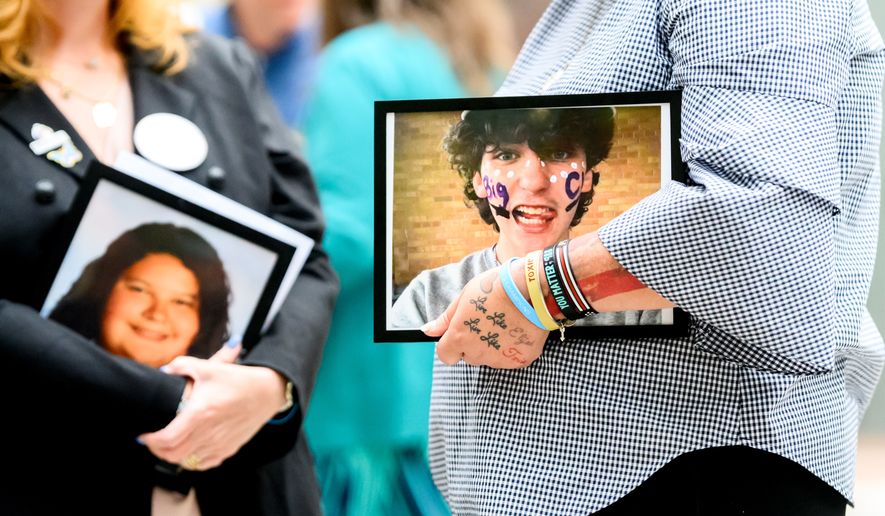

Children were the victims in a landmark lawsuit filed against tech giant Meta, but state governments will reap the financial benefits from a $17 billion settlement that hinges on cooperation from TikTok and YouTube.
Most of the 47 states that settled claims against Meta this week do not have specific plans yet for spending the hundreds of millions of dollars each received in exchange for dropping litigation that accused Meta of knowingly pushing addictive and harmful content on children while hiding that information from the public.
In Kentucky, one lawmaker wants to establish a commission to decide how to spend up to $358 million that the state will receive from the settlement.
People were interested in these podcasts
Maryland officials said they would use up to $327 million from the settlement “for any lawful public purpose as set forth in the settlement agreement.”
California, one of the lead plaintiffs in the case, will receive up to $2.1 billion if the court approves the settlement.
State officials did not respond to requests seeking details about where the money would be spent.
“How a significant portion of the payment received by California will be spent will ultimately be decided by the Legislature and Governor, but in the proposed settlement it is earmarked for purposes related to the prevention or remediation of mental health or other harms to young Californians associated with social media use,” officials in the office of Attorney General Rob Bonta said in a statement announcing the agreement.
Court documents list nearly a dozen ways states can use the cash. They can spend it on crisis intervention services, after-school programs, public health advertising, outdoor activities, youth mental health programs and medical provider training on the harms of social media. The money can also be used for additional litigation against social media platforms.
How much money states will ultimately receive, however, hinges on two social media platforms — YouTube, owned by Google, and TikTok — agreeing to implement the same new safety requirements Meta is ordered to put into place under the court settlement.
Meta agreed to pay $12.1 billion to the states in annual installments over 10 years. The rest of the money, roughly $5.3 billion, is contingent on competing social media platforms agreeing to the same new safety restrictions.

Specifically, the settlement calls on YouTube and TikTok to adopt matching safety restrictions, including a 60-minute daily time limit per app, consistent with Meta’s mandatory two-hour daily cap. It also calls for restricting nighttime use and strengthening age-verification requirements for underage users, matching the safety-related changes Meta agreed to in the settlement.
The entire settlement is subject to court approval.
New York could receive up to $1.5 billion in the settlement but may end up with significantly less, $819 million, if Google and TikTok do not implement the same safety changes.
Meta, currently valued at $1.47 trillion, is also tying the larger payouts to Google and TikTok, agreeing to jointly pay states an additional $5.3 billion for online safety programs for children.
Meta issued a press release Wednesday, labeling it an “open letter” to TikTok and YouTube, calling on its competitors to “join us” and implement the same list of safety changes.
“All platforms should empower parents and support teens in these ways because we know that when teens are restricted on one app, they simply move to another,” Meta officials said in the statement.
The Washington Times has reached out to Google and TikTok.
Under the terms of the settlement, an independent auditor will be appointed to oversee every step of Meta’s implementation of the new safety features and to ensure their efficacy.
Meta will have to consult with and report to the auditor with data showing the new features are achieving the goal of limiting screen time for children and protecting them from harmful content.
A 2024 Pew Research Center study found that 6 in 10 teens used TikTok and Instagram, and more than half used Snapchat.
YouTube topped the list of social media apps used by children. Nine in 10 teens reported using the site.
Massachusetts Attorney General Andrea Joy Campbell said the Bay State will receive up to $516 million from the settlement, including $366 million guaranteed to be paid out over the next decade.
She said the funds will go to expanding youth crisis intervention and mental health services, after-school programs, phone-free school initiatives and training for healthcare professionals to help teens negatively impacted by social media. Some of the money, she said, will go into the state’s general fund.
Ms. Campbell said the settlement “secured meaningful, long-term changes to Meta’s products and practices, while delivering real resources to Massachusetts.”
Contact the author


Please read our comment policy before commenting.