



Don’t miss the full story, whose reporting from Mike Corder at The Associated Press is the basis of this AI-assisted article.
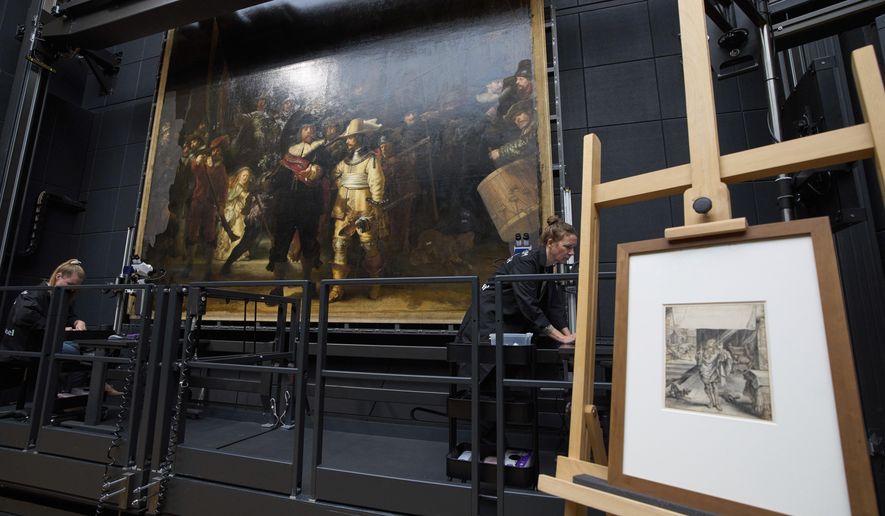
A curator at Amsterdam’s Rijksmuseum discovered by accident that the barking dog in Rembrandt’s famous “Night Watch” painting is an almost identical copy of a dog from a 1619 drawing by Dutch artist Adriaen van de Venne.
Some key facts:
• Anne Lenders, a Rijksmuseum curator, made the discovery accidentally while visiting an exhibition at the Zeeuws Museum.
• The original dog appears in a 1619 pen and ink drawing by van de Venne that was printed in a book by poet Jacob Cats.
• Van de Venne’s drawing was already part of the Rijksmuseum’s own collection.
• Both dogs share identical poses, head angles, slightly opened mouths, long hair and vertically hanging ears.
• In “Night Watch,” the dog creates tension in a dark corner near drummer Jacob Jorisz and behind Lt. Willem van Ruytenburch.
• The discovery emerged during “Operation Night Watch,” a years-long restoration and research project that began in 2019.
• The massive canvas measures 379.5 by 453.5 centimeters (149.4 by 178.5 inches).
• Experts remain divided on the dog’s breed, with opinions split between French and Dutch varieties.
READ MORE: Rembrandt copied another artist’s canine for his famous ’Night Watch’
This article was constructed with the assistance of artificial intelligence and published by a member of The Washington Times' AI News Desk team. The contents of this report are based solely on The Washington Times' original reporting, wire services, and/or other sources cited within the report. For more information, please read our AI policy or contact Steve Fink, Director of Artificial Intelligence, at sfink@washingtontimes.com
The Washington Times AI Ethics Newsroom Committee can be reached at aispotlight@washingtontimes.com.
Please read our comment policy before commenting.