



A version of this story appeared in the daily Threat Status newsletter from The Washington Times. Click here to receive Threat Status delivered directly to your inbox each weekday.
A version of this story appeared in the daily Threat Status newsletter from The Washington Times. Click here to receive Threat Status delivered directly to your inbox each weekday.
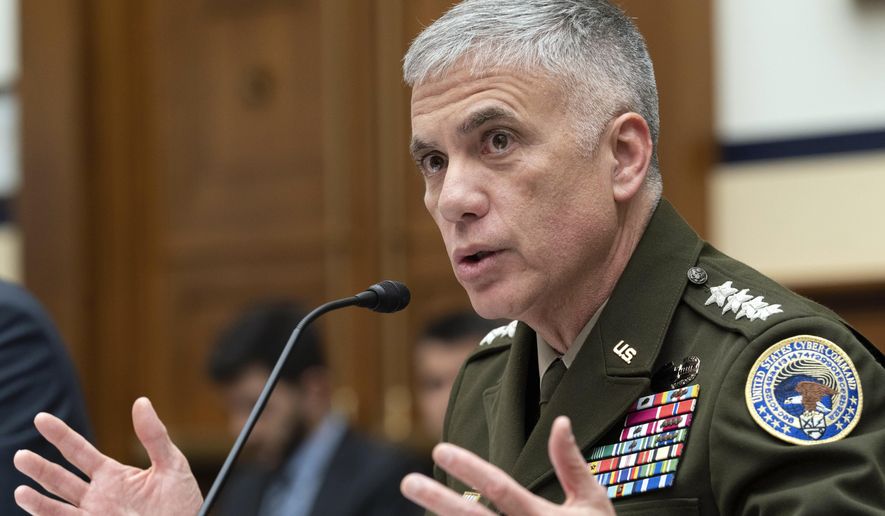
The recently retired leader of U.S. Cyber Command and the National Security Agency has come out against the creation of a new cyber branch of America’s armed services as efforts to consider a cyber force gain momentum on Capitol Hill.
The House Armed Services Committee last month directed the Pentagon to study the need for a separate a cyber force in an amendment to a major defense bill now working its way through Congress.
People were interested in these podcasts
Former Army Gen. Paul Nakasone says the problem is serious, but acknowledged he is not a fan of creating a new force to join the Army, Navy, Marine Corps, Air Force and Space Force.
“We have to think about how we’re going to organize ourselves; I do not think organizing a service is the best way to do that right now,” Gen. Nakasone said on a podcast with ClearanceJobs, a website listing career opportunities with special security requirements.
The general sounded much more optimistic about modeling the current Cyber Command after the U.S. Special Operations Command instead, with a focus on developing cyber professionals who are operating around-the-clock.
His reluctance to the creation of a new cyber force could dampen the hopes of those in Washington leading the push for a new armed service, saying it would elevate the visibility of the threat from adversaries such as Russia and China
The Foundation for Defense of Democracies called for the establishment of a cyber force in March — which would be the seventh separate service under the Pentagon’s command — and captured the attention of a key cyber policymaker in the House.
The influential think tank said the U.S. government’s cyber forces were plagued by a poor and uncertain division of labor against the growing cyber threat, after interviewing more than 75 active-duty and retired military officers. China, the FDD study noted, China “has already centralized its cyber, space, electronic warfare, and psychological warfare capabilities within its Strategic Support Force.”
FDD’s recommendation captured the attention of the then-leader of the House Armed Services cyber subcommittee Mike Gallagher. Before retiring, the Wisconsin Republican urged Congress to have the Department of Defense look at the question of a cyber force.
“Congress needs to have the Department of Defense commission an independent assessment of the force-generation challenges to include some recommended ways forward,” Mr. Gallagher said at an FDD event in March. “I think we need the department to have an outside assessor replicate this study but at an even deeper level.”
Rep. Morgan Luttrell, Texas Republican, called for a new military cyber force last month and helped insert an amendment prompting the Pentagon to consider the question in a major defense bill.
The Senate Armed Services Committee’s cyber panel is set to meet behind closed doors on the defense bill next week, and lawmakers may discuss the issue of a new cyber force.
Sen. Kirsten Gillibrand, a member of the cybersecurity subcommittee, attempted to insert a similar provision in a defense bill last year, according to The Record, but the New York Democrat’s proposal was later dropped from the legislation.
Please read our comment policy before commenting.